
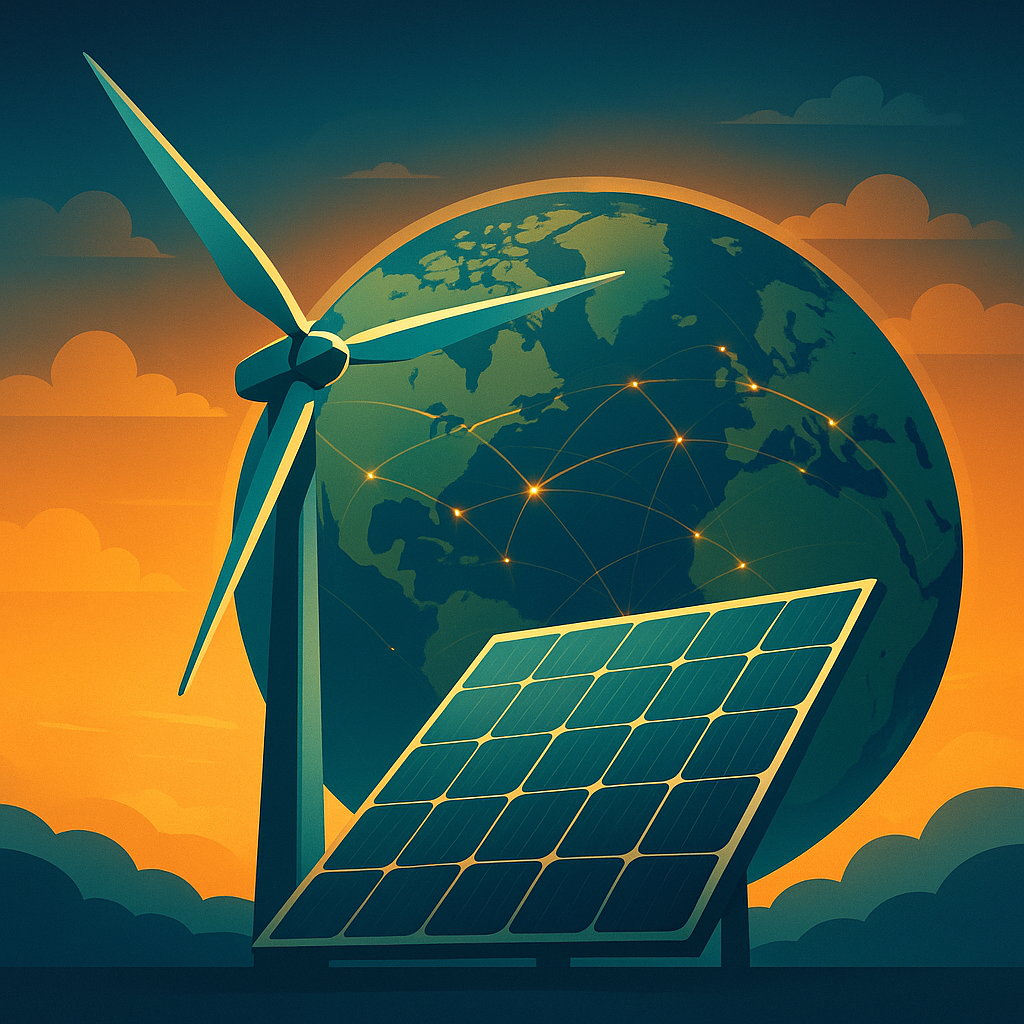
Seeing the Shift: A World Powered by Renewables
On an early spring morning in 2026, the skyline of Copenhagen was illuminated not just by the rising sun but by the hum of wind turbines and solar arrays stretching across the horizon. This is no isolated vignette. Across continents, the quiet revolution of renewable energy is accelerating at an unprecedented pace. The International Renewable Energy Agency (IRENA) recently reported that renewables now account for nearly 45% of global electricity generation, an all-time high. This surge is driven by a combination of technological advances, policy commitments, and shifting economic incentives that are redefining energy markets worldwide.
As the world confronts the relentless challenges of climate change and energy security, renewable energy has transitioned from a niche aspiration to a strategic imperative. Yet, beneath the surface of this transition lies a complex tapestry of economic, technological, and geopolitical factors that shape how energy is produced, distributed, and consumed. Understanding this dynamic environment requires more than acknowledging the rise of solar panels and wind farms; it demands a deep dive into the forces propelling this momentum and the implications for global power structures.
“The energy sector is undergoing a profound transformation, where renewables are not just alternatives—they are becoming the foundation of future energy systems,” notes Dr. Helena Strauss, energy policy analyst at the Global Energy Institute.
Tracing the Trajectory: From Fossil Fuels to Renewables
The story of renewable energy is intertwined with global industrialization and environmental awareness. Historically, fossil fuels—coal, oil, and natural gas—powered the world’s rapid economic growth throughout the 19th and 20th centuries. Their high energy density and established infrastructure made them the default energy sources. However, the environmental costs, escalating greenhouse gas emissions, and geopolitical risks associated with fossil fuels gradually sparked interest in cleaner alternatives.
Early efforts in renewable energy, such as hydroelectric power development in the early 1900s and the installation of the first commercial wind turbines in the 1980s, were limited by technology and cost. The 21st century, however, marked a turning point. The Paris Agreement in 2015 galvanized international commitment to limit global warming, accelerating investments in renewables. Simultaneously, the cost of solar photovoltaic (PV) panels and wind turbines plummeted due to manufacturing scale and innovation, making them competitive with, or even cheaper than, fossil fuels in many regions.
These developments laid the groundwork for what experts now refer to as the “renewable energy tipping point,” where sustainable energy sources began to dominate new capacity additions worldwide. According to TheOmniBuzz’s analysis, this shift is not merely environmental but economic, with renewables creating millions of jobs and driving new industries.
Unpacking the 2026 Landscape: Trends, Data, and Innovations
In 2026, renewable energy is no longer an adjunct but a pillar of the global energy framework. The latest data from the International Energy Agency (IEA) underscores this: renewables contributed over 50% of net electricity capacity additions worldwide in 2025, with solar and wind leading the charge.
Key drivers of this growth include:
- Technological advancements: Innovations in battery storage and grid management have mitigated intermittency issues, enabling more reliable integration of variable renewables.
- Policy frameworks: Governments across Asia, Europe, and the Americas have adopted aggressive renewable portfolio standards and carbon pricing mechanisms, incentivizing clean energy deployment.
- Corporate commitments: Major multinational corporations have embraced 100% renewable energy goals, investing in on-site generation and power purchase agreements (PPAs).
- Cost competitiveness: The Levelized Cost of Energy (LCOE) for solar and wind has dropped to historic lows—solar at $20 per megawatt-hour and onshore wind at $25, according to BloombergNEF.
Moreover, emerging technologies such as green hydrogen production and floating offshore wind farms are expanding the renewable energy frontier. Green hydrogen, produced via electrolysis using renewable electricity, is gaining traction as a clean fuel alternative for hard-to-electrify sectors like heavy industry and shipping.
“We are witnessing a paradigm shift where renewables are not only cost-effective but also essential to energy security and economic resilience,” asserts Miguel Santos, CEO of Iberian Renewables Corp.
Voices from the Field: Industry Leaders and Expert Insights
The rapid expansion of renewable energy has sparked robust debate among stakeholders. Industry leaders highlight the transformative potential, while cautioning about the challenges ahead.
According to Dr. Amina El-Sayed, Chief Sustainability Officer at GreenGrid Technologies, “Scaling renewables requires not just installing capacity but rethinking energy infrastructure, market design, and workforce development.” She emphasizes the need for investment in smart grids, digitalization, and energy storage to balance supply and demand effectively.
Financial institutions are also recalibrating risk and opportunity assessments. Global banks have increased green financing by 40% over the past two years, reflecting confidence in renewables as profitable long-term assets. However, concerns remain about supply chain vulnerabilities, particularly for critical minerals like lithium and cobalt, which are essential for batteries.
Community engagement is another critical dimension. Projects that incorporate local stakeholders tend to achieve higher social acceptance and sustainability. This aligns with findings from TheOmniBuzz’s investigation into renewable project failures, which often stem from inadequate stakeholder consultation and planning.
Case Studies: Transforming Energy Systems Across Regions
Several countries and corporations exemplify the renewable energy surge through ambitious initiatives and tangible results.
- Denmark: Having pioneered offshore wind, Denmark now generates over 70% of its electricity from renewables. The Hornsea 3 offshore wind farm, commissioned in early 2026, adds 2.5 GW of capacity, powering millions of homes.
- India: With a renewable capacity target of 600 GW by 2030, India has accelerated solar park developments and decentralized solar rooftop adoption. The Solar Expressway project integrates solar panels with highways, optimizing land use.
- United States: Private sector leadership has been pivotal. Tesla’s latest battery storage facility in Texas, coupled with vast wind farms, supports grid stability and peak demand management.
- Morocco: The Noor Midelt solar complex combines concentrated solar power with photovoltaics, providing dispatchable renewable power and inspiring similar projects across North Africa.
These examples illustrate the diversity of approaches and contexts in which renewables are deployed. They also highlight the opportunities for cross-border technology transfer and financing mechanisms that can accelerate global adoption.
Looking Ahead: Challenges and Opportunities on the Renewable Horizon
Despite remarkable progress, several hurdles remain that could influence the trajectory of renewable energy.
- Grid integration and stability: Increasing the share of variable renewables requires advanced grid management and expanded transmission networks to avoid bottlenecks.
- Raw material supply chains: Ensuring sustainable and ethical sourcing of critical minerals is vital to avoid environmental and social pitfalls.
- Policy consistency: Political shifts and regulatory uncertainty can disrupt investment flows and project timelines.
- Equity and access: Addressing energy poverty and ensuring that renewable benefits reach marginalized communities is essential for inclusive growth.
Nevertheless, the outlook remains optimistic. Innovations in artificial intelligence and blockchain are enhancing energy forecasting, peer-to-peer trading, and decentralized grids. Moreover, international cooperation frameworks are strengthening, with new climate finance pledges and technology partnerships emerging.
“Renewable energy is not a distant dream but an unfolding reality that demands collective action and innovation,” says Fatima Noor, climate advisor at the United Nations Environment Programme.
For readers seeking a comprehensive overview of renewable energy’s transformative impact, TheOmniBuzz offers detailed insights in Renewable Energy’s Rising Tide and Renewable Energy’s Surge: How 2026 Is Redefining Global Power. These resources explore the technological breakthroughs, policy evolution, and market dynamics shaping a sustainable energy future.
As the global community strives to meet ambitious climate targets, renewable energy stands at the nexus of opportunity and responsibility. Its expansion will not only redefine how power is generated but also how societies envision progress, equity, and resilience in an increasingly interconnected world.