Opening the Doors to a New Educational Landscape
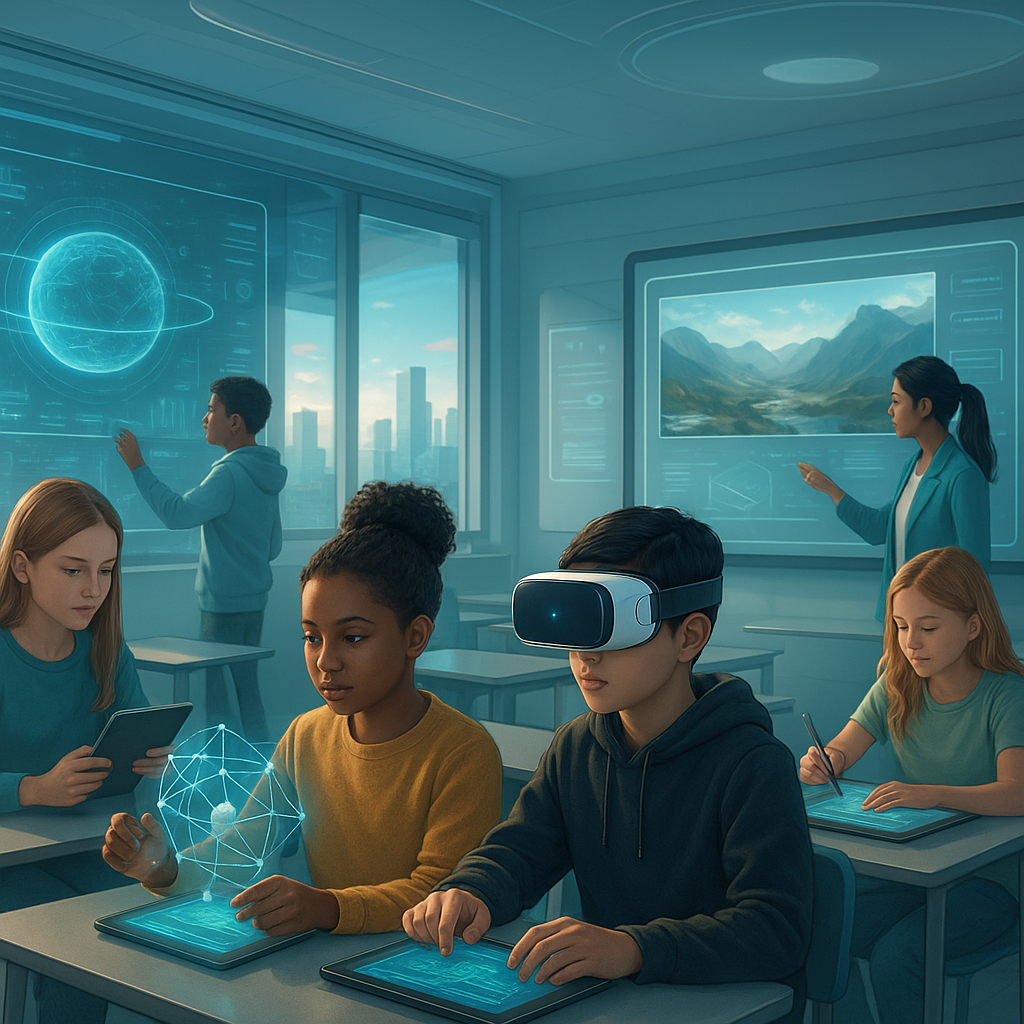
In a sunlit classroom in Helsinki, a group of students engages with a holographic simulation of the human brain, manipulating neural pathways in real-time. Half a world away, a village school in rural Kenya connects live with an expert in quantum computing, bridging a knowledge gap that once seemed insurmountable. These scenes underscore a profound truth: education in 2026 no longer fits the mold of traditional classrooms and textbooks. It is an adaptive, technology-driven ecosystem that continuously reshapes how knowledge is accessed, processed, and applied worldwide.
The transformation is not merely incremental but systemic. From personalized AI tutors to immersive virtual reality (VR) environments, the future of education is unfolding with unprecedented momentum. According to Statista data, global edtech investments surpassed $100 billion in 2025, reflecting the escalating commitment to this sector. This surge is not just about tech adoption; it signals a paradigm shift in pedagogy and learning dynamics.
“What we are witnessing is an educational renaissance where technology is not an add-on but the core enabler of personalized, inclusive, and lifelong learning,” says Dr. Lianne Gray, an education futurist at the International Learning Institute.
This article explores the forces driving this transformation, current developments shaping education in 2026, and the implications for learners, educators, and institutions worldwide.
From Chalkboards to Algorithms: Charting the Path to 2026
The foundations of modern education have long been rooted in standardized curricula, physical classrooms, and teacher-led instruction. These methods served societies well for centuries but revealed limitations as global demands shifted toward agility, creativity, and technological fluency.
The early 2020s marked a turning point, catalyzed by the COVID-19 pandemic which accelerated online learning adoption. This period revealed inequities in access and highlighted the potential of digital platforms. By 2024, massive open online courses (MOOCs) had evolved into fully accredited, interactive learning experiences, and hybrid models became commonplace.
Simultaneously, innovations in artificial intelligence began reshaping instructional design. Early AI systems focused on automating grading and administrative tasks. Today’s systems deliver adaptive learning paths tailored to individual cognitive styles and emotional states—achievements unimaginable just a few years ago.
Global educational policy responded accordingly. UNESCO’s 2023 Global Education Framework emphasized digital literacy, critical thinking, and equity, setting standards that many nations adopted. The omnipresence of mobile connectivity and cloud computing further democratized access, even in underserved regions.
“The last decade has redefined what it means to be educated. The journey from passive reception to active, personalized engagement was inevitable but demands new infrastructure and mindset shifts,” explains Professor Roshni Mehta of the Global Education Council.
Core Innovations Steering Education’s Transformation
Modern educational ecosystems rely on a confluence of technologies and pedagogical innovations. These developments have not only enhanced learning outcomes but also reimagined the very concept of education.
1. Artificial Intelligence and Machine Learning
- Adaptive Learning Platforms: AI-driven systems analyze learner data continuously, adjusting content difficulty and format to optimize understanding.
- Intelligent Tutoring Systems: Virtual tutors provide real-time feedback and scaffold complex concepts, mimicking one-on-one human interaction.
- Emotional Recognition: Using facial and voice analysis, AI gauges learner engagement, enabling dynamic pedagogical adjustments.
2. Immersive Technologies
- Virtual and Augmented Reality: Students engage with 3D models and simulations, enhancing comprehension of abstract concepts like molecular biology or history.
- Mixed Reality Labs: Hybrid environments blend physical and digital learning spaces, fostering collaboration across geographies.
3. Blockchain for Credentialing
- Secure Certificates: Tamper-proof digital diplomas and badges streamline verification processes for employers and institutions.
- Learning Portfolios: Learners maintain lifelong records of skills and achievements accessible globally.
These innovations are not isolated; their integration forms a cohesive learning ecosystem. For example, a student using an AI tutor in a VR environment with blockchain-verified credentials experiences a seamless, personalized education journey.
Comparatively, regions that invested early in these technologies, such as Scandinavia and South Korea, report higher student engagement and improved skill acquisition, according to OECD educational performance surveys.
2026: Milestones and Emerging Trends
As of 2026, several notable developments illustrate the maturation of educational innovation:
- Hybrid Learning as Standard: Over 70% of primary and secondary schools in OECD countries employ hybrid models combining in-person and virtual instruction.
- AI-Powered Curriculum Design: Leading institutions use AI to co-create curricula with educators, optimizing relevance and inclusivity.
- Micro-Credentials and Modular Learning: Learners accumulate stackable certifications aligned with industry needs, supported by platforms like edX and Coursera.
- Global Learning Communities: Students participate in cross-border projects facilitated by real-time translation AI, fostering intercultural competence.
- Emphasis on Soft Skills: Programs prioritize creativity, emotional intelligence, and resilience alongside traditional academics.
One striking example is the University of Toronto’s Learning Innovation Lab, which has pioneered AI-assisted peer review and collaborative problem-solving platforms, significantly increasing student satisfaction and retention.
Notably, equity remains a critical challenge. The digital divide persists in many low-income regions, though initiatives like UNESCO’s GIGA project aim to expand connectivity to schools worldwide.
For more insights on ongoing transformations, see our detailed coverage in Education in 2026: Transformations, Challenges, and the Road Ahead and How Online Learning Is Shaping Education’s Next Frontier.
Voices from the Field: Educators and Innovators Speak
Educators and policy makers provide invaluable perspectives on these sweeping changes.
“Personalization is no longer a luxury but a necessity. Our students demand learning experiences that reflect their unique strengths and goals,” remarks Sarah Kim, head of curriculum innovation at Seoul International School.
Industry leaders emphasize the importance of teacher empowerment alongside technology deployment.
“Technology can never replace the human element in education. Our focus is on augmenting teachers’ capabilities, not sidelining them,” states Michael Lopez, CEO of EduTech Solutions.
Experts also stress the growing importance of lifelong learning as the job market evolves rapidly. Programs targeting adult learners utilize AI-driven diagnostics to tailor pathways, ensuring workforce adaptability.
Furthermore, cross-sector collaborations between tech companies, governments, and educational institutions have become vital. Partnerships such as the Global EdTech Alliance illustrate how shared resources and expertise accelerate innovation diffusion.
The Road Ahead: Challenges and Opportunities to Watch
Looking forward, several critical factors will influence the trajectory of education’s future:
- Ethical AI Use: Balancing data privacy with personalized learning requires transparent governance and stakeholder trust.
- Bridging the Digital Divide: Ensuring equitable access to technology must remain a priority to avoid exacerbating disparities.
- Curriculum Evolution: Continuous alignment with emerging skills and societal needs is essential to maintain relevance.
- Teacher Training: Professional development must evolve to equip educators with skills to leverage new tools effectively.
- Global Collaboration: Expanding intercultural competencies through international learning networks will prepare students for interconnected futures.
Education’s future is undeniably exciting yet complex. Stakeholders must balance innovation with inclusivity, agility with depth, and technology with humanity.
As highlighted in Rethinking University: How Institutions Are Transforming Education and Opportunity, universities are reimagining their roles, emphasizing flexibility and learner-centric models. Likewise, Rethinking Learning: How 2026 Is Transforming Online Education Forever offers a comprehensive view of online learning’s evolution, crucial to understanding the broader educational landscape.
Ultimately, the future of education hinges on embracing change while honoring the core mission of fostering human potential.