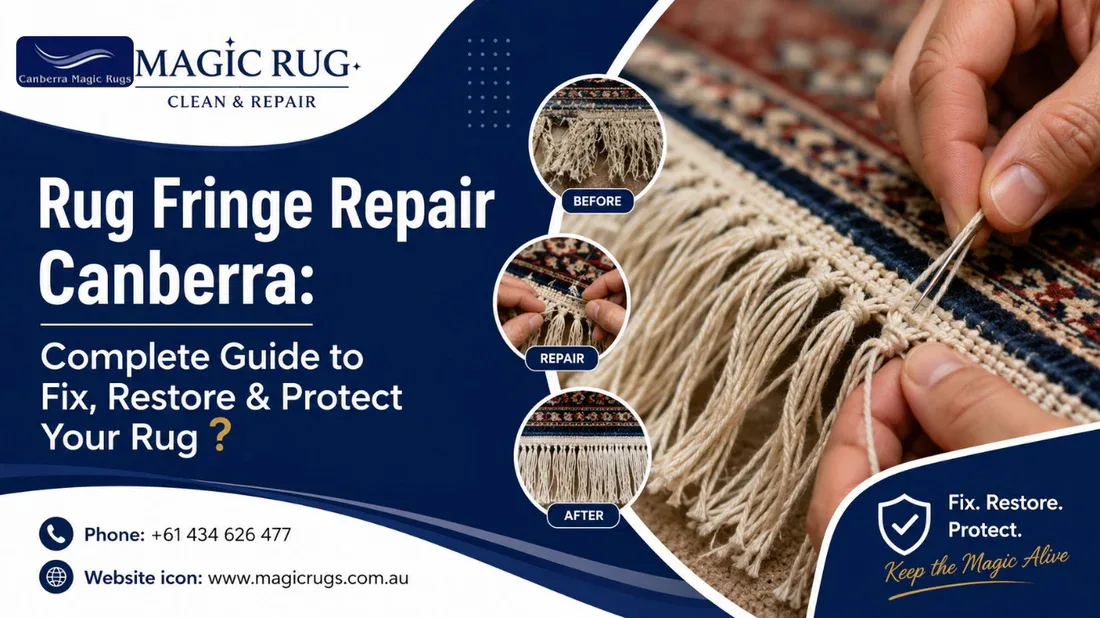
In case your rug fringe is damaged or the tassels are separating, Canberra rug fringe repair can assist you restore your rug's original beauty and lengthen its lifespan. Persian, wool, silk and contemporary rugs can be restored, cleaned and repaired by Magic Rugs with safe and effective methods. Their new guide will help you learn how to keep you rug looking elegant for years with timely rug fringe repair. For the full blog, click: www.magicrugs.com.au/blogs/tips/rug-fringe-repair-canberra-complete-guide-to-fix-restore-rug
Rug fringe repair in Canberra refers to the professional restoration of damaged, frayed, or missing rug fringes. Key methods include fringe re-twisting, overcasting, fringe replacement, and foundation re-knotting. Magic Rugs Canberra offers expert fringe repair using matched materials to preserve rug value, structure, and appearance.
Your rug's fringe is not just decorative — it holds the entire structure together.
Once fringe starts fraying, unravelling, or breaking off, the damage spreads fast. Within weeks, you can lose an inch or more of the actual pile. That's not a cosmetic issue. That's a structural one.
If you're in Canberra and dealing with damaged rug fringe, this guide covers everything: what causes it, what you can fix at home, and when to call a professional for rug fringe repair in Canberra.
What Is Rug Fringe — And Why Does It Matter?
Rug fringe is the knotted or looped extension at the ends of a rug. On handmade rugs, it's actually part of the warp threads — the very backbone of the weave.
This is the part most people treat as an afterthought. But here's the thing: once fringe damage reaches the pile, the rug can start losing knots and structure at an accelerating rate.
On machine-made rugs, fringe is often sewn on separately. On handmade Persian or Afghan rugs, it's integral to the foundation. The repair approach for each is completely different.
What does rug fringe repair involve?
Rug fringe repair involves restoring damaged, missing, or frayed fringe at a rug's ends. Repair types include fringe re-twisting, overcasting edges, replacing lost fringe with matched materials, and re-knotting foundation threads. Professional repair preserves both the structure and value of handmade rugs.
Top Causes of Rug Fringe Damage in Canberra Homes
Canberra's dry climate is tough on natural fibre rugs. Most fringe damage comes from a small number of predictable sources.
- Vacuum cleaners: Running a vacuum beater bar over fringe is the single most common cause of fraying. The rotating brush grabs individual threads and pulls them loose.
- Foot traffic: High-traffic zones — hallways, living rooms, entryways — cause fringe to mat, break, and thin over time.
- Pets: Dogs and cats chew, scratch, and tug on fringe. Even mild pet activity can accelerate fraying significantly.
- Furniture placement: Chair and table legs sitting on fringe edges crush and split thread bundles gradually.
- Improper cleaning: Over-wetting or harsh chemical cleaning can weaken fringe fibres — particularly on wool and silk rugs.
- Age and UV exposure: Canberra's sunny climate causes fringe to bleach and become brittle, especially on south-facing rooms with large windows.
Types of Rug Fringe Repair — What's Involved
Not all fringe damage is the same. The right repair method depends on the rug type, extent of damage, and material.
1. Fringe Re-Twisting
This is used when fringe threads are still intact but have become unravelled and splayed. A technician re-twists each thread bundle and secures the end with a small knot. This works best on early-stage fringe wear.
2. Overcasting / Whipstitching
When the pile has reached the edge and fringe is almost gone, overcasting creates a tightly bound edge that stops further unravelling. It's a protective technique — it won't restore lost length, but it prevents further damage effectively.
3. Fringe Replacement
For rugs where fringe is completely missing or heavily damaged beyond re-twisting, new fringe is sourced in matching material, colour, and texture and professionally attached. On high-quality Persian or Afghan rugs, this requires careful material matching to preserve the rug's authenticity.
4. Foundation Re-Knotting
The most complex repair. When fringe damage has spread into the pile — meaning actual knots are coming loose — foundation re-knotting is needed. Skilled artisans re-establish the warp and weft threads at the rug's end before reattaching or re-twisting fringe. This is heritage-level work and should only be done by experienced rug restorers.
5. End Binding / Serging
For machine-made rugs, end binding involves folding the end of the rug under and securing it with a strong whipstitch or serger. This creates a clean, fringe-free finish that stops unravelling cleanly.
Not sure which repair your rug needs?
Magic Rugs offers a free assessment for every rug. We inspect the damage, explain exactly what's needed, and quote honestly — no hidden fees.
Book Your Free Rug Inspection →
Contact Magic Rugs – Canberra’s most trusted rug experts
· Call Us: +61 434 626 477
· Email: [email protected]
· Website: magicrugs.com.au
· GMB Profile: https://share.google/Ta43LVhDWki5BFkPy
· Support: Fast help with rug selection, orders & delivery