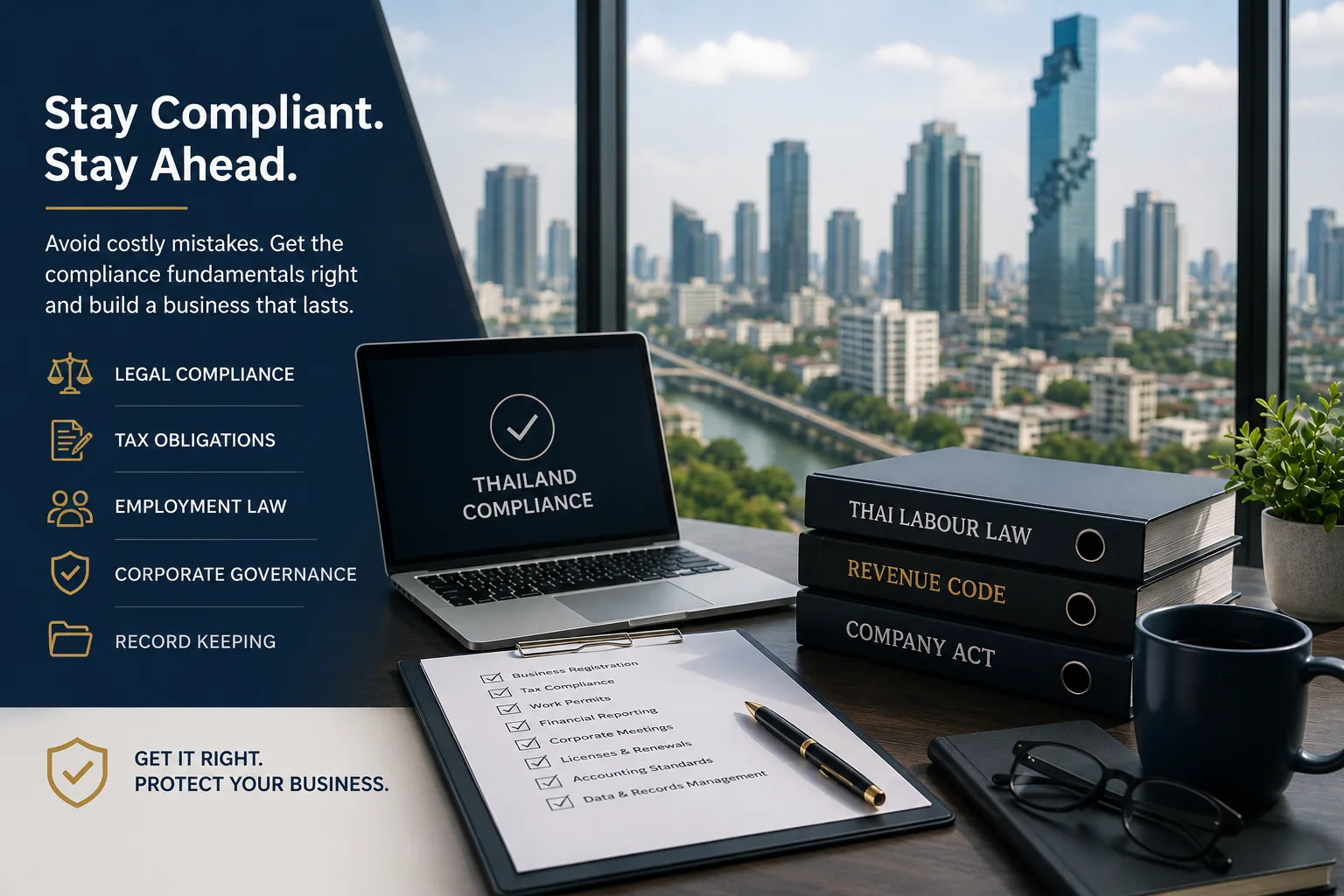
Thailand is one of the easiest places in Southeast Asia to open a company, but it is not always the easiest place to keep one running correctly. Founders and operations teams often focus so much energy on incorporation that they overlook what happens after the company is registered. Monthly filings, annual audits, labour law obligations, and tax deadlines do not pause once the business is up and running, and a surprising number of companies discover this the hard way, usually during a Revenue Department review or a bank account issue that could have been avoided entirely.
The problem is rarely a lack of effort. It is a lack of visibility. Thai regulations change more often than most foreign business owners expect, and requirements can differ depending on your industry, your ownership structure, and whether you hold BOI promotion. This is why growing numbers of companies are turning to established corporate compliance services thailand businesses can rely on year round, instead of trying to track every regulatory update internally. A proper legal advisory partner can catch problems long before they turn into fines, license issues, or forced closures.
The Filings Nobody Warns You About
New business owners in Thailand are usually well briefed on the incorporation process itself, but far less prepared for what comes next. Every Thai limited company has ongoing obligations that include monthly withholding tax filings, VAT submissions if registered, social security contributions for staff, and an annual audited financial statement submitted to the Department of Business Development. Miss enough of these and the company risks penalties, interest charges, and in serious cases, difficulty renewing licenses or work permits tied to the business.
What makes this tricky is that these deadlines rarely arrive with a warning. There is no single dashboard that tells a foreign director everything that is due and when. Companies that manage compliance well tend to have either a strong in-house finance team or an external partner tracking the calendar for them.
Corporate Structure Changes Compliance Requirements
Not every Thai company faces the same rules. A standard Thai Limited Company has different obligations than one operating under BOI promotion, which comes with its own reporting schedule to the Board of Investment in exchange for tax incentives and relaxed foreign ownership limits. Companies under the US Treaty of Amity, regional operating headquarters, and businesses in regulated industries such as finance or education each carry additional layers of oversight.
This matters because a compliance approach that works for one company structure can leave another completely exposed. A business assuming its obligations are identical to a competitor's, simply because they operate in the same industry, is a common and costly mistake.
Employment Law Is Its Own Minefield
Beyond tax and corporate filings, Thai labour law creates ongoing obligations that many foreign employers underestimate. Employment contracts, termination procedures, severance calculations, and workplace regulations all follow specific legal frameworks that differ meaningfully from what employers may be used to in their home country. Getting termination wrong, for example, can expose a company to significant severance liability even in cases that would be straightforward elsewhere.
Companies sponsoring foreign staff also need to keep payroll, social security registration, and internal documentation aligned with what labour officers expect to see during work permit renewals. A mismatch between what is on paper and what is actually happening inside the company is one of the fastest ways to trigger scrutiny.
Why Reactive Compliance Costs More Than Proactive Compliance
Many businesses only start paying close attention to compliance after something goes wrong, whether that is a late filing penalty, a rejected renewal, or an unexpected audit. By that point, the cost of fixing the issue is almost always higher than the cost of preventing it would have been. Reconstructing missing records, negotiating with regulators, or untangling a mismatched filing history takes far more time and money than simply staying current in the first place.
Proactive compliance is not just about avoiding fines. It also protects a company's ability to renew licenses, sponsor work permits, retain BOI incentives, and present clean financials to investors or banks. For companies planning to raise capital, sell equity, or expand regionally, a clean compliance history often becomes part of due diligence, and gaps discovered late in that process can derail deals entirely.
Building a System That Actually Holds Up
The businesses that handle Thai compliance well tend to share a few habits. They keep a single source of truth for every filing deadline, review their obligations whenever the company structure or headcount changes, and lean on experienced local advisors rather than assuming international best practices translate directly. Compliance in Thailand rewards consistency far more than it rewards effort applied in bursts after a problem surfaces.
Final Thoughts
Incorporating a company in Thailand is the easy part. Staying compliant afterward is where most businesses either build a durable operation or slowly accumulate risk without realizing it. Understanding the filings, the structural nuances, and the employment obligations that come with running a Thai entity puts a company in a far stronger position, whether that means avoiding penalties today or being ready for scrutiny during a future audit, license renewal, or investment round.