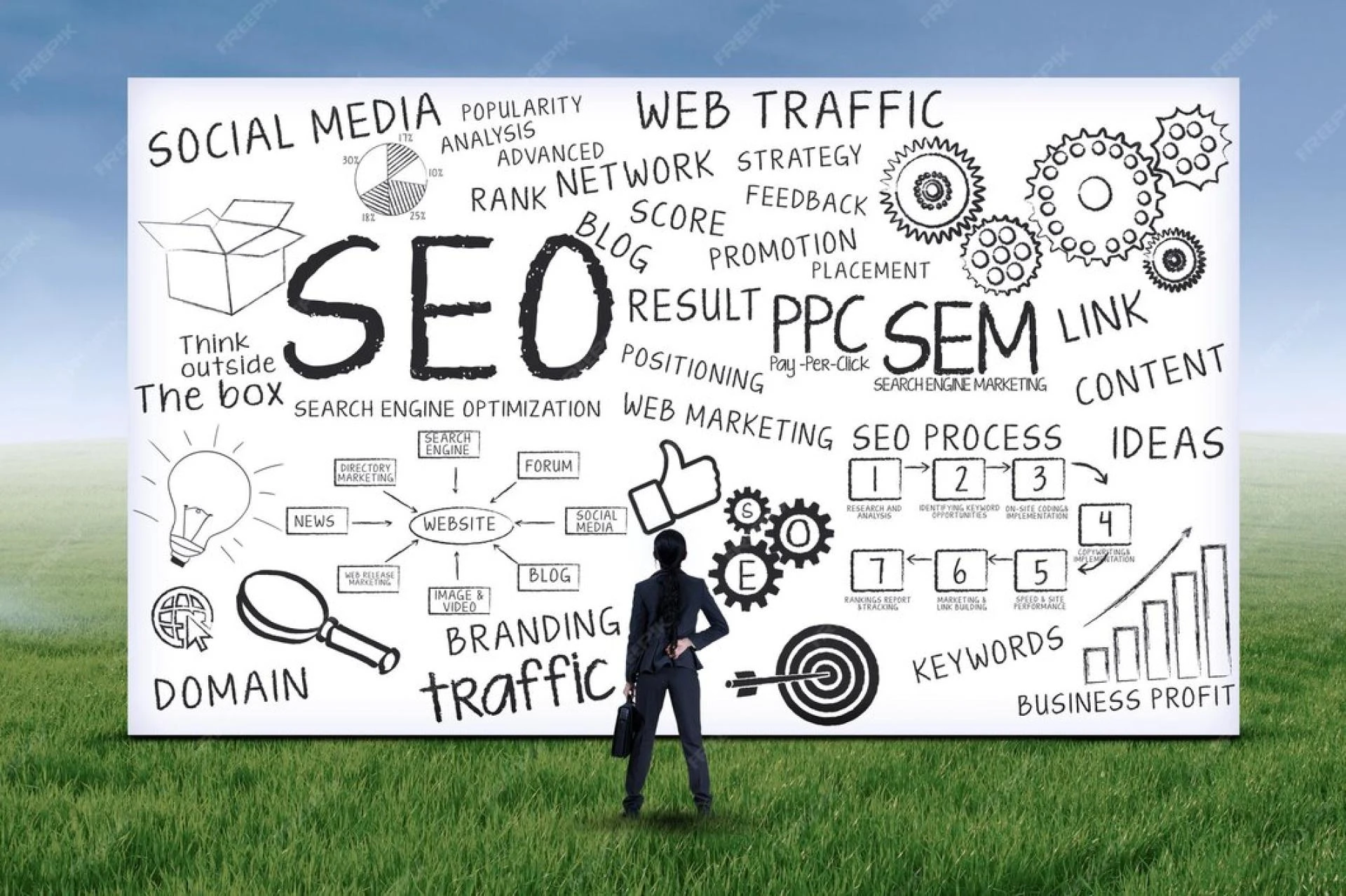
Many marketing techniques rely heavily on SEO and PPC. Why? We, as customers, rely largely on search engines. Understanding the difference between the two is critical to a comprehensive search marketing strategy.
Search advertising generates over 42% of worldwide digital marketing income each year, with Google alone processing more than 8.5 billion queries every day. Whether we are going someplace, researching a product/service, or making a purchase, our normal internet experience will include at least one search engine, if not more.
However, too frequently, companies manage their SEO and PPC operations separately. The well-known 'war of the SERPs' is sometimes exacerbated by the fact that distinct teams or agencies maintain the two channels and frequently compete with one another.
While there are some basic distinctions, finding a means to connect your efforts and approach search more holistically can produce outcomes that would not be achievable if operating in silos. While this may appear to be a straightforward task, there are always hurdles, such as establishing a clear, common knowledge of each channel's purpose and the benefits and drawbacks associated with it. There's a lot to unpack here.
What are PPC Services?
Pay-per-click (PPC) is a type of digital marketing in which marketers pay each time a user clicks on one of their adverts by bidding on keywords to appear in the search results.
The most frequent type of pay-per-click is done through search engines like Google and Bing, where consumers bid to appear at the top of the SERPs for certain keywords. The advertising provides a high level of flexibility since you can modify your targeting audience, bid strategy, budget, and ad wording in real time.
Businesses utilize PPC advertisements to guarantee that their products and services are highly visible when a user searches for exactly what they provide.
What is Search Engine Optimization (SEO)?
SEO is the process of enhancing your website so that it ranks higher in search results for queries entered into search engines such as Google and Bing.
However, search is getting increasingly fragmented as consumers search on social platforms (e.g., YouTube, TikTok) as well as shops (e.g., Amazon). As a result, SEO practices have taken on a new dimension.
Holistic SEO techniques rely on three major elements.
Technical: Optimizing your website's technical underpinnings to provide a better user experience while also allowing search engines to crawl, index, and rank its content.
Content: Work that focuses on written and multimedia material on your landing pages, optimizing it for visitors and search engines.
Off-page: Activities performed off-site to increase backlinks to your domain and boost its authority—each link to your site is seen as a 'vote of confidence' by search engines, passing on link equity that helps your pages rank better.
What's the difference between SEO and PPC services?
SEO is a collection of methods for improving your organic presence on search engine result pages and driving traffic to your website. PPC (pay-per-click) is a type of paid advertising in which websites pay each time a sponsored search, social, or display ad is clicked.
However, the correct answer to this issue is more difficult because there are numerous other significant distinctions, such as
- SEO and PPC differ in their approach to SERPs. PPC involves paid adverts, but SEO takes a time commitment.
- Channel performance is monitored using several KPIs.
- PPC offers immediate results, whereas SEO takes a longer-term approach. SEO focuses just on keywords, but PPC includes geo and demographic targeting options.
Should I invest in SEO or PPC Services?
If you need speedy results and have a modest budget, PPC should be your first focus. However, as a long-term strategy, investing in SEO services can assist in producing significant ROI in the future. Ideally, both channels should be used concurrently.
This is because combining PPC advertising with SEO may produce tremendous results that increase the efficacy of both strategies. By utilizing their core distinction of instant vs. long-term outcomes, you may boost your marketing efficiency while also maintaining a strong presence in the SERPs throughout the whole client journey.
Unfortunately, SEO and PPC services are frequently managed separately, as competitors or, worse, cannibals of each other's success. As a result, many people will prefer to stick to one path, working hard to attain success through the channel that they believe works best for them. Furthermore, dedicated SEO and PPC agencies provide these services solely, shunning the other and feeding the long-running SERP conflict between organic and paid.
It doesn't have to be this way, and, in my opinion, it shouldn't. Integrating your SEO and PPC efforts properly may provide outcomes that you couldn't get without them working together, and the data you can acquire from this marriage can be a strong tool in its own right.
The Bottom Line
The basic takeaway is that you must incorporate PPC and SEO into your digital marketing approach. PPC can produce faster results, so you can conduct a PPC campaign to see which keywords convert better, and then use SEO to rank for those keywords. Use PPC services for high-converting products and SEO for low-budget promotion. SEO takes effort, but the rewards are long-lasting, making it ideal for long-term growth. With PPC, if you stop paying for clicks, traffic will cease.
Are you ready to launch your campaign? Our PPC services will help you to fully use all of the benefits. At Eye4Future, we can help you select keywords, establish bids, create advertisements, and do so much more!