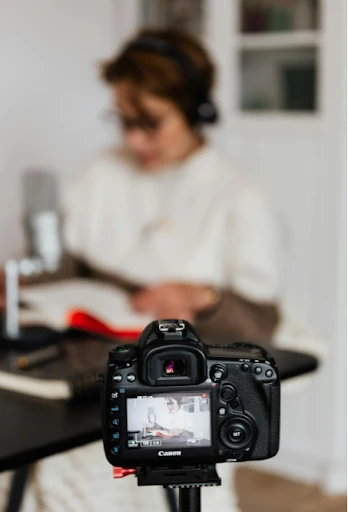
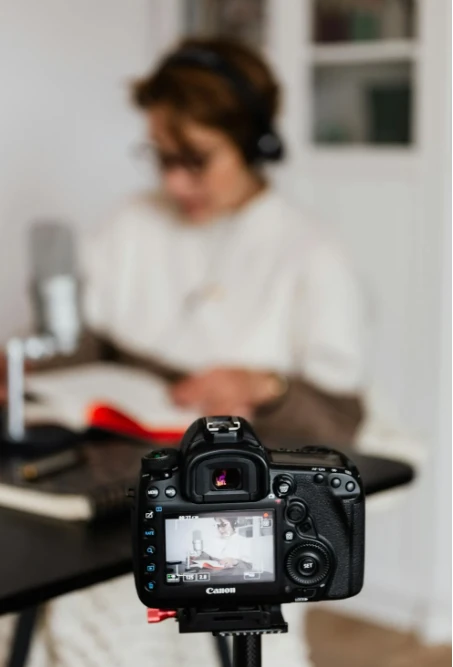
If you ask most creators why their early videos look off, they usually talk about resolution or lighting. But the real issues almost always come down to three things. The footage is shaky, the sound is weak, or the camera keeps losing focus. A good vlogging camera fixes these problems so you can focus on the story.
Stability keeps viewers watching
People will forgive a slightly messy frame. They will not forgive motion that makes them uncomfortable. Whether you are walking through a market or filming at your desk, stability decides how professional your video feels.
This is where camera design matters more than specs. A compact body is easier to hold for long periods and works better with small tripods and gimbals. Cameras like the EOS R50 V are clearly built with this in mind. It is light, well-balanced, and quick to handle, making handheld shooting feel natural rather than tiring. Add intuitive vertical shooting, and you won't have to fight the camera when switching between YouTube and short-form platforms.
Audio builds trust
Bad audio kills good content. Viewers might not know what bit depth is, but they instantly know when your voice sounds hollow or clipped. A serious vlogging camera must support clean audio workflows, not just record video.
Monitoring tools such as zebra and false colour are usually associated with exposure, but they also change how you approach recording. When you know your levels are right visually, you stop guessing and start focusing on delivery. Pair that with proper mic inputs and simple controls, and audio becomes something you manage confidently instead of fixing later.
Autofocus that understands people
Focus is emotional. When the camera drifts away from your eyes, the connection with the viewer breaks. For vloggers who shoot solo, autofocus has to feel almost human.
The EOS R50 V features Dual Pixel CMOS AF II, designed to track faces and eyes with accuracy rather than hunting back and forth. It is the difference between feeling relaxed in front of the camera and constantly checking if you are still sharp. For creators who also shoot stills, the same system supports fast bursts up to 15 frames per second, which makes it useful beyond video.
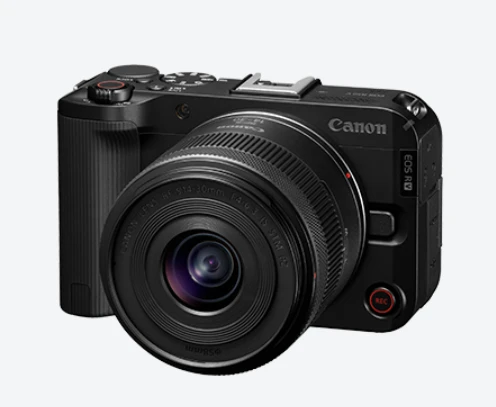
A camera that adapts to how you work
A modern vlogging camera is not just a capture device. It is part of a workflow. Features such as internal 10-bit 4K recording with Canon Log 3 and real-time LUT preview let you see your final look while shooting rather than imagining it. That is a huge mental shift. You stop thinking like an editor and start thinking like a storyteller.
Add a dedicated live stream button and customisable controls, and the camera will feel like it is working with you rather than asking you to dig through menus.
The apparent difference
Stability, audio, and autofocus are not exciting on paper. But together they decide whether your content feels watchable or forgettable. A vlogging camera that gets these three right, like the EOS R50 V, does not just record your day. It helps you show it the way it deserves to be seen.