Reimagining Skylines: A Glimpse into 2026's Architectural Revolution
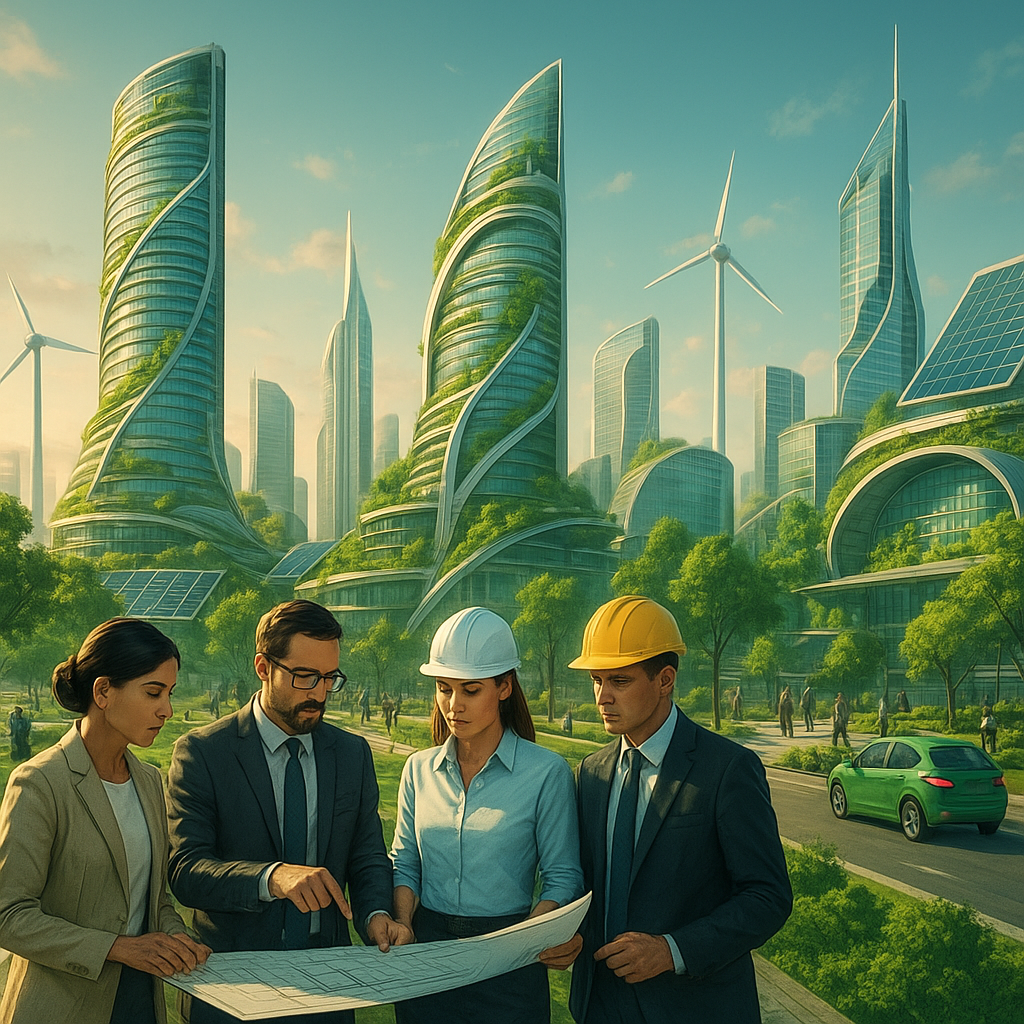
On a crisp spring morning in 2026, the skyline of Singapore showcases something entirely new. Towering structures, their facades shimmering with dynamic solar glass, breathe and adapt to sunlight, filtering heat while generating energy. Streets below hum with autonomous vehicles weaving seamlessly past verdant vertical gardens embedded in building exteriors. This scene is not a distant utopia but a concrete reality signaling how architecture is rapidly evolving. These changes reflect profound shifts in design philosophy, material science, and urban planning strategies, driven by urgent environmental concerns and technological breakthroughs.
Architecture has always mirrored societal values and technological capacities. Today, it confronts unprecedented challenges: climate change, population growth, urban density, and the demand for resilience. The solutions emerging in 2026 are multifaceted, blending sustainability, automation, AI-driven design, and new construction methodologies. These innovations promise to transform not just individual buildings but entire communities and real estate markets worldwide.
Understanding this transformation requires a deep dive into the trends reshaping architecture’s future. From the origins of green building to the latest in smart material applications, the journey reveals how the industry is retooling itself for a radically different world.
From Foundations to Futures: Tracing Architecture’s Evolution to 2026
Architecture’s trajectory over the last century reveals a continuous interplay between necessity and innovation. Post-World War II reconstruction accelerated the use of concrete and steel, enabling skyscrapers to dominate cityscapes. Yet, with the rise of industrialization came environmental degradation. The 1970s energy crises sparked the first wave of sustainable design, emphasizing insulation and energy efficiency.
By the early 21st century, green architecture gained momentum, introducing LEED certifications and renewable materials. However, these early efforts were often incremental and costly. The real paradigm shift began in the 2020s, when digital tools like Building Information Modeling (BIM), parametric design, and AI-driven simulations became mainstream. These technologies allowed architects to optimize buildings for energy use, structural integrity, and occupant comfort with unprecedented precision.
Simultaneously, climate change intensified demand for buildings that could withstand extreme weather events. This led to innovations in resilient design, such as flood-adaptive structures and earthquake-resistant frameworks. Urban planners began integrating nature-based solutions, like green roofs and permeable pavements, to mitigate urban heat islands and stormwater runoff.
“Sustainability is no longer a feature; it’s the foundation of all architectural innovation,” says Dr. Lila Fernandez, a leading expert in resilient urban design. “Our buildings must be living systems that interact positively with their environment.”
This context sets the stage for the architectural breakthroughs defining 2026 and beyond, where technology and ecological mindfulness converge to create smarter, more adaptive environments.
Core Innovations Powering Architectural Transformation
Several technological and scientific advancements underpin the current architectural revolution. They are shaping how buildings are conceived, constructed, and operated.
- AI-Driven Design Optimization: Advanced AI algorithms analyze site conditions, climate data, and user behavior to generate designs that optimize energy efficiency, daylighting, and spatial flow. Firms like ArchiTech Solutions report that AI integration reduces design iteration times by up to 40%, accelerating project delivery and reducing costs.
- Smart and Responsive Materials: Innovations in materials science have introduced adaptive facades that can modulate transparency, thermal conductivity, and even self-heal minor cracks. Examples include thermochromic glass and bio-concrete infused with bacteria that repair microfractures.
- 3D Printing and Modular Construction: Large-scale 3D printing enables rapid, precise construction with reduced waste. Modular systems allow prefabricated components to be assembled onsite quickly, improving quality control and reducing labor shortages prevalent in many regions.
- Energy-Positive Buildings: Moving beyond net-zero energy, buildings now generate surplus energy via integrated photovoltaics and wind turbines. This energy feeds back into smart grids, supporting local communities and reducing reliance on fossil fuels.
- Immersive Virtual and Augmented Reality: VR and AR tools facilitate real-time collaboration among architects, engineers, and clients, enabling immersive walkthroughs and design tweaks before construction begins.
These advances are not isolated; they form an ecosystem that empowers architects to create structures responsive to environmental, social, and economic dynamics.
2026 Milestones: Current Developments Shaping Real Estate and Architecture
This year marks several key developments that demonstrate architecture’s new direction. Notably, the completion of the Horizon Arcology in Dubai exemplifies the fusion of sustainability, technology, and urban density. This mixed-use mega-structure integrates vertical farming, renewable energy generation, and AI-managed environmental controls, housing 20,000 residents within a self-sufficient ecosystem.
In Europe, the Green Spine Project in Milan showcases the successful integration of bio-responsive facades that adjust to seasonal variations, reducing energy consumption by 35% compared to traditional buildings. This project has influenced zoning regulations across the continent, encouraging municipalities to mandate adaptive building technologies.
Moreover, the rise of digital twins—virtual replicas of physical assets—is reshaping building management. Real estate firms now employ digital twins to monitor structural health, optimize maintenance, and forecast energy use, significantly extending building lifespans and reducing operational costs.
These advancements align with broader real estate trends documented in Why 2026 Marks a Radical Turning Point in Architecture and Real Estate. The article highlights how integrated technology and sustainability criteria are driving investment decisions, reshaping asset valuations, and influencing tenant preferences.
“The future tenant demands more than four walls; they want buildings that enhance well-being and minimize environmental impact,” notes Amelia Chen, CEO of GreenHabitat Realty. “This shift is fundamentally altering real estate development strategies.”
Industry Voices: Expert Perspectives on Architecture’s Next Frontier
Architects, developers, and urban planners offer varied but converging views on the future trajectory of their field. According to Javier Morales, chief architect at EcoBuild International, the integration of AI and robotics will become indispensable: “Automation will not replace creativity but augment it, allowing us to explore forms and functions previously unimaginable.”
Meanwhile, sustainability consultant Priya Nair emphasizes social equity: “Future architecture must address inclusivity, ensuring affordable housing incorporates green technologies without escalating costs. This balance is crucial for global urban resilience.”
From a policy perspective, governments worldwide are increasingly incentivizing green building certifications and penalizing carbon-intensive construction. The U.S. Green Building Council reports that over 70% of new commercial projects in North America meet or exceed net-zero standards in 2026, a dramatic increase from just 15% in 2020.
Such momentum reflects a growing consensus that architecture is a critical lever in combating climate change and enhancing quality of life. The real estate sector responds accordingly, as discussed in How Architecture Shapes Real Estate’s Future Amid Global Shifts, which details how sustainable design influences market competitiveness and investor confidence.
Looking Ahead: What to Watch in Architecture and Real Estate
As we peer beyond 2026, several trends warrant close attention. First, the proliferation of decentralized, community-focused developments promises to redefine urban living. These "15-minute cities" prioritize walkability, mixed-use spaces, and local resource loops, facilitated by smart infrastructure.
Second, the continued advancement of bioengineered materials could revolutionize construction. Researchers are exploring carbon-negative concrete alternatives and living building skins that clean air and produce oxygen. Adoption at scale could drastically reduce construction’s environmental footprint.
Third, the convergence of AI with blockchain may transform property transactions and building management, enhancing transparency, security, and efficiency in real estate markets.
“The next decade will see architecture not just as a static art but as a dynamic ecosystem,” predicts Dr. Fernandez. “Buildings will sense, adapt, and evolve with their inhabitants and environment.”
For investors, developers, and policymakers, these insights underscore the importance of embracing innovation while prioritizing sustainability and social inclusiveness. Strategic foresight will be essential to navigate shifting regulatory landscapes and evolving consumer expectations.
In sum, the future of architecture is unfolding as a complex, exciting synthesis of technology, ecology, and human-centric design. As this transformation accelerates, staying informed through expert analysis and case studies is imperative, as highlighted in our related coverage on Rethinking Urban Spaces and How Architecture Is Shaping Real Estate’s Next Frontier.
Case Studies: Pioneering Projects Illustrating Architectural Futures
Two exemplary projects vividly demonstrate the future trajectory of architecture.
- The Horizon Arcology, Dubai: Spanning 1.5 million square meters, this self-contained vertical city combines residential, commercial, and agricultural spaces. It employs AI-powered energy management systems and advanced robotics for maintenance. Solar glass panels covering 60% of the facade provide 120% of the building’s energy needs, exporting surplus to the city grid.
- Green Spine, Milan: This 80-story tower incorporates living facades with plant species chosen for air purification and insulation. Its bio-responsive skin adjusts to humidity and light, optimizing energy use seasonally. The project’s success has inspired EU-wide incentives for similar adaptive cladding technologies.
Both projects highlight how architecture is evolving into an integrative discipline, balancing aesthetics, performance, and environmental stewardship at scale.
These developments are not isolated innovations but part of a systemic shift influencing real estate valuation, urban policy, and community well-being.