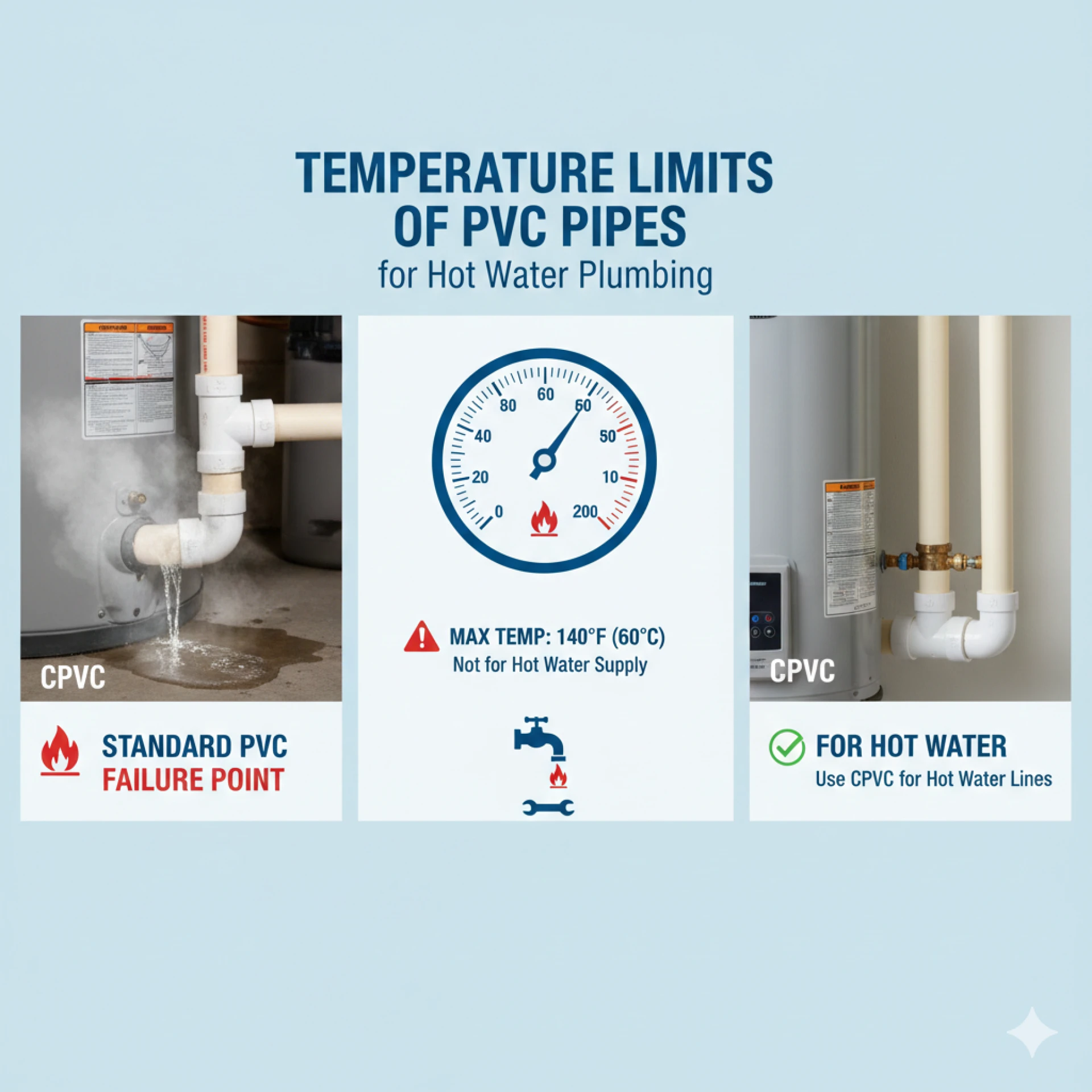
When planning a plumbing project, especially for enterprise plumbing systems, understanding the temperature limits of materials is crucial. One common question is whether you can use pvc pipe for hot water applications without compromising performance or safety. For many commercial and residential projects, enterprise plumbing engineers and contractors need clarity on how PVC behaves under heat and when alternative materials are more suitable. In this blog, we’ll explore how temperature affects PVC, what limits you must respect, and when to choose other piping options for hot water delivery.
What Is PVC and Why Temperature Matters
PVC (polyvinyl chloride) is a widely used thermoplastic material common in cold water and drainage systems due to its strength, corrosion resistance, and affordability. However, when it comes to pvc pipe for hot water, thermal performance becomes a concern. Unlike materials engineered for higher temperatures (like CPVC or metal alloys), standard PVC softens and loses mechanical strength as temperatures rise. According to materials data, PVC begins to deform around 140°F (60°C), and prolonged exposure above this range significantly reduces its structural integrity.
For enterprise plumbing projects where hot water supply lines are mandatory — such as in commercial kitchens, hotels, or institutional buildings — selecting the correct pipe material isn’t just good practice; it’s a compliance requirement.
PVC Pipe Temperature Limits for Hot Water
Maximum Safe Operating Temperature
Standard PVC is rated for liquids at or below about 140°F (60°C) for continuous use. Beyond this point, PVC becomes softer and more prone to creep or deformation under pressure. This means that using pvc pipe for hot water above this limit could lead to leaks, deformation, or even failure of the pipeline. In comparison, specialized materials like CPVC (chlorinated PVC) are designed to withstand higher temperatures — up to about 180°F (82°C) — making them much more suitable for hot water service.
Effect on Pressure Ratings
Temperature doesn’t just impact deformation; it also affects pressure rating. As the temperature of water increases, PVC’s tensile strength drops. In enterprise plumbing systems with higher operating temperatures, this means reduced allowable pressure, which could be a safety concern if not properly accounted for in design and material selection.
When to Use Alternatives to PVC
If your project involves sustained hot water service — for example, in radiant floor heating, commercial restroom supply, or industrial hot water loops — avoiding pvc pipe for hot water is a wise decision. Instead consider:
- CPVC piping, engineered for higher temperatures
- PEX tubing, flexible and heat tolerant
- Copper or stainless steel, traditional high-temperature options
These alternatives maintain structural integrity and safety under heat stress, making them better suited for hot water plumbing.
Final Thoughts: Smart Material Choices Matter
Understanding the temperature limits of PVC pipes for hot water plumbing helps ensure your system’s durability, safety, and compliance. While standard PVC excels in cold water and vent applications, it’s not designed for continuous hot water service — especially in enterprise-scale installations. Selecting the right material from the start protects your investment, enhances performance, and avoids costly maintenance down the line.
If you’re designing or upgrading your enterprise plumbing systems, always consult piping standards and qualified professionals to choose materials that match your temperature and pressure requirements.