
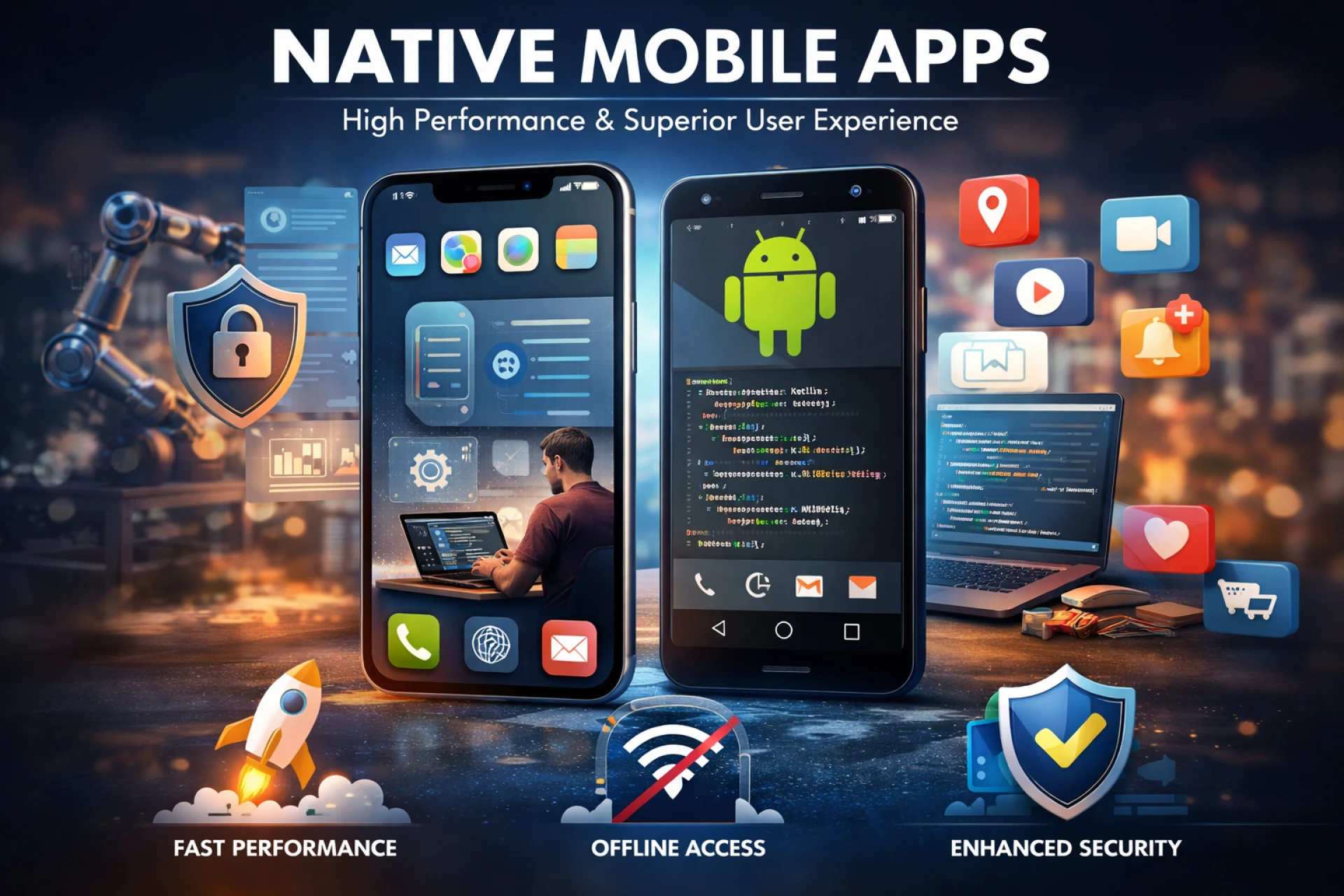
In today’s mobile-first world, the way businesses interact with users has fundamentally changed. Smartphones are no longer just communication devices—they are central hubs for shopping, entertainment, banking, healthcare, and productivity. As user expectations continue to evolve, businesses must deliver fast, reliable, and engaging digital experiences. This is where native mobile apps come into play.
Native mobile apps have become the preferred choice for organizations that prioritize performance, scalability, and user satisfaction. Unlike other development approaches, native apps are designed specifically for a single operating system, allowing them to fully leverage the capabilities of the device. This results in a seamless experience that feels intuitive, responsive, and deeply integrated into the user’s daily life.
This guide explores native mobile apps in a detailed and descriptive manner, helping you understand not just what they are, but why they matter and how they can transform your business.
Understanding Native Mobile Apps in a Practical Context
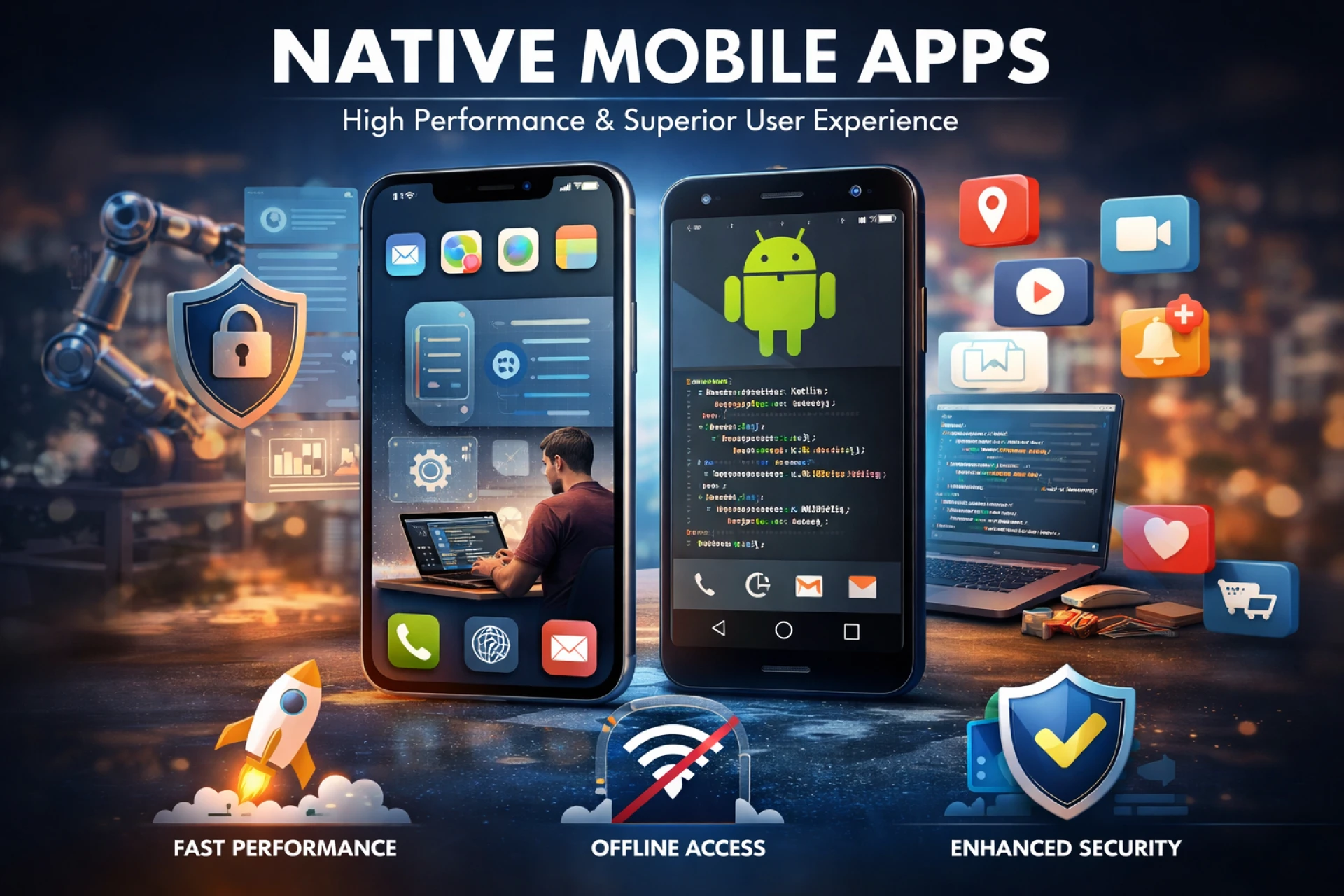
At its core, a native mobile app is built specifically for a particular platform, such as iOS or Android. Instead of using a single codebase to run across multiple platforms, native development focuses on creating an application tailored to one environment. This approach ensures that every feature, interaction, and visual element aligns perfectly with the platform’s standards.
For example, an iOS app is typically developed using Swift or Objective-C within Apple’s Xcode environment, while an Android app is built using Kotlin or Java through Android Studio. These tools and languages are optimized for their respective ecosystems, allowing developers to create applications that perform efficiently and integrate smoothly with system-level features.
What truly distinguishes native apps is their ability to communicate directly with the device’s hardware and operating system. This direct interaction eliminates the need for additional abstraction layers, resulting in faster execution, smoother animations, and more reliable performance.
Why Native Apps Feel Faster and More Responsive
One of the most noticeable advantages of native mobile apps is their speed. When users open a native app, they often experience instant loading, fluid navigation, and highly responsive interactions. This is not by accident—it is the result of how native apps are built and executed.
Because native apps are compiled into machine code, they can communicate directly with the device’s processor. This eliminates delays caused by intermediaries, which are common in web or hybrid applications. As a result, tasks such as scrolling through content, loading images, or processing user input happen almost instantly.
This level of performance is especially critical for applications that rely on real-time interactions. For instance, gaming apps, video streaming platforms, and financial trading applications require rapid data processing and minimal latency. Native development ensures that these demands are met without compromising user experience.
The Role of User Experience in Native App Success
User experience is often the deciding factor between an app’s success and failure. Even if an application offers powerful features, users are unlikely to continue using it if it feels slow, confusing, or inconsistent. Native apps excel in this area by adhering to platform-specific design principles.
On iOS, developers follow Apple’s Human Interface Guidelines, which emphasize clarity, simplicity, and depth. On Android, Material Design provides a structured approach to layout, motion, and interaction. By aligning with these guidelines, native apps create a sense of familiarity for users.
This familiarity reduces the learning curve and allows users to navigate the app effortlessly. Buttons behave as expected, gestures feel natural, and transitions appear smooth. These small details collectively contribute to a polished and enjoyable experience, which ultimately leads to higher user retention and satisfaction.
Deep Integration with Device Capabilities
Another defining characteristic of native mobile apps is their ability to fully utilize device features. Modern smartphones are equipped with a wide range of sensors and hardware components, including cameras, GPS modules, microphones, accelerometers, and biometric authentication systems.
Native apps can access these features directly, enabling functionalities that are simply not possible—or not as effective—in other types of applications. For example, a fitness app can track physical activity using motion sensors, while a navigation app can provide real-time directions using GPS data. Similarly, banking apps can enhance security through fingerprint or facial recognition.
This deep integration not only enhances functionality but also creates more personalized and engaging user experiences. By leveraging device capabilities, businesses can deliver value in ways that feel natural and intuitive to users.
Offline Functionality and Reliability
In many parts of the world, including regions with inconsistent internet connectivity, offline functionality is a crucial feature. Native apps are designed to handle such scenarios effectively by storing data locally on the device.
This means users can continue to access certain features even without an active internet connection. For example, a note-taking app can allow users to create and edit notes offline, syncing the data once connectivity is restored. Similarly, e-commerce apps can store browsing history or cart information locally.
This level of reliability ensures that users are not entirely dependent on network conditions, making native apps more versatile and user-friendly.
Security Advantages of Native Apps
Security is a top concern for both users and businesses, especially when dealing with sensitive data such as personal information, financial transactions, or health records. Native apps offer robust security features by leveraging the built-in protections of the operating system.
These protections include secure data storage, encrypted communication, and authentication mechanisms. Additionally, native apps can implement advanced security measures such as biometric verification and multi-factor authentication.
Because native apps are developed specifically for a platform, developers have greater control over security implementations. This reduces vulnerabilities and ensures compliance with industry standards, making native apps a preferred choice for sectors like banking, healthcare, and enterprise solutions.
Business Impact: Why Companies Prefer Native Apps
From a business perspective, investing in native mobile app development can deliver significant long-term benefits. One of the most important advantages is improved customer engagement. Native apps provide a faster and more personalized experience, which encourages users to spend more time within the app.
This increased engagement often translates into higher conversion rates. Whether it’s completing a purchase, booking a service, or subscribing to a plan, users are more likely to take action when the experience is smooth and hassle-free.
Native apps also play a key role in building brand loyalty. A well-designed app that consistently performs well creates a positive impression, encouraging users to return. Over time, this leads to stronger relationships and increased customer lifetime value.
The Development Journey: From Idea to Launch
Creating a native mobile app is a structured process that involves multiple stages, each contributing to the final product’s success. It begins with idea validation, where businesses identify their target audience, define the app’s purpose, and analyze market demand.
Once the concept is validated, the next step is planning and strategy. This involves selecting the platform, defining features, and creating a development roadmap. A clear strategy ensures that the project stays on track and meets its objectives.
The design phase focuses on creating a user-friendly interface. Designers develop wireframes and prototypes to visualize the app’s layout and interactions. This step is crucial for ensuring a seamless user experience.
Development follows, where the app is built using platform-specific tools and languages. This phase includes both frontend and backend development, integrating APIs, databases, and third-party services.
Testing is conducted to identify and fix any issues. This includes functional testing, performance testing, and security testing. Once the app meets quality standards, it is submitted to app stores for approval and launched to the public.
Cost Considerations and Investment Value
The cost of developing a native mobile app can vary widely depending on several factors, including complexity, features, and platform choice. While native development may require a higher initial investment compared to other approaches, it often delivers better long-term value.
This is because native apps tend to perform better, attract more users, and generate higher revenue. Additionally, their scalability allows businesses to expand features and accommodate growth without major limitations.
For companies aiming to build high-quality, future-ready applications, the investment in native development is often justified by the returns it delivers.
Challenges and How to Overcome Them
Despite their advantages, native apps come with certain challenges. One of the primary concerns is the need to develop separate applications for different platforms, which can increase both cost and development time.
However, this challenge can be addressed by prioritizing platforms based on target audience or by adopting a phased approach. Businesses can start with one platform and expand to others as they grow.
Another challenge is maintenance, as updates must be implemented separately for each platform. This can be managed through efficient development practices and the use of shared backend systems.
The Future of Native Mobile Apps
As technology continues to evolve, native mobile apps are expected to become even more powerful and intelligent. Emerging technologies such as artificial intelligence, augmented reality, and 5G connectivity are already shaping the future of mobile applications.
AI-driven personalization will enable apps to deliver tailored experiences based on user behavior, while AR will create immersive interactions in industries like retail and real estate. Faster internet speeds through 5G will further enhance app performance, enabling real-time data processing and seamless connectivity.
These advancements will continue to strengthen the position of native apps as the leading choice for mobile development.
Final Thoughts
Native mobile apps represent the pinnacle of mobile development, offering a combination of performance, reliability, and user experience that is difficult to match. While they require careful planning and investment, the benefits they provide make them an essential tool for businesses aiming to succeed in a competitive digital landscape.
By choosing native development, businesses can create applications that not only meet user expectations but exceed them, delivering value that drives engagement, loyalty, and growth.