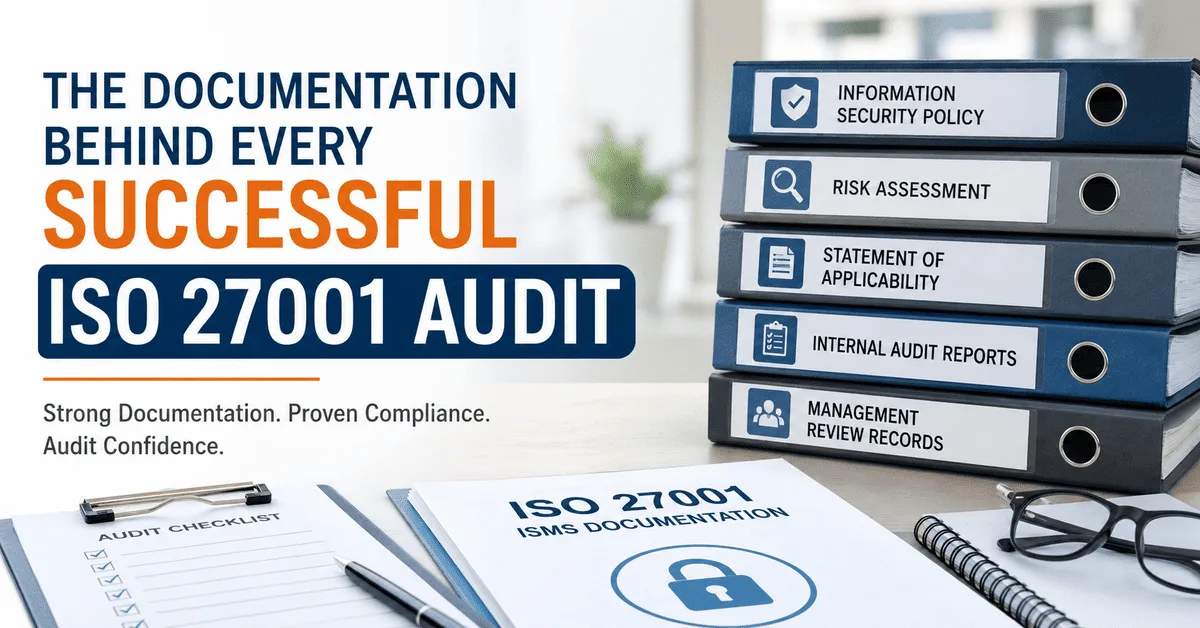
A successful ISO 27001 certification audit is rarely the result of last-minute preparation. Behind every well-executed audit lies a structured set of documents, records, and controls that demonstrate an organization's commitment to information security. Whether you are implementing a new Information Security Management System (ISMS) or preparing for surveillance audits, documentation plays a critical role in proving compliance and operational effectiveness.
One of the first things auditors evaluate during an ISO 27001 certification audit is the quality and completeness of your ISO 27001 documents. These documents provide evidence that your organization has established, implemented, maintained, and continually improved its information security framework in accordance with ISO 27001 requirements.
Why Documentation Matters in ISO 27001
The ISO 27001 certification process is built around documented evidence. Organizations must demonstrate that security controls are not only defined but also actively managed and monitored. Effective documentation creates consistency, improves accountability, and helps employees understand their responsibilities within the ISMS.
Key documentation typically includes:
- Information Security Policy
- ISMS Scope Statement
- Risk Assessment Methodology
- Risk Treatment Plan
- Statement of Applicability (SoA)
- Internal Audit Reports
- Management Review Records
- Corrective Action Reports
These documents help auditors verify that security objectives are supported by appropriate policies, procedures, and operational controls.
Defining the Scope of Your ISMS
A clearly defined scope is essential for audit success. Many organizations use an ISO 27001 ISMS scope template to identify the business units, processes, technologies, and locations covered by the management system.
An accurate scope statement prevents misunderstandings during the audit and ensures that all relevant assets and risks are considered. It also serves as a foundation for risk management activities and control implementation.
Risk Assessment as the Foundation
Risk management remains one of the most important elements of ISO 27001. A thorough risk assessment enables organizations to identify threats, vulnerabilities, and potential impacts on information assets.
In some industries, organizations may incorporate probabilistic risk assessment techniques to evaluate the likelihood and severity of security events. This approach supports more informed decision-making and helps prioritize resources where risks are highest.
The outcomes of the risk assessment directly influence the controls selected within the ISMS and provide justification for security investments.
The Importance of Policies, Procedures, and Corrective Actions
Strong ISO 27001 policies and procedures establish a consistent approach to managing information security across the organization. They define responsibilities, operational processes, and security expectations for employees and stakeholders.
However, documentation should not remain static. During audits, nonconformities may be identified that require corrective measures. A formal corrective action request process ensures that issues are investigated, root causes are identified, and improvements are implemented effectively.
Organizations should also maintain a detailed Corrective Action Report to document actions taken, responsibilities assigned, and evidence of completion. These records demonstrate a commitment to continual improvement—one of the core principles of ISO 27001.
Preparing for Audit Success
Organizations that maintain organized documentation are generally better prepared for certification and surveillance audits. Regular internal audits, management reviews, and documentation updates help ensure ongoing compliance and readiness.
For additional guidance on audit preparation, organizations can review an ISO 27001 ISMS Audit Guide to understand auditor expectations, evidence requirements, common nonconformities, and best practices for certification readiness.
Conclusion
Successful ISO 27001 audits are built on more than technical controls. They depend on accurate ISO 27001 documentation, comprehensive risk assessment activities, well-defined policies and procedures, and a mature and resilient information security management system. By maintaining complete and up-to-date records, organizations can streamline the ISO 27001 certification process, reduce audit findings, and strengthen overall information security performance.