By Aero NZ - New Zealand’s Leading Automatic Gate Company
If someone had told us ten years ago that people would be opening gates, doors and car parks with their phones, many would have thought it sounded a bit futuristic.
Now it's becoming normal.
The way people access buildings is changing quickly, and from what we're seeing across New Zealand and internationally, the next five years could bring even bigger changes than the last ten.
The interesting thing is that most of these changes are not happening because people want more technology. They're happening because people want less friction.
Nobody wants to carry five different access cards. Nobody wants to wait at a gate because someone forgot their swipe card. Nobody wants to manage hundreds of keys or manually update access permissions every time a staff member leaves.
People want access systems that are simple, secure and easy to manage.
Looking ahead to 2030, here's what we think buildings are likely to look like.
Your Phone Will Become Your Key
This is probably the easiest prediction to make because it's already happening.
Physical keys aren't disappearing completely any time soon, but mobile credentials are becoming increasingly common.
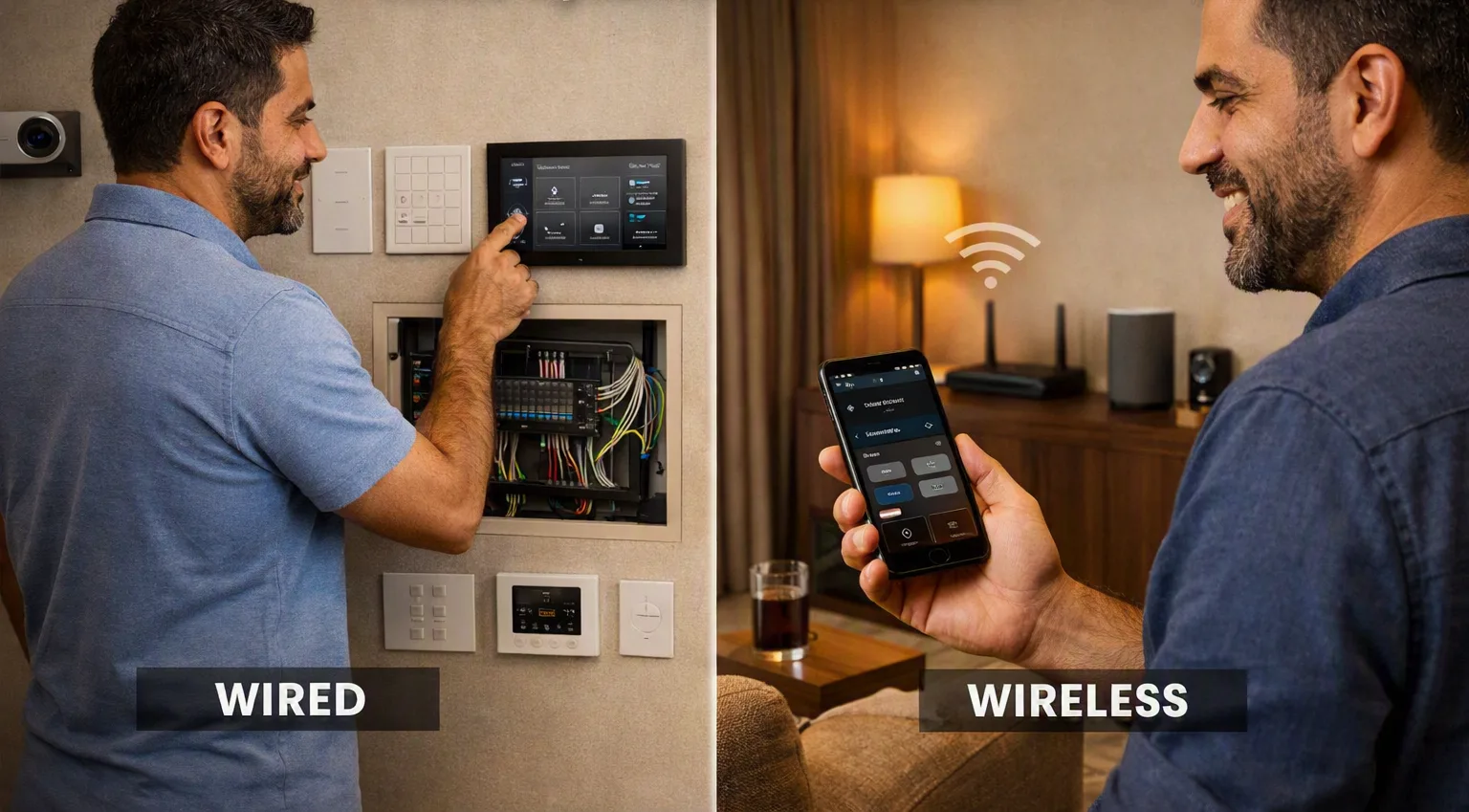
Instead of carrying cards, remotes or fobs, people will use their smartphones to access gates, buildings, car parks and restricted areas.
For businesses, the benefits are obvious.
If an employee loses their phone, access can be removed instantly. If a contractor needs temporary access, permissions can be granted remotely. If someone changes roles within a business, their access rights can be updated in seconds.
For users, it's one less thing to carry around.
Most people already have their phone with them everywhere they go. Access control is simply moving to the device people use every day.
Access Will Become More Invisible
One trend we're seeing is that the best access control systems are becoming less noticeable.
In the past, access control often meant stopping at a keypad, swiping a card or pressing a button.
In the future, many systems will work automatically in the background.
Your phone may communicate with a building before you even arrive. Your vehicle may be recognised automatically as it approaches a gate. Permissions may be verified instantly without requiring any action from the user.
The technology becomes less visible, while the experience becomes smoother.
Most people don't care how the system works. They just want it to work.
Facial Recognition Will Become More Common
Facial recognition often creates debate, but there's little doubt it will become more widespread over the next few years.
The technology has improved significantly and is already being used in airports, transport hubs, large commercial facilities and secure sites around the world.
In some environments, it offers real advantages.
There are no cards to lose. No PIN numbers to remember. No keys to manage.
Access is linked directly to the individual.
That doesn't mean every office building or apartment complex will suddenly adopt facial recognition. Privacy considerations will always be important, and different sites will have different requirements.
But for high-security environments, we expect biometric access to play a much bigger role by 2030.
Artificial Intelligence Will Help Improve Security
When people hear AI, they often think of robots taking over jobs.
The reality is much less dramatic.
In access control, AI is likely to become another tool that helps people make better decisions.
Imagine a system that can identify unusual activity patterns.
Maybe a vehicle enters a site at an unusual time. Maybe a credential is being used in a way that doesn't match normal behaviour. Maybe a gate is opening more frequently than expected.
Instead of relying on someone manually reviewing reports, AI can help identify issues earlier and alert operators when something needs attention.
The goal isn't to replace people.
The goal is to help security teams focus on the things that actually matter.
Car Parks Will Become Smarter
Parking is one of those everyday frustrations that most people don't think about until they're stuck in it.
By 2030, we expect parking systems to become much more connected.
Number plate recognition technology is already making vehicle access easier. Instead of stopping to collect a ticket or swipe a card, vehicles can be identified automatically.
Commercial buildings may use parking systems that allocate spaces dynamically.
Visitors may receive digital access before arriving. Businesses may gain better visibility into how their parking facilities are actually being used.
The technology exists today.
What we're likely to see is broader adoption and better integration between parking systems and access control platforms.
Everything Will Move to the Cloud
This is perhaps the biggest shift happening right now.
Historically, many access control systems were managed on-site. If changes were needed, someone often had to physically access the system.
Cloud management changes that completely.
Building managers can view activity, update permissions, manage users and monitor systems from virtually anywhere.
For organisations with multiple locations, the benefits are even greater.
Instead of managing separate systems across different sites, everything can be controlled through a single platform.
We expect cloud-based access control to become the standard rather than the exception over the next few years.
Security and Convenience Will Need to Work Together
One mistake people sometimes make is assuming that more security means less convenience.
The best modern systems achieve both.
A secure building shouldn't create unnecessary obstacles for the people who legitimately need access.
Employees, residents, contractors, visitors and delivery drivers all have different access requirements. The challenge is creating systems that keep unwanted visitors out while allowing authorised people to move through spaces efficiently.
That balance will become even more important as buildings become smarter and more connected.
The Human Element Isn't Going Anywhere
For all the technology that's coming, one thing probably won't change.
People still matter.
The best access control system in the world can be undermined by poor planning, incorrect setup or a lack of understanding about how the site actually operates.
Technology will continue to evolve. Products will become smarter. Systems will become more connected.
But successful access control will still come down to understanding how people use a space, what risks need to be managed, and what level of security makes sense for that environment.
That's as true today as it will be in 2030.
The future of access control isn't really about gates, doors, cards or smartphones.
It's about creating buildings that are safer, easier to manage and more convenient for the people who use them every day.
And from what we're seeing, we're only just getting started.