
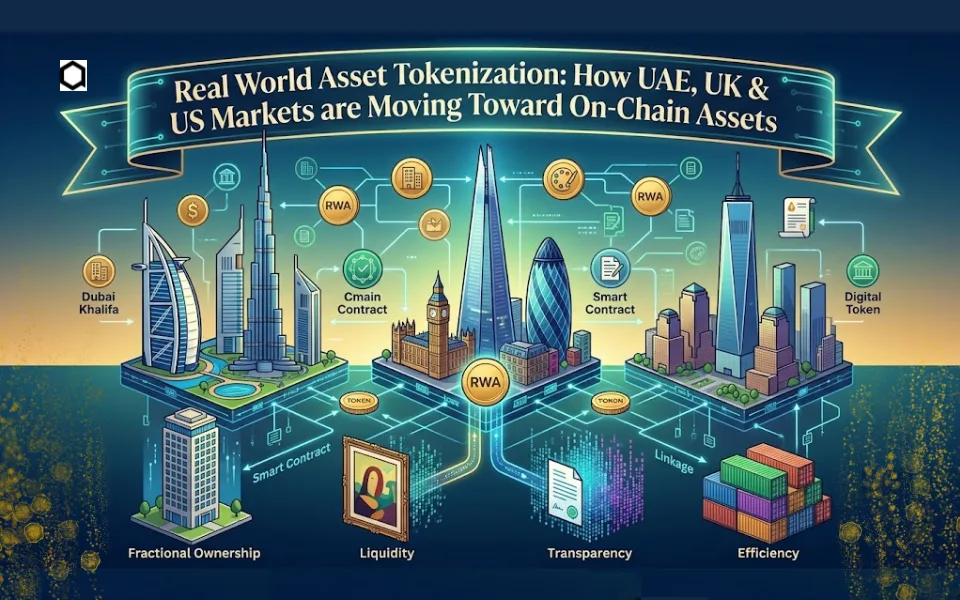
Hey everyone, Real World Asset (RWA) tokenization is changing how traditional assets are represented, transferred, and managed. Instead of relying entirely on conventional databases and paper-based ownership records, businesses can represent assets such as real estate, government securities, investment funds, commodities, and private credit through blockchain-based tokens.
What once appeared to be a blockchain experiment is increasingly becoming part of mainstream financial infrastructure. The UAE is testing tokenized property ownership, the UK is preparing a digital gilt pilot, and US financial institutions are expanding tokenized funds and Treasury products.
The direction is clear: traditional assets are increasingly moving toward programmable, on-chain infrastructure.
What Is Real World Asset Tokenization?
RWA tokenization is the process of creating a blockchain-based representation of an asset or a legally defined claim connected to that asset.
Potential tokenized assets include:
- Real estate
- Government bonds
- Treasury securities
- Money-market funds
- Private credit
- Gold and commodities
- Infrastructure
- Investment funds
For example, a property can be divided into digital investment units, allowing eligible investors to access fractional interests rather than purchasing the entire property.
However, tokenization is more than simply putting an asset on a blockchain. The token must be connected to a clear legal structure, ownership rights, compliance process, custody arrangement, and transfer mechanism.
Why are Markets Moving On-Chain?
Traditional financial transactions can involve brokers, custodians, clearing institutions, transfer agents, and settlement systems. Each layer can create operational costs, reconciliation requirements, and settlement delays.
Tokenization can potentially simplify parts of this process through blockchain infrastructure and smart contracts.
Key advantages include:
- Faster settlement: Digital transactions can reduce processing time.
- Fractional ownership: Large assets can potentially be divided into smaller investment units.
- Transparency: Blockchain records can improve transaction traceability.
- Programmability: Smart contracts can automate transfers, distributions, and eligibility rules.
- New liquidity models: Tokenized assets can potentially connect with digital marketplaces and collateral systems.
The strongest evidence of adoption is coming from regulated institutions and government-backed projects rather than speculative token launches.
UAE: Dubai Is Putting Real Estate On-Chain
The UAE is emerging as one of the most visible markets for real-world asset tokenization, particularly in real estate.
In March 2025, Dubai Land Department (DLD) launched its Real Estate Tokenisation Project, working with VARA and other strategic partners. The initiative connects blockchain-based tokenization with property title infrastructure and is designed to support fractional ownership and wider investor access.
Real Example: Prypco Mint
In May 2025, DLD launched the MENA region’s first tokenized real estate investment project through Prypco Mint.
The first project attracted 224 investors from 44 nationalities, with 70% entering Dubai’s real estate market for the first time. DLD reported an average individual investment of AED 10,714.
Dubai has since moved toward secondary-market activity. Phase II of the project began controlled resale of tokenized real estate in February 2026, demonstrating that the initiative is moving beyond initial issuance toward a broader market lifecycle.
UK: Building the Digital Financial Market
The UK’s strategy is focused strongly on wholesale financial markets.
Rather than concentrating mainly on physical property, the UK is exploring tokenization for government securities, investment funds, collateral, settlement, and other institutional financial activities.
Real Example: Digital Gilt Instrument
In February 2026, HM Treasury appointed HSBC as the platform provider for the Digital Gilt Instrument (DIGIT) pilot. The first transaction is planned for no later than Q1 2027.
The Bank of England and FCA are also developing a broader framework for tokenized wholesale markets, including tokenized collateral and settlement infrastructure.
The UK’s approach demonstrates an important shift: blockchain is being evaluated not simply for issuing digital assets, but for improving the infrastructure supporting financial markets.
US: Tokenized Treasuries and Funds Gain Momentum
The US market is developing tokenization around financial products with established institutional demand, particularly Treasury securities and money-market funds.
Real Example: BlackRock BUIDL
BlackRock’s BUIDL fund is one of the best-known examples of a tokenized institutional financial product. It provides eligible investors with blockchain-based access to a fund focused on US government securities and related assets.
The importance of BUIDL goes beyond token issuance. Its integration with digital trading, custody, and collateral infrastructure demonstrates how tokenized assets can become part of broader financial workflows.
Franklin Templeton’s BENJI, representing its on-chain US government money-market fund, is another major example of blockchain-based fund infrastructure.
UAE vs UK vs US: Different Paths, Same Direction
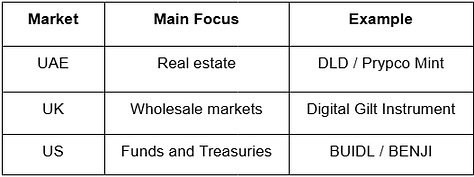
The UAE is demonstrating how physical property can connect with digital ownership infrastructure.
The UK is exploring how government debt and wholesale markets can use distributed-ledger technology.
The US is showing how major financial institutions can integrate tokenized securities with digital-market infrastructure.
How RWA Tokenization Works?
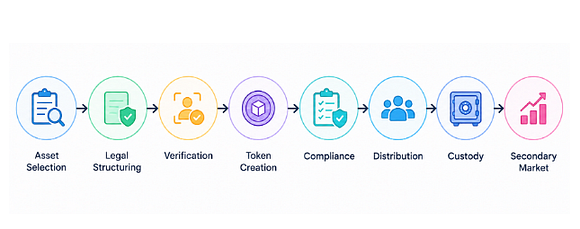
A typical tokenization platform follows several stages:
https://www.alwin.io/real-world-asset-tokenization-for-business
The legal and compliance layers are especially important. A blockchain token does not automatically create legal ownership. The underlying asset, investor rights, custody arrangements, and transfer restrictions must be clearly established.
This is why successful RWA platforms require cooperation between financial institutions, legal teams, regulators, blockchain developers, custodians, and marketplaces.
The Future of RWA Tokenization
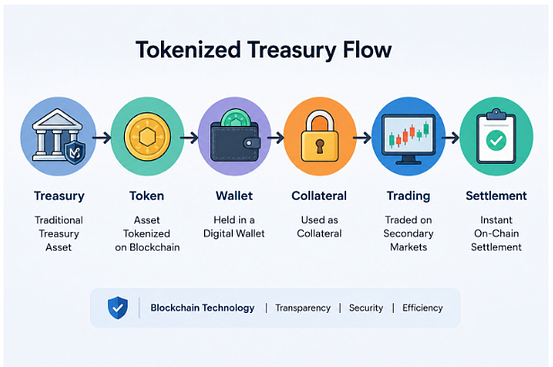
The next stage of tokenization will focus less on simply creating tokens and more on making those tokens useful.
https://www.alwin.io/real-world-asset-tokenization-for-business
A tokenized property could become:
Property → Token → Fractional Ownership → Investor Platform → Secondary Market
This shift from tokenized assets to tokenized financial infrastructure could become the defining development of the RWA market.
Final Thoughts
The UAE, UK, and US are taking different approaches, but all three markets are moving toward a common goal: connecting traditional assets with programmable digital infrastructure.
Dubai is testing tokenized real estate and secondary-market resale. The UK is preparing its Digital Gilt Instrument and expanding its wholesale tokenization framework. The US is demonstrating how tokenized funds and Treasury products can connect with institutional digital markets.
For businesses, the opportunity is no longer simply to create another token. The real opportunity is to build secure, compliant, legally structured, liquid, and interoperable on-chain assets.
RWA tokenization is therefore becoming more than a blockchain trend. It is emerging as a strategic model for the next generation of financial and asset-management infrastructure.
#RWATokenization #RealWorldAssets #Blockchain #OnChainAssets