Buying a home is one of the most exciting milestones in life. From envisioning your future in a new space to carefully selecting the perfect neighborhood, every step feels meaningful. However, beneath the excitement lies a silent and invisible danger that many homebuyers overlook—radon gas.
Radon is not something you can see, smell, or taste. Yet, it has the potential to significantly impact your health and the long-term value of your investment. Understanding how radon affects homebuyers is not just helpful—it’s essential.
In this comprehensive guide, we’ll uncover everything you need to know about radon, from how it enters homes to how it can influence your buying decisions. By the end, you’ll be equipped with the knowledge to make smarter, safer choices.
What Is Radon and Why Should Homebuyers Care?
Radon is a naturally occurring radioactive gas that forms when uranium in soil, rock, and water breaks down. It rises from the ground and can seep into homes through cracks and openings in the foundation.
What makes radon especially dangerous is its invisibility. Unlike mold or structural issues, radon doesn’t give off warning signs.
Why It Matters:
- Second leading cause of lung cancer worldwide
- Leading cause of lung cancer among non-smokers
- Can accumulate to dangerous levels indoors without detection
For homebuyers, this means that even a seemingly perfect property could pose a hidden health risk.
How Radon Enters a Home
Understanding how radon infiltrates a house can help you identify potential vulnerabilities.
Common Entry Points:
- Cracks in solid floors
- Construction joints
- Gaps around service pipes
- Cavities inside walls
- Sump pumps and drainage systems
- Well water (in some cases)
Radon typically enters from the ground and becomes trapped inside, especially in well-insulated, energy-efficient homes.
The Health Risks Associated with Radon Exposure
Radon exposure is a serious health concern, particularly because it often goes unnoticed until it’s too late.
Long-Term Effects:
- Lung cancer
- Respiratory issues
- Increased risk for smokers
How It Affects the Body:
When radon gas is inhaled, radioactive particles can become trapped in the lungs. Over time, these particles release radiation that damages lung tissue.
The risk increases with prolonged exposure, making it especially dangerous in residential settings where people spend most of their time.
Why Radon Is a Bigger Issue for Homebuyers Than Renters
While radon can affect anyone, homebuyers face unique challenges.
Ownership Responsibility
When you buy a home, you assume responsibility for:
- Testing
- Mitigation
- Ongoing monitoring
Financial Impact
If radon is discovered after purchase, you may face:
- Unexpected mitigation costs
- Reduced property value
- Difficulty reselling
Negotiation Leverage
On the flip side, identifying radon before purchase can give buyers strong negotiating power.
Radon Testing: A Critical Step in the Homebuying Process
Skipping a radon test is one of the biggest mistakes a homebuyer can make.
Types of Radon Tests:
Short-Term Tests
- Duration: 2–7 days
- Quick results
- Ideal during home inspections
Long-Term Tests
- Duration: 90 days or more
- More accurate
- Better for long-term exposure assessment
When to Test:
- During the home inspection period
- Before finalizing the purchase
- After major renovations
What Is a Safe Radon Level?
The recommended action level is 4 picocuries per liter (pCi/L) or higher.
How Radon Affects Property Value
Radon doesn’t just impact health—it can also influence a property’s market value.
Negative Impacts:
- Buyers may walk away from deals
- Homes with high radon levels may sell for less
- Disclosure requirements can deter future buyers
Positive Mitigation Effects:
Homes with radon mitigation systems can actually:
- Sell faster
- Attract informed buyers
- Provide peace of mind
Radon Mitigation Systems: What Homebuyers Should Know
If radon levels are high, mitigation is the solution—and it’s more common than you might think.
How Mitigation Works:
The most effective method is sub-slab depressurization, which involves:
- Installing a vent pipe system
- Using a fan to pull radon from beneath the house
- Venting it safely outside
Cost of Mitigation:
- Typically ranges from $800 to $2,500
- A small price compared to long-term health risks
Maintenance:
- Periodic system checks
- Fan replacement every 5–10 years
Common Myths About Radon That Mislead Buyers
Myth #1: Only Older Homes Have Radon
Truth: New homes can have radon too, sometimes even higher levels due to tighter construction.
Myth #2: Radon Isn’t a Problem in My Area
Truth: Radon levels vary widely—even between neighboring homes.
Myth #3: Testing Isn’t Necessary if the Home Looks Fine
Truth: Radon is invisible. Appearance means nothing.
Myth #4: Mitigation Is Too Expensive
Truth: Mitigation is affordable and highly effective.
How to Negotiate Radon Issues During a Home Purchase
Discovering radon doesn’t mean you should walk away—but it does mean you should negotiate smartly.
Your Options as a Buyer:
- Request the seller install a mitigation system
- Ask for a price reduction
- Negotiate closing credits
- Walk away if the issue isn’t addressed
Pro Tip:
Always include a radon contingency clause in your purchase agreement.
The Role of Home Inspections in Detecting Radon
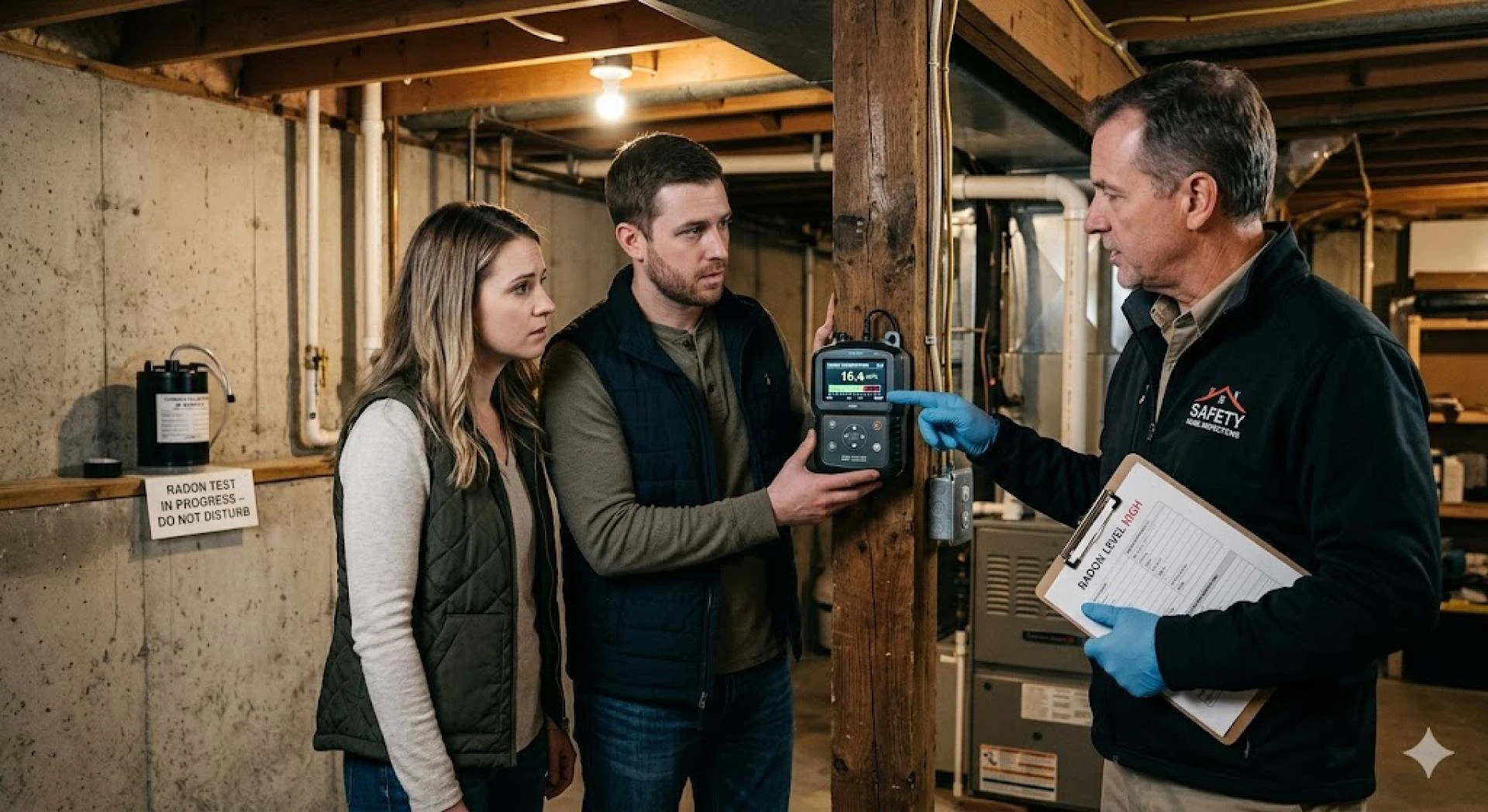
A standard home inspection doesn’t always include radon testing—you may need to request it separately.
What Inspectors Do:
- Place testing devices in the lowest livable area
- Ensure proper test conditions
- Provide detailed reports
Choosing the Right Inspector:
Look for:
- Certified professionals
- Experience with radon testing
- Transparent reporting
Radon and New Construction: What Buyers Should Know
Many assume new homes are safer—but that’s not always true.
Why New Homes Can Have Radon:
- Tighter construction traps gases inside
- Built on radon-prone soil
- Lack of proper ventilation systems
Radon-Resistant Construction Features:
- Gas-permeable layers
- Plastic sheeting
- Sealing and caulking
- Vent pipes
If you’re buying new construction, ask whether these features are included.
How Geography Influences Radon Levels
Radon levels depend heavily on the geology of the land.
High-Risk Areas:
- Regions with uranium-rich soil
- Rocky terrains
- Areas with poor ventilation
However, even low-risk zones can have homes with elevated radon levels. That’s why testing is always necessary, regardless of location.
Protecting Your Family After Buying a Home
If you’ve already purchased a home, it’s not too late to take action.
Steps to Take:
- Conduct a radon test immediately
- Install mitigation if levels are high
- Retest periodically
- Maintain your system
Peace of Mind Matters
Knowing your home is safe allows you to truly enjoy it.
Radon Disclosure Laws: What Buyers Should Know
In many areas, sellers are required to disclose known radon levels.
What to Expect:
- Written disclosure forms
- Previous test results
- Information on mitigation systems
However, not all sellers test for radon—so don’t rely solely on disclosures.
The Psychological Impact on Homebuyers
Beyond health and finances, radon can affect how buyers feel about a property.
Common Reactions:
- Anxiety about long-term exposure
- Doubts about the purchase
- Stress during negotiations
Being informed helps reduce fear and empowers better decisions.
Why Ignoring Radon Can Be a Costly Mistake
Failing to address radon can lead to:
- Serious health consequences
- Expensive retrofits later
- Reduced resale value
- Legal complications in some cases
Simply put, ignorance is not worth the risk.
Conclusion: Make Informed Decisions and Protect Your Investment
Buying a home should be a joyful experience—not one overshadowed by hidden dangers. Radon may be invisible, but its impact is very real. From health risks to financial implications, it’s a factor that every homebuyer must take seriously.
The good news? Radon is detectable, manageable, and preventable. With proper testing, smart negotiation, and effective mitigation—such as the solutions offered by Radon Mitigation Spokane WA—you can eliminate the risk and move forward with confidence.
As you navigate your homebuying journey, remember this: the safest investment is an informed one. Take the time to test, understand, and act—and you’ll not only protect your property but also the people who matter most.