The commercial transport vehicle represents a significant investment of capital. For managers tasked with maintaining the productivity and longevity of these machines, adopting the million-mile mindset is critical. This perspective treats the vehicle not as a temporary, replaceable commodity but as a durable asset designed for sustained, long-term service.
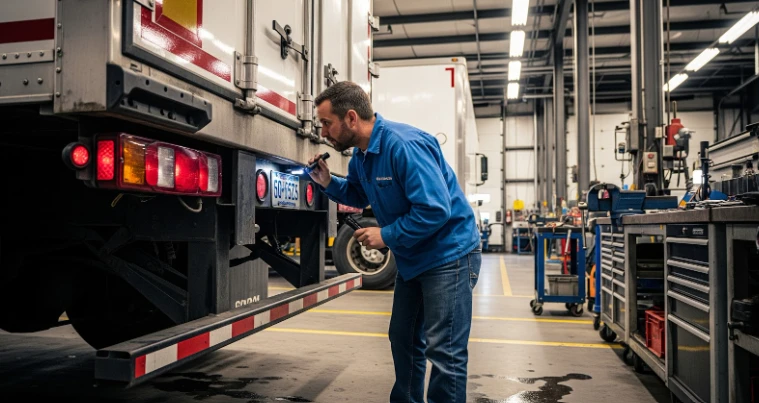
The commitment to longevity demands that all operational decisions prioritize preservation over immediate convenience. This concept is perhaps most clearly manifested in the fleet’s approach to routine vehicle inspections. These procedures, often viewed as compliance hurdles, are in truth the most powerful, cost-effective instruments available for ensuring relentless uptime and protecting financial viability. The sustained success of a transport organization relies heavily on the meticulous, repetitive act of inspecting and documenting the vehicle’s condition at every operational interval.
The fundamental economic reality for commercial carriers is that profit is earned only when the wheels are moving. A sudden, unplanned stop represents a severe, immediate drain on resources. The cost associated with such an event is complex and far-reaching. It includes the premium price paid for emergency roadside service, the cost of expedited parts delivery, the unproductive hours of the driver, and the disruption to the entire logistics chain.
Delayed deliveries can lead to contractual penalties, loss of customer goodwill, and administrative chaos that consumes valuable staff time. The ultimate power of a comprehensive inspection regime is its capacity to intercept incipient failures when they are still minor, controllable defects.
The Transformative Value of Meticulous Observation
Moving beyond the perfunctory, compliance-driven checklist is the critical first step toward harnessing the profit potential embedded within the inspection process. The inspection should be an invaluable moment of data collection based on professional focus and documentation. This thoroughness is particularly important in the often-undervalued routine of post-trip inspections for fleets. Although there is a natural temptation to rush this procedure at the end of a long, taxing day, the observations made during the post-trip check offer useful assessments of the vehicle’s condition following stress.
The driver can observe subtleties that are often invisible during a cold check in the shop. They report on unusual noises during braking, the degree of play in the steering, or the feel of the clutch engagement under load. These firsthand observations, when accurately logged, become part of a vehicle’s permanent digital record. When these reports are intelligently cross-referenced with other data sources, they enable the maintenance division to transition smoothly from reactionary repair to predictive maintenance.
Further out, a thoroughly executed inspection program is the most effective defense mechanism a carrier possesses against regulatory intervention. Commercial carriers operate under the strict governance of authorities that impose severe penalties for non-compliance. Roadside inspections are frequent, and any vehicle found with readily detectable safety defects is subject to an immediate out-of-service order. This detention brings all revenue generation to a halt and incurs both the cost of the emergency repair and a monetary fine. More importantly, these violations negatively impact the carrier’s overall safety profile. A strong record of clean inspections is essential for maintaining the carrier’s safety rating. The rating directly influences insurance premiums, access to preferred contracts, and the likelihood of future in-depth regulatory audits.
Converting Raw Data Into Economic Foresight
The maximum financial benefit from inspections is achieved by leveraging the resultant data through intelligent systems. Paper checklists, while mandatory, are passive, isolated pieces of information. The true transformation occurs when a fleet adopts digital tools that enable the data to be aggregated, analyzed, and applied across the entire operation. The implementation of straightforward fleet tracking systems, which integrate digital inspection reports, fault codes, and performance metrics, converts isolated observations into business intelligence.
When inspection data is centralized and analyzed, previously hidden patterns and trends within the vehicle set become immediately visible. E.g., a manager might discover that a particular brand of brake shoe, while initially cheaper, is consistently failing far sooner than anticipated on vehicles operating in mountainous regions, as reported by driver logs and confirmed by shop records. This insight allows management to make a strategic purchasing decision: phasing out the inferior component in favor of a more durable, higher-cost item. While the initial part cost increases, the subsequent reduction in labor expenses, unscheduled downtime, and emergency repairs generates a massive positive return on the small price difference.
The integration of digital tracking also vastly improves accountability within the maintenance workflow. Digital inspection forms ensure that every step of a scheduled service or repair is documented, time-stamped, and attributed to a specific technician. If a recurring failure occurs, the system provides an immediate and verifiable record of the previous work performed.
Planned Interventions
The objective of fleet management’s financial efficiency is not to eliminate maintenance costs but to convert unplanned costs into planned, predictable, and manageable expenditures. The systematic use of inspection data for strategic planning is the core mechanism for achieving this goal. When a fleet manager can anticipate component failure based on trend analysis, they gain the distinct financial advantage of controlled intervention over emergency reaction.
Scheduling component replacement based on data, rather than waiting for a failure, offers three significant commercial benefits. Firstly, the purchasing department can buy necessary parts in bulk, leveraging volume discounts and avoiding the exorbitant surcharges associated with urgent, single-item procurement from a roadside vendor. Secondly, labor resources in the maintenance shop can be allocated with maximum efficiency, scheduling work during off-peak hours and minimizing expensive overtime. Finally, predictable downtime allows the dispatch team to allocate backup units, reroute drivers, and notify clients in advance. This avoids the costly disruption to the supply chain that a sudden mechanical failure inevitably causes.
By embracing this paradigm, the entire organization shifts its focus toward sustainable long-term performance. The driver who diligently completes their checklist, the technician who meticulously records every torque setting, and the manager who analyzes the resulting data are all actively participating in the company’s financial defense strategy. Their actions preserve capital, protect the safety rating, and maximize asset utilization. The commitment to meticulous detail in the pre-trip and post-trip inspection routines is, after all, the single most affordable and effective insurance policy against the enormous hidden costs of commercial transport failure.