Understanding the science behind fire-resistant safes begins with recognizing how fires behave and what materials can withstand extreme temperatures. House fires typically reach temperatures between 1,000-1,200°F within minutes, while structural fires can exceed 1,800°F. The key to effective fire protection lies in a safe's ability to maintain internal temperatures below critical thresholds—350°F for paper documents and 125°F for magnetic media and photographs. This temperature control is achieved through specialized insulation materials like gypsum, vermiculite, or proprietary composites that absorb and dissipate heat while releasing steam to create a protective barrier. The thickness and density of these materials directly correlate with protection duration, which is why understanding UL (Underwriters Laboratories) fire ratings becomes crucial for making informed decisions.
Fire ratings aren't just marketing numbers—they represent rigorous scientific testing that simulates real-world fire conditions. UL Class 350 safes maintain internal temperatures below 350°F for specified durations (30 minutes, 1 hour, or 2 hours), making them ideal for paper documents, while UL Class 125 safes offer superior protection for digital media and photographs by keeping internal temperatures below 125°F. However, the testing process reveals critical insights: safes are heated in furnaces following standardized time-temperature curves, then subjected to explosion impact tests and cooling water spray to simulate firefighting efforts. The most revealing aspect is the "drop test," where heated safes are dropped 30 feet onto rubble to simulate building collapse—a reality many buyers never consider but which separates truly effective safes from those that merely meet minimum standards.
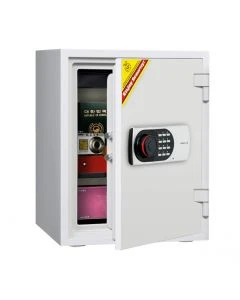
The construction science behind effective fireproof safes involves multiple engineering principles working in harmony. Double-wall construction with fire-resistant insulation creates thermal barriers, while door seals expand when heated to prevent smoke and heat infiltration. The door-to-body interface represents the most vulnerable point, requiring precision engineering with multiple overlapping seals and sufficient mass to maintain structural integrity under thermal stress. Additionally, the safe's overall mass plays a crucial role—heavier safes with more insulation material maintain temperature stability longer, while lighter models may provide adequate protection for shorter durations but fail during extended fires.
Choosing a safe that actually works requires matching scientific specifications to your specific needs and fire risk profile. Consider your geographic fire risk, building construction materials, and local fire department response times when selecting protection duration. For maximum effectiveness, look for safes with verified fire ratings from independent testing laboratories, not manufacturer claims alone. Pay attention to what you're protecting—paper documents require different temperature thresholds than computer hard drives or photographic film. Finally, understand that no safe is truly "fireproof"—they're fire-resistant for specific time periods under specific conditions. The science of fire safety isn't about finding perfect protection; it's about understanding the limitations and choosing solutions that provide adequate protection for your most valuable possessions based on realistic fire scenarios and proven scientific testing.