We’ve all been there. You’re watching a live championship game or a high-stakes product reveal, the tension is peaking, and suddenly—the screen freezes. That little spinning circle of death appears. In that split second, the immersion is broken, and honestly, so is the trust in the brand behind the stream.
As we move into 2026, the digital audience has zero patience for technical hiccups. We’ve reached a point where high-definition video isn't a luxury; it’s a basic expectation. Whether it’s 8K cinematic streams or interactive corporate town halls, the "behind-the-scenes" tech has to be invisible and bulletproof. If your video doesn't work perfectly every time, your audience is just one click away from leaving.
Solving the "Distance" Problem with Edge Intelligence
The biggest enemy of a smooth stream has always been physical distance. If your content is sitting on a server in Virginia and your viewer is in London, that data has a long, treacherous journey ahead of it. Every millisecond of delay (or latency) increases the chance of a stutter.
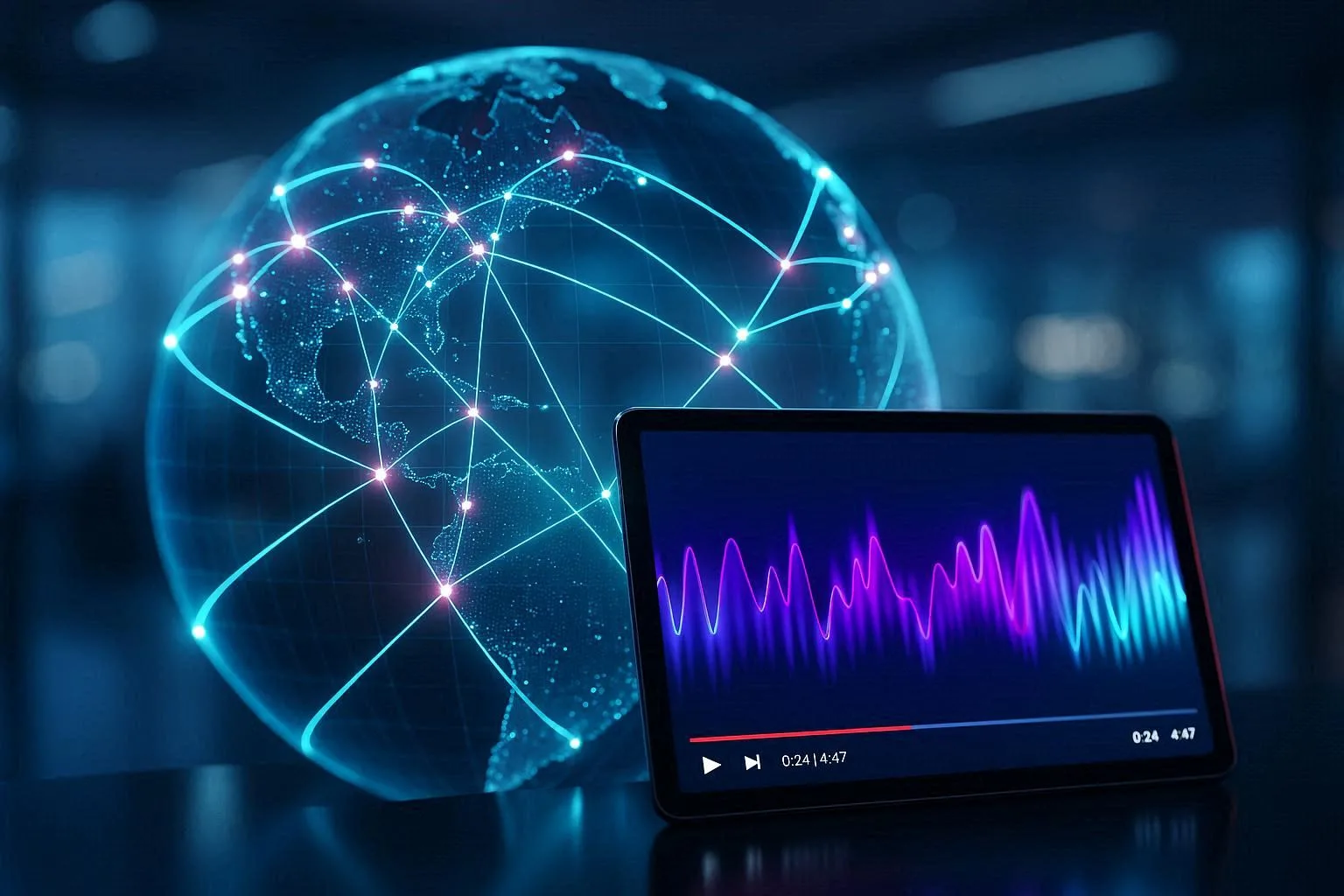
To bridge this gap, modern media strategies rely heavily on a robust video content delivery network. Instead of forcing everyone to pull data from one central source, a CDN mirrors your content across hundreds of "edge" servers worldwide. This means when someone hits play, the video travels only a few miles from a local data center rather than across an entire ocean. By 2026, these networks have become incredibly smart, using AI to predict traffic surges before they happen and rerouting data packets to the fastest path available in real-time.
The Final Mile: Where Software Meets the Eye
Infrastructure is only half the battle. Once the data actually reaches the user’s device, the responsibility shifts to the playback engine. We’re living in a world of massive device fragmentation. Your viewers are switching between foldable phones, smart glasses, and giant 8K home theaters. Making sure the video looks great on all of them is a massive headache for developers.
This is exactly why the industry has standardized on adaptive protocols. To handle these shifts in bandwidth and device types, you need a high-performance HLS Video Player. The beauty of HLS (HTTP Live Streaming) is that it’s essentially a conversation between the player and the network. If a viewer's 5G signal dips for a moment, the player doesn’t just stop and buffer; it intelligently drops to a slightly lower resolution for a few seconds until the signal recovers. The viewer stays immersed, the video keeps playing, and the "moment" is saved.
What’s Changing in 2026?
We’re seeing a shift in focus from just "speed" to "intelligence and sustainability." It’s not enough to just be fast anymore. Here’s what’s currently on the horizon:
- Green Streaming: We're finally seeing delivery paths optimized to reduce the massive energy consumption of global data centers.
- Predictive Pre-loading: Modern apps are starting to "warm up" your stream based on your habits, so the video starts the millisecond you tap it.
- Low-Latency Everything: The gap between "real life" and "digital broadcast" is shrinking to under two seconds, making true real-time interaction possible.
The Bottom Line
At the end of the day, your technical setup is a direct reflection of your brand’s reliability. In 2026, the tech shouldn't be the story; the content should be. By investing in a solid delivery network and a smart playback engine, you’re making sure that nothing—not distance, not bad signal, and certainly not a "spinning wheel"—comes between you and your audience.