
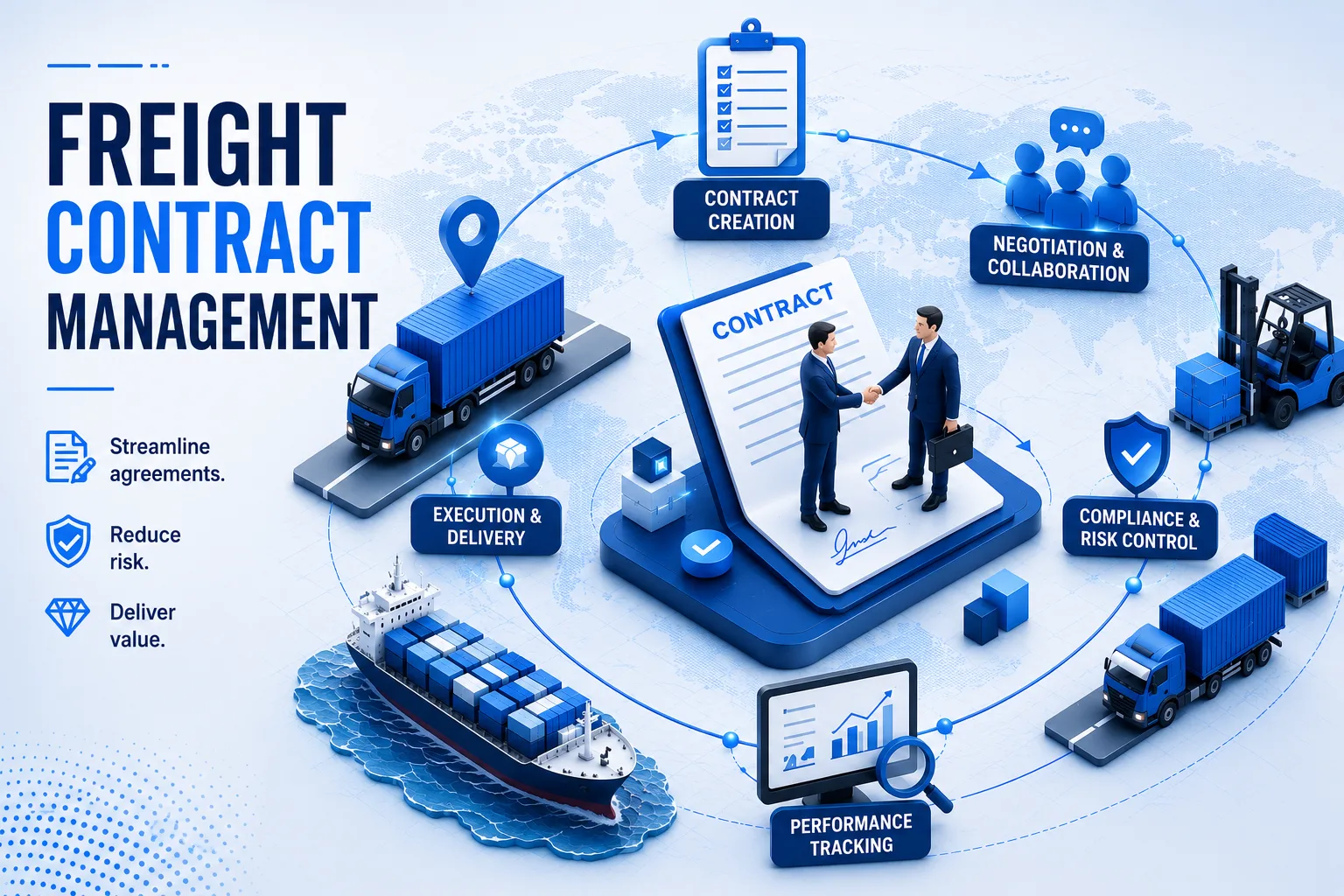
Managing freight contracts in 2026 is no longer a back-office task; it sits at the heart of every smart logistics decision. As supply chains grow more complex and carrier markets shift without warning, businesses that treat freight contract management as a strategic function consistently outperform those that treat it as paperwork.
Rethinking the Way You Handle Freight Contracts
Most companies sign their freight contracts and file them away until renewal season. That approach is expensive. Carrier markets move throughout the year, service expectations evolve, and billing errors quietly accumulate in the background. Staying engaged with your contracts between signing and renewal is where real value is created.
Think of freight contracts less like legal agreements and more like performance partnerships. The terms you negotiate today directly influence your cost structure, your carrier relationships, and your ability to scale operations without friction.
Building Contracts That Actually Protect Your Business
A freight contract is only as strong as the detail behind it. Vague language around pricing, accessorial charges, and liability is an open invitation for disputes. Before signing anything, shippers need absolute clarity on how rates are structured, which surcharges apply under what conditions, and who carries responsibility when cargo is damaged or delayed.
Escalation clauses are worth the extra negotiation effort. Tying rate adjustments to published indices rather than leaving them open-ended gives both parties a predictable framework when fuel prices spike or capacity tightens. Renewal and exit terms should never be buried in boilerplate; they need to be understood before the contract begins, not after it ends.
Where the Freight Audit and Payment Process Breaks Down
Billing errors in freight are not rare exceptions. They are routine. The freight audit and payment process exists precisely because carriers and shippers operate with different data sources, and those gaps produce invoice discrepancies at a significant scale.
A disciplined audit process cross-references every invoice against contracted rates before a single payment is released. Duplicate charges, misapplied fuel adjustments, and incorrect weight-based calculations are among the most common errors caught during this stage. In 2026, businesses are increasingly turning to AI-driven audit platforms that process invoice volumes in real time, flagging exceptions without waiting for a manual review cycle to begin.
Companies that skip this step or treat it casually are essentially leaving money on the table with every billing cycle.
Practical Ways to Reduce Freight Costs Without Cutting Corners
Knowing how to reduce freight costs begins long before the negotiation room. It starts with your own data. Shippers who arrive at contract discussions armed with lane-by-lane volume analysis, carrier performance history, and market benchmarks negotiate from a position of strength rather than guesswork.
Volume consolidation is one of the most effective levers available. Directing more freight toward fewer strategic carriers earns preferential pricing and secures capacity priority during peak seasons. Mode optimization choosing ocean over air or rail over road where transit time allows adds another layer of cost efficiency without sacrificing reliability.
Annual contract reviews, rather than waiting for expiry, keep your agreements aligned with current market realities and prevent you from overpaying simply because no one flagged an outdated rate.
The Hidden Cost of Poor Contract Visibility
Even well-negotiated freight contracts lose their value when they are poorly stored and rarely referenced. When contract terms live in scattered email threads or outdated spreadsheets, enforcement becomes inconsistent and renewal deadlines get missed.
Centralized contract management, whether through a transportation management system or a dedicated contract repository, ensures your team can access terms instantly, track carrier performance against agreed SLAs, and act on renewal windows with enough lead time to negotiate effectively.
Visibility is not just an operational convenience it is a financial safeguard.
The Competitive Advantage Starts Here
Freight contract management done right does not just reduce costs. It builds the kind of carrier relationships, operational consistency, and financial control that compound over time. Every contract you negotiate, audit, and actively manage is a direct investment in a supply chain that performs under pressure.
nVision Global works alongside businesses ready to move beyond reactive logistics into strategic freight contract management. If tightening your freight audit and payment process, lowering costs, and building contracts that hold up in any market condition is the goal, the nVision Global team is ready to help you get there.