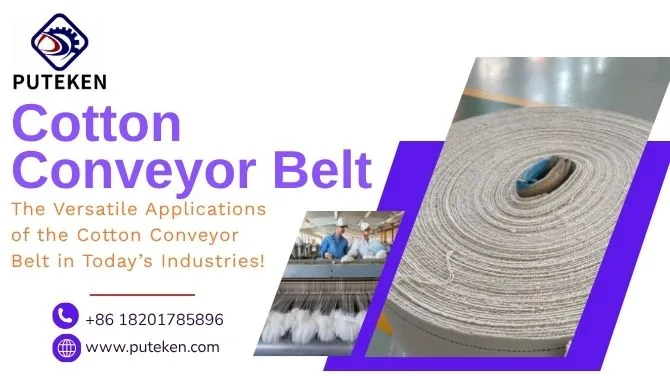
In a manufacturing landscape increasingly defined by technology, environmental responsibility, and operational diversity, the need for reliable, adaptable material handling solutions has never been greater. Yet, among the advances in synthetic materials and high-tech composites, one classic performer continues to prove its value—the Cotton Conveyor Belt. From the earliest days of industrial automation, cotton has played a role in conveyor systems. Today, with the expertise of leading innovators like Shanghai Puteken Transmission System Co., Ltd., the cotton conveyor belt remains a vital link in modern industry, prized for its versatility, safety, and sustainability.
Cotton conveyor belts may seem traditional compared to synthetic alternatives, but their unique properties deliver substantial advantages in diverse operating environments. As we move toward greener and more ergonomic production, manufacturers in industries as varied as food processing, logistics, textiles, pharmaceuticals, and packaging are rediscovering the benefits of cotton’s natural resilience and adaptability. Notably, the Cotton Conveyor Belt is inherently flexible, non-marking, quiet in operation, and suitable for countless applications where gentle handling, breathability, or even conductivity are essential.
Moreover, as industries are pressed to balance efficiency with consumer and regulatory expectations, choosing the right conveyor belt is a strategic decision. The cotton conveyor belt, with its excellent chemical resistance, food-grade status, and customizable design, answers the call for performance and peace of mind. Whether you’re moving delicate dough in a bakery, transferring finished garments in textile plants, or ensuring contamination-free movement in a medical facility, the right cotton belt can ensure both product integrity and operational efficiency.
Furthermore, as sustainability becomes indispensable—not just a catchphrase—companies increasingly weigh the environmental impact of their equipment. Unlike many petrochemical-based alternatives, the cotton conveyor belt offers a renewable, biodegradable, and lower-carbon solution. This makes it especially appealing to manufacturers who wish to reduce their ecological footprint without sacrificing reliability or safety.
The Versatile Applications of the Cotton Conveyor Belt in Today’s Industries
What Makes the Cotton Conveyor Belt Unique?
Material and Construction
A Cotton Conveyor Belt is typically constructed from tightly woven, natural cotton yarns reinforced with polyester or other fibers for strength and dimensional stability. The result is a belt that can be produced in various ply counts, thicknesses, and surface finishes—a versatility unmatched by most synthetic options.
Key Properties:
- Natural Softness: Gentle on products; ideal for items that are delicate, easily marked, or require cushioning.
- Absorbent and Breathable: Excellent for humid, moist, or warm environments, as cotton can absorb condensation and reduce slippage.
- Quiet Operation: The soft surface minimizes conveyor noise, improving workplace comfort.
- Food Safety: Untreated cotton can be food-grade and FDA compliant—ideal for bakeries and food packaging lines.
- Eco-Friendliness: Cotton is renewable and biodegradable, helping companies meet sustainability goals.
- Solid Woven: All-cotton or mixed cotton-polyester plain weave, popular for food, tobacco, and light goods.
- Rubberized Cotton Belts: Feature a cotton base with a rubber or synthetic top layer, providing enhanced grip.
- Custom Variations: Flame-retardant, oil-resistant, or antistatic cotton belts available by request.
1. Gentle Product Handling
The soft, non-abrasive surface of a cotton conveyor belt is perfect for handling bakery products, textiles, printed materials, pharmaceuticals, and fragile items without damage or marking.
2. Suitability for Hot, Moist, or Oily Conditions
Cotton belts are naturally absorbent. In bakeries or food factories, they soak up excess oil and moisture, reducing mess and slippage. Unlike plastics, they won’t deform in low-temperature baking processes.
3. Ideal for Food and Pharma Applications
Cotton’s inert, non-toxic properties make it a favorite where hygiene is paramount. The belts can often be sterilized or used in cleanrooms. They are also used for direct contact with items such as dough, candy, or medicinal tablets.
4. Low Environmental Impact
Unlike most synthetic belts, cotton conveyor belts are fully biodegradable. This means a reduced environmental load at end of life, and better alignment with ISO14001 and other green production standards.
5. Quiet and Energy-Efficient Running
Their pliability and softness reduce friction and vibration, minimizing wear on conveyor components and motors—lowering both noise and energy usage over time.
6. Flexibility and Customization
Cotton conveyor belts are easily customized: different weave densities, thicknesses, surface patterns (e.g., ribbed, smooth, or anti-slip), endless or open-ended design, and options for lacing or guided strips are widely available.
1. Food Processing
In bakeries, pastries, and biscuit factories, cotton belts are used for dough handling, dividing, proofing, and post-baking transfer. Their absorption properties help manage excess oils and prevent sticking, ensuring smooth, hygienic movement.
Example: A leading pastry manufacturer adopted Shanghai Puteken’s woven cotton belts for their croissant line, slashing product waste and clean-up time by 30%.
2. Textile and Garment Production
From cutting tables to ironing lines, cotton belts are perfect for transporting fabrics and finished garments without static build-up or marking delicate materials.
Example: A garment exporter replaced synthetic mesh belts with cotton conveyor belts to reduce fabric snags. Returns from quality defects dropped significantly.
3. Printing and Paper
Cotton belts gently carry paper reels, stacks, or freshly-printed sheets through collators, folders, and bindery systems. Their breathability prevents ink smudges and curl, while quiet operation benefits high-volume print plants.
4. Pharmaceuticals and Personal Care
For transferring vials, tablets, or syringes in cleanrooms, cotton belts offer both cleanliness and a non-scratching surface. Antistatic and antimicrobial coatings can further enhance suitability for strict regulatory environments.
5. Tobacco Industry
Cotton conveyor belts have long been used in cigarette and cigar production—delivering the right balance of grip, softness, and “no contamination” assurance demanded by this sensitive sector.
6. Wood and Furniture
When finishing wood veneers or transporting lacquered surfaces, the cotton conveyor belt’s non-marring texture is ideal for preventing scratches or impressions.
7. Electronics Assembly
The anti-static version of the cotton belt is useful for moving PCBs or other sensitive components, reducing static discharge and contamination risk.
A. Application Analysis
Start by mapping your full conveyor process:
- Are you transporting raw, finished, sticky, wet, or hot items?
- Will there be direct food contact?
- Is static build-up a concern?-
- What is your required belt thickness, width, and ply count?
Our experts offer:
- Site visits and audit of your production line
- Recommendations on fiber blends, weaves, and coatings
- Custom splicing, lacing, or endless joining for trouble-free installation
- Belt tracking solutions (guides, V-profiles, etc.)
1. Regular Cleaning and Inspection
Cotton belts can collect lint, crumbs, or product residue. Clean regularly with an approved vacuum or gentle wipe-down. For food applications, belts can often be sanitized with mild, approved detergents.
2. Monitor Belt Tension and Tracking
As a natural fabric, cotton may stretch over time. Regularly check and adjust tension and tracking guides for consistent performance and to avoid belt edge wear or misalignment.
3. Replace at Signs of Fraying or Glazing
Replace belts promptly if you observe:
- Edge fraying
- Surface glazing or hardening (from oils or repeated heating)
- Loss of grip or slipping
4. Store Spare Belts Properly
Keep in a cool, dry place, out of direct sunlight or excess humidity to prevent premature deterioration.
5. Train Staff in Proper Handling
Ensure operators are careful not to overload belts or use sharp implements, which may cut the fabric.
Shanghai Puteken Transmission’s Industry-Leading Cotton Conveyor BeltsOur cotton belts are renowned for their quality, durability, and performance, servicing clients in over 30 countries. We offer:
- Custom thickness, width, and ply options
- Food-grade and pharma-grade certifications
- Antistatic and flame-retardant versions
- Full technical support and after-sales service
In a world where innovation often means synthetic and high-tech, the Cotton Conveyor Belt stands out for its remarkable blend of history, sustainability, and modern utility. Whether on the bakery floor, the assembly line, or in sterile medical environments, these belts enable gentle, reliable, and eco-friendly handling for today’s industries. Backed by the expertise and global reach of Shanghai Puteken Transmission System Co., Ltd., you can harness the unique powers of cotton to elevate product quality, efficiency, and environmental responsibility.
Frequently Asked Questions (FAQ):Q1: Can a Cotton Conveyor Belt be used for direct food contact?
A: Yes, our belts are available in pure and food-grade cotton, suitable for direct handling of dough, baked goods, and confectionery. Always specify food-contact needs when ordering.
Q2: How do I clean and sanitize a Cotton Conveyor Belt?
A: Use a vacuum, soft brush, or a damp cloth with approved mild detergents. High-pressure washing is not recommended. Always dry belts thoroughly to avoid mildew.
Q3: What is the typical lifespan of a Cotton Conveyor Belt?
A: Lifespan varies based on load, speed, environment, and maintenance. With proper care, cotton belts often last 1–3 years in food handling and longer in lighter applications.
Q4: Are there chemical resistance limitations?
A: Cotton resists mild acids and oils but can deteriorate with strong acids, alkalis, or harsh solvents. Discuss your application with our team for advice on coatings or alternates.
Q5: Will cotton belts stretch or shrink?
A: Some stretch is normal, especially in the early phase. Shanghai Puteken belts are pre-stretched and stabilized, but periodic tightening may be required.
Q6: Can the belts be endless or do they require mechanical lacing?
A: Both options are available. Endless splicing offers smoother running for food and pharma, while laced joints allow quick replacement in industrial lines.
Q7: Is customization available?
A: Absolutely! Specify thickness, ply, width, length, edge shape, color, tracking guides, and any special coatings or certifications.