In today's digital economy, safe online transactions are the most important part of e-commerce, fintech, SaaS, and subscription-based platforms. When picking the best payment gateway in India, speed and ease of integration are not the only things to think about. It's also about safety, since more and more businesses are accepting digital payments. Tokenization and encryption are two of the most common ways to protect payments, as tokenization and encryption both protect sensitive payment information, but they do it in different ways and for different reasons. It's very important to understand these ideas if you're looking at a Payment Gateway in India or choosing a trustworthy Payment Gateway Service Provider.
Why Payment Security Is More Important Than Ever
Cyber threats are also on the rise as UPI, cards, and online wallets become more popular in India. The Reserve Bank of India (RBI) and other regulatory bodies have made it mandatory for merchants to use card tokenization to protect data. Data breaches can cause:
- Losing money
- Punishments by the law
- Customers stop trusting you
- Damage the brand's reputation
That's why modern payment gateways need advanced security features like tokenization and encryption.
What does it mean to encrypt?
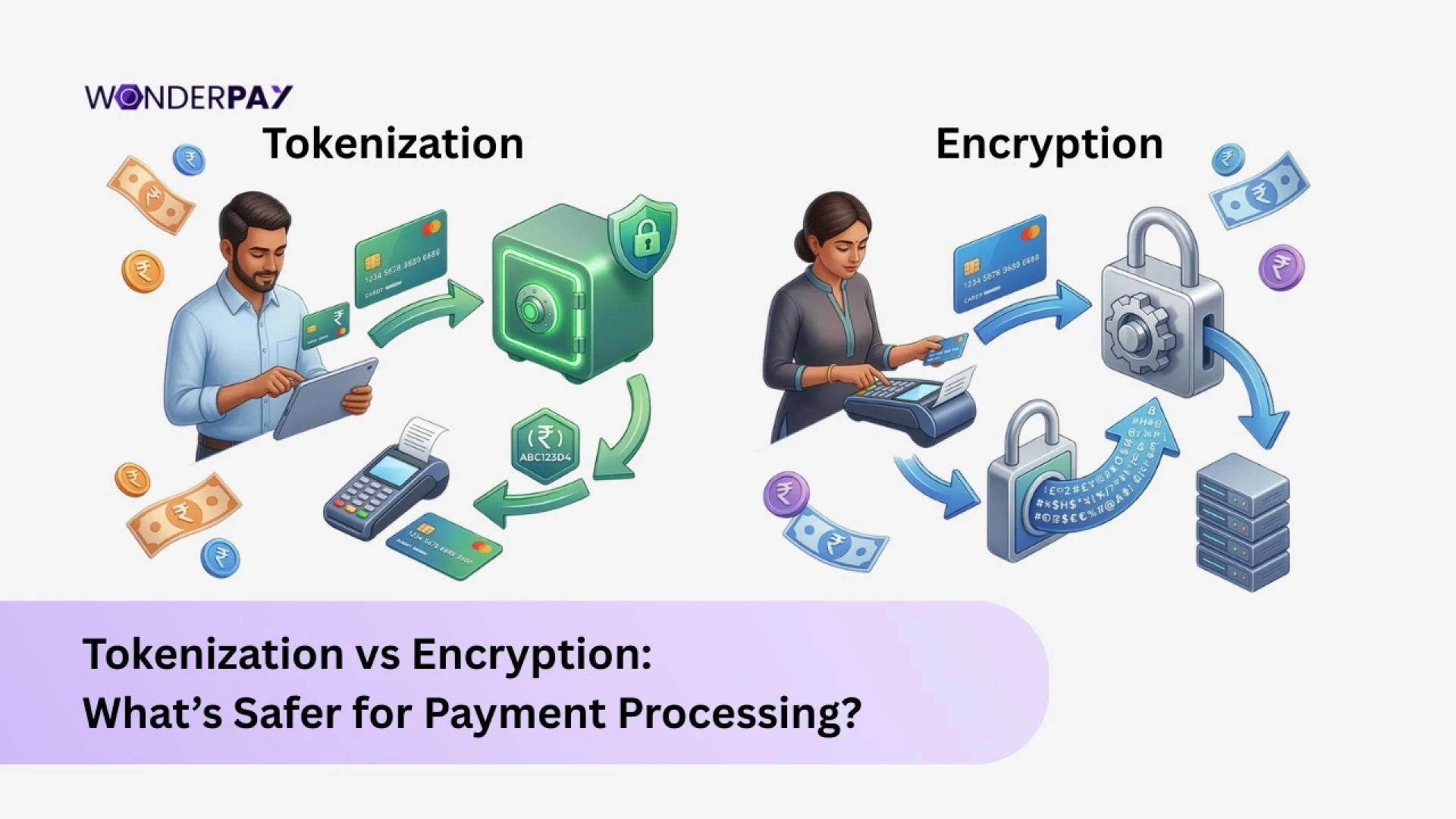
Encryption changes sensitive information, like credit card numbers, into text that can't be read by using cryptographic algorithms. When a customer enters their card information:
- The information is encrypted right away.
- It goes to the payment processor in a safe way.
- It is only decrypted at the authorised endpoint.
- How encryption works when you pay for things
Encryption uses:
- Asymmetric encryption makes use of public and private keys.
- SSL/TLS (Secure Sockets Layer)
- AES stands for Advanced Encryption Standard.
Advantages of Encryption
- Strong protection of data while it is being sent
- Common security practice in the field
- Required for PCI DSS compliance
- Stops attacks that take data
What encryption can't do?
- You can still read encrypted data if the key is stolen.
- Companies may still need to protect their encrypted data.
- Managing keys makes things harder.
Encryption protects data while it's being sent, but it doesn't get rid of all the risks that come with keeping it.
Also Read : Top 10 Payment Gateway in India
What does it mean to "tokenise"?
Tokenization replaces sensitive card information with a token, which is a random string that doesn't mean anything and can't be turned back into the original data.
The payment gateway keeps the real card information safe in a vault. The merchant only keeps the token.
How Tokenization Works
When a customer saves their card the card number goes to the gateway.
- The gateway makes a unique token for each user.
- The merchant keeps the token.
- The original card data is still safe in the gateway's vault.
This model is used by many of India's best payment gateway companies to follow RBI rules.
The Benefits of Tokenization
- Keeps merchants from keeping private information
- Makes PCI compliance easier to handle
- Tokens are useless if they are stolen.
- Best for payments and subscriptions that happen more than once
Issues with Tokenization
- Needs infrastructure at the gateway level
- Works mostly in the same way to pay
- Tokenization protects data even when it's not being sent, not just when it's being sent.
What does RBI want in India?
To make digital payments safer, the Reserve Bank of India has made card-on-file tokenization a requirement. Merchants can't store real card numbers. Instead, they have to use tokenised card data that payment gateways and aggregators that have been given permission give them. So, Indian businesses that want to follow the rules must use tokenization.
Which is safer for taking payments?
When used together encryption and tokenization both ensures a secured digital payment ecosystem. A good Payment Gateway Service Provider usually does these things:
- Encryption to protect data while it is being sent
- Tokenization to keep stored card data safe
- Following the PCI DSS compliance
- Systems for finding fraud
- Security architecture from beginning to end
How to Choose a Secure Payment Gateway in India
When picking a Payment Gateway in India, keep these things in mind:
1. Following the RBI: Make sure the gateway follows the rules for tokenization.
2. Getting certified by PCI DSS: This makes sure that everyone follows the same rules for safety while handling sensitive card information.
3. Encryption from the beginning to the end: Check for SSL/TLS and strong encryption algorithms.
4. Vault for Safe Tokens: Tokens should be safe with the gateway.
5. Tools to help you find fraud: AI-powered fraud detection makes things even safer.
6. Help with putting things together: Choose a gateway that works well with your website, app, or ERP system.
How to Use in the Real World
Consider starting a SaaS platform that costs a monthly fee:
- Customers keep their cards.
- The gateway changes the card information into tokens.
- Every month, people use tokens to pay.
- Your server never saves the real card number.
- Even if someone gets into your database, they won't get any real card data, just useless tokens.
That's what tokenization is good for.
What is the safest thing in the end?
We can only see
- Encryption protects data while it is being sent.
- Tokenization protects stored data and makes it less likely that it will be seen.
- People think that tokenization makes digital payments safer for merchants, especially in India. For safe transmission, encryption is still needed.
Conclusion
As digital payments become more common in India's financial system, businesses need to make security their top priority when picking the Top Payment Gateway in India. Tokenization and encryption are not two separate technologies; they work together.
Read more: The Future of Digital Payments