
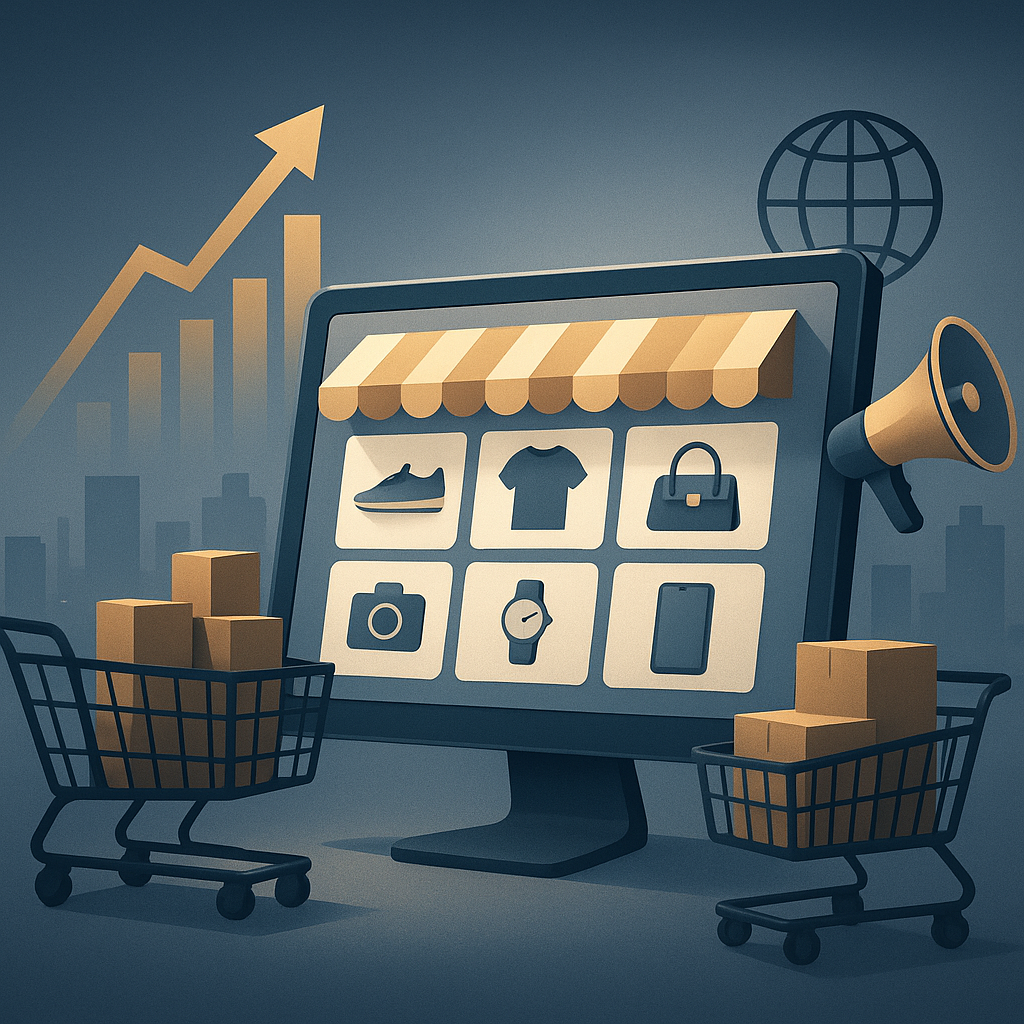
Hook: The Digital Marketplace Explosion
Imagine a bustling marketplace that never closes, where billions of transactions occur daily, products from every corner of the globe are just a click away, and entrepreneurs can launch global brands from their living rooms. This is the reality of eCommerce in 2026. According to industry estimates, global eCommerce sales surpassed $8.5 trillion in 2025, marking a staggering growth trajectory that continues unabated. Behind this surge lies a complex ecosystem of technology, consumer behavior shifts, and innovative business models that have redefined how commerce operates worldwide.
Early in 2026, the integration of AI-driven personalization and advanced SaaS tools has accelerated this trend, enabling even small startups to compete with retail giants. A recent study by McKinsey highlights that nearly 70% of online shoppers now expect hyper-personalized experiences, driving merchants to innovate continuously. This guide unpacks the critical components shaping eCommerce today, offering a comprehensive framework to build, manage, and scale an online store successfully.
“The ability to harness data, combined with scalable technology platforms, has democratized retail. Anyone with a viable product can now reach millions globally.” — eCommerce analyst at Gartner
Background and Context: The Evolution to Today’s eCommerce Landscape
The roots of eCommerce date back to the 1990s, with the launch of pioneering platforms like Amazon and eBay. What began as a novel way to buy books or auction collectibles has evolved into a multi-trillion-dollar industry encompassing everything from groceries to luxury goods. The early 2010s witnessed the rise of mobile commerce, social shopping, and the first wave of SaaS eCommerce platforms like Shopify, which simplified online store creation.
Fast forward to 2026, and the eCommerce ecosystem has become vastly more sophisticated. Consumer expectations have shifted alongside technology. Websites are no longer static storefronts but dynamic, AI-powered environments offering personalized product recommendations, virtual try-ons, and seamless omnichannel experiences. The pandemic accelerated digital adoption, but the sustained growth owes much to innovation in logistics, payment systems, and cloud computing.
Several key developments have shaped this evolution:
- Cloud-based SaaS Solutions: Platforms such as Shopify, BigCommerce, and emerging competitors provide merchants with turnkey solutions that integrate inventory management, marketing automation, and analytics.
- Mobile Commerce Dominance: Over 65% of eCommerce transactions now originate from smartphones, necessitating mobile-first design and payment options.
- AI and Machine Learning: From chatbots to predictive inventory, AI drives efficiency and enhances customer engagement.
- Globalization and Cross-Border Trade: Easy payment gateways and international shipping solutions have expanded market reach.
TheOmniBuzz’s coverage of how ecommerce’s digital revolution is redefining global commerce provides an excellent historical context for these transformations.
Core Analysis: Building Blocks of a Successful eCommerce Business
Launching and growing an eCommerce business requires mastering several interdependent elements. Below is a breakdown of the core pillars and their current best practices, as of 2026.
1. Platform Selection and Customization
Choosing the right eCommerce platform is foundational. SaaS platforms dominate due to their scalability, security, and integration capabilities. Shopify remains a giant, with over 4 million active merchants worldwide. However, newer platforms emphasize headless commerce, allowing for decoupled front-end customization and backend commerce logic flexibility.
Customizing the user experience to meet brand identity and customer needs is critical. Studies show that 75% of buyers judge credibility based on website design and usability. Features like instant search, dynamic filtering, and AI-driven product curation have become standard expectations.
2. Product Strategy and Inventory Management
Product assortment strategy is evolving with the rise of micro-niches and personalized product lines. Data analytics tools help identify trending products and optimize stock levels to reduce overstock and stockouts. Advances in AI forecast demand more accurately, enabling just-in-time inventory and reducing operational costs.
Dropshipping remains popular, but 2026 sees a shift toward hybrid models combining in-house inventory with third-party fulfillment to balance control and scalability. For a deep dive, see our analysis of dropshipping’s evolution.
3. Seamless Payments and Security
Payment innovation is now anchored by digital wallets, buy-now-pay-later (BNPL) options, and crypto payments in select markets. Consumers demand frictionless checkout processes; cart abandonment rates average around 70% globally, often due to complicated payment steps.
Security remains paramount. GDPR, CCPA, and other data privacy regulations require compliance, while merchants invest heavily in cybersecurity protocols to protect customer data and maintain trust.
4. Logistics and Fulfillment
Fast, reliable, and transparent shipping is a competitive advantage. The rise of micro-fulfillment centers and AI-optimized routing has shrunk delivery times significantly. Same-day delivery is standard in urban centers, while drones and autonomous vehicles are beginning to supplement traditional methods.
Returns management also impacts customer satisfaction. Automated return portals and AI-driven reverse logistics reduce friction and cost.
5. Marketing and Customer Engagement
Omnichannel marketing integrates email, social media, search engines, and marketplaces. AI-powered segmentation and personalized campaigns boost conversion rates. Influencer partnerships and social commerce have matured, with platforms like Instagram and TikTok driving direct sales.
Customer retention strategies, such as loyalty programs and subscription models, have gained traction. According to Deloitte, increasing customer retention by just 5% can boost profits by 25% to 95%.
Current Developments in 2026: Trends Reshaping eCommerce Now
The eCommerce landscape continues to evolve rapidly. Notable 2026 trends include the following:
- AI as the Default Engine: AI is embedded in almost every aspect of eCommerce, from product discovery to fraud detection and personalized pricing.
- Voice Commerce Growth: With smart speakers and voice assistants becoming household staples, voice-activated shopping grew by 38% in the past year.
- Augmented Reality (AR) Shopping: AR technology enables customers to visualize products in their environment before purchasing, reducing returns and increasing confidence.
- Sustainability as a Purchase Driver: Eco-conscious consumers demand transparency about sourcing, packaging, and carbon footprints, pushing merchants to adopt green logistics.
- Integration of Social and eCommerce Platforms: Social networks have embedded full-featured storefronts, blurring the line between browsing and buying.
Technology companies continue innovating to support these trends. SaaS providers have released enhanced AI modules and AR toolkits, empowering merchants to stay competitive. For insights on technology’s role, see our feature on how SaaS is revolutionizing eCommerce.
“In 2026, agility in adopting new tech and evolving customer expectations defines who wins and who falls behind in eCommerce.” — CTO, leading SaaS eCommerce platform
Expert Perspectives and Industry Impact
The voices leading the eCommerce sector emphasize integration, customer-centricity, and innovation. Experts agree that no single factor guarantees success; instead, it’s the orchestration of multiple components that creates resilience.
Industry leaders highlight the following insights:
- Data-Driven Decision Making: Leveraging real-time analytics is no longer optional but essential. Understanding customer behavior at granular levels helps tailor experiences and optimize operations.
- Platform Ecosystems: The future lies in interconnected ecosystems where merchants leverage multiple SaaS tools seamlessly, from marketing automation to supply chain management.
- Human Touch in Digital Commerce: Despite automation, personalized human interaction—via live chat or curated content—remains vital to building trust and loyalty.
Executives from major platforms stress sustainability and ethical practices as emerging priorities influencing brand reputation and consumer preference. They foresee regulatory frameworks tightening, especially around data privacy and environmental impact.
“Sustainable commerce is not just a trend but a necessity. Consumers reward brands that take real action on environmental and social responsibility.” — Chief Sustainability Officer, global retailer
What to Watch: The Future of eCommerce and Key Takeaways
Looking forward, several developments warrant close attention. The intersection of emerging technologies and changing consumer values will drive eCommerce’s next phase.
Key areas to monitor:
- Metaverse Commerce Expansion: Virtual reality shopping environments could become mainstream, offering immersive brand experiences.
- Advanced Supply Chain Transparency: Blockchain and IoT devices will enable traceability, enhancing consumer trust.
- AI-Enhanced Customer Service: Next-gen conversational AI will provide hyper-personalized support around the clock.
- Global Market Diversification: Growth in emerging markets will reshape competitive dynamics, necessitating localization and cultural adaptation.
For entrepreneurs and established merchants alike, the imperative is clear: embrace technology, prioritize customer experience, and commit to sustainability. TheOmniBuzz’s detailed articles on unlocking Shopify’s full potential and eCommerce in 2026 trends and challenges offer practical insights for staying ahead.
In conclusion, eCommerce’s dynamism demands continuous learning and adaptation. Success hinges on a holistic approach combining technology, strategy, and customer empathy. As the digital marketplace expands, those who innovate thoughtfully will thrive.