
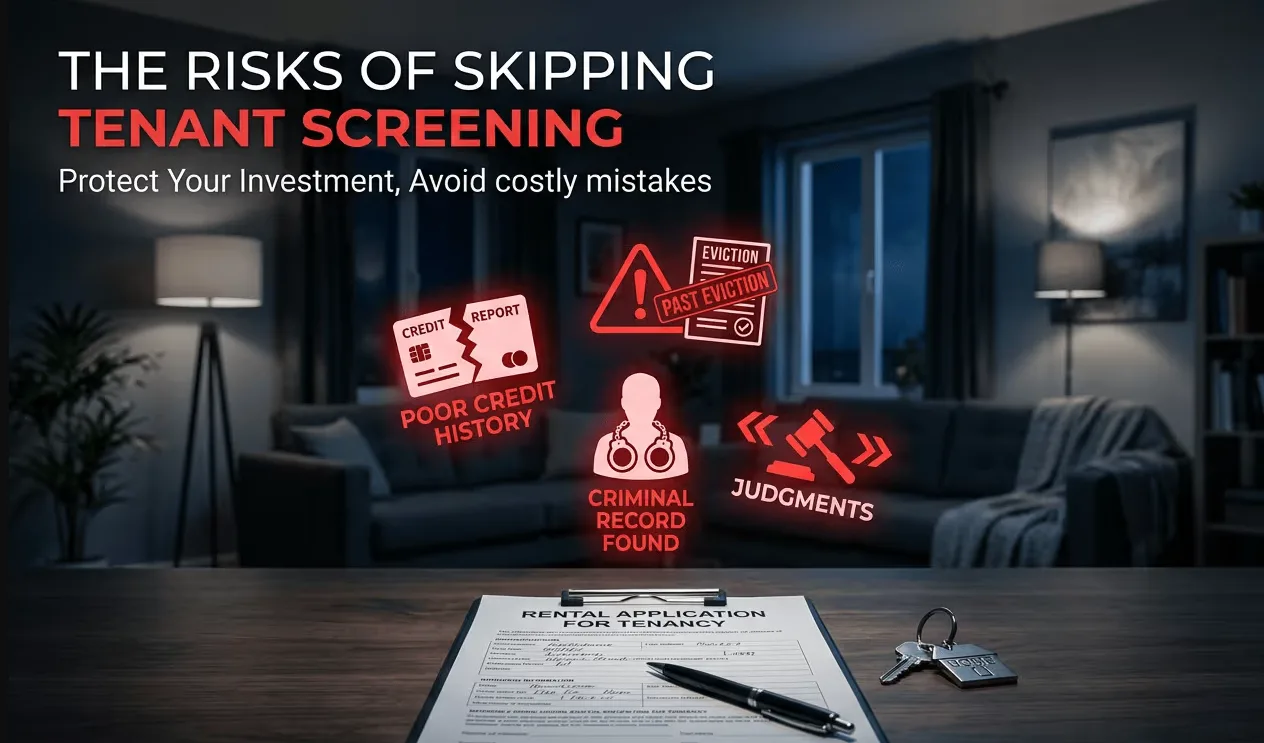
Skipping tenant screening can turn a rental property into a financial and operational problem very quickly. Without properly checking an applicant’s rental history, payment reliability, income stability, and background, landlords may end up dealing with unpaid rent, property damage, lease violations, legal disputes and costly evictions.
The real issue is not just placing the wrong tenant. It is everything that follows after that decision. A bad tenant can create months of stress, lost income, repair expenses and legal complications. In most cases, the cost of proper screening is far lower than the cost of fixing problems caused by a tenant who should never have been approved in the first place.
Why Tenant Screening Matters Before Signing a Lease
Approving a tenant is one of the most important decisions a landlord makes. Once a lease is signed, the property owner is committing not only to a tenant but also to the financial and operational risks that come with that tenancy. This is why a structured tenant screening process is often one of the most effective tools for protecting both the property and the rental income it generates.
Financial Protection
Screening helps verify income, employment and payment history, reducing the likelihood of rent collection issues and financial losses.
Tenant Reliability
Reviewing rental history and background information provides insight into whether an applicant has a track record of meeting lease obligations and maintaining rental properties responsibly.
Reduced Landlord Risk
Proper screening helps identify potential red flags before a lease is signed, lowering the risk of disputes, lease violations and costly legal issues.
Long-Term Tenancy Stability
Selecting qualified tenants from the beginning often leads to smoother tenancies, fewer operational disruptions and greater long-term occupancy stability.
The Hidden Risks of Skipping Tenant Screening
Many landlords skip or rush the screening process to fill a vacancy quickly. This can save time initially but can lead to much greater financial and operational problems down the road. Many serious tenancy problems can often be traced back to one of the most common tenant screening mistakes: approving an applicant without fully verifying their background and qualifications.
- Increased Risk of Late or Missed Rent Payments – Without proper verification of income, employment and payment history, landlords may unknowingly approve tenants who struggle to meet their financial obligations.
- Higher Chances of Property Damage – Skipping tenant screening increases the risk of placing tenants who may neglect property care, resulting in costly repairs and maintenance issues.
- More Frequent Lease Violations – Applicants with a history of lease violations may be more likely to create recurring issues involving occupancy limits, unauthorized occupants, property misuse, or failure to comply with lease terms.
- Costly Eviction Proceedings – Evictions can involve legal expenses, lost rental income, vacancy periods, and significant administrative effort, making them one of the most expensive consequences of inadequate screening.
Step-by-Step Tenant Background Check Process
A structured tenant screening process helps landlords make informed decisions before approving an applicant. While every property may have slightly different requirements, professional screening typically follows several key steps designed to verify information, assess risk and support better tenant selection.
Step 1: Verify Identity & Rental Application Information
Confirm the applicant's identity and verify the accuracy of information provided during the rental application screening process.
Step 2: Review Employment & Income Stability
Verify employment and income details to assess the applicant's ability to meet ongoing rent obligations.
Step 3: Check Previous Rental History
Review past rental records to evaluate payment habits, lease compliance, and property care.
Step 4: Conduct Tenant Background Checks
Perform tenant background checks to identify potential concerns that may affect tenancy risk.
Step 5: Contact References & Verify Information
Speak with previous landlords or references to confirm information and assess applicant reliability.
Step 6: Evaluate Overall Risk Before Approval
Review all screening results together to determine whether the applicant meets the property's qualification criteria.
Property owners who want a more streamlined and professional approach can benefit from dedicated Tenant Screening & Placement Services, which help ensure applicants are thoroughly evaluated before a lease is signed.
How One Bad Tenant Can Cost Thousands of Dollars
The financial consequences of picking the wrong tenant are usually more than just not getting paid. Late rent, unpaid rent, property damage and lease violations can pile up quickly and interfere with normal operations on the property and put a strain on your finances. That’s why many landlords pay for professional tenant screening services before they sign a lease.
If problems get worse, landlords may also have to pay legal fees, court costs, eviction costs, the cost of a vacancy period, and the cost of finding a new tenant. Add these expenses together and a bad leasing decision can easily cost thousands of dollars. Proper tenant screening is in many cases far less expensive than the consequences of placing the wrong tenant.
Common Tenant Screening Mistakes Landlords Make
Even landlords who understand the importance of screening can make mistakes that increase risk and lead to costly tenancy issues. A thorough tenant screening process helps reduce uncertainty, but only when each step is completed carefully and consistently.
Rushing the Approval Process
Vacant properties can create pressure to place a tenant quickly. However, rushing an approval decision often leads to overlooked red flags and increases the likelihood of future problems.
Skipping Background Checks
One of the most common tenant screening mistakes is failing to perform proper background reviews. Without sufficient verification, landlords may miss important information that could influence the approval decision.
Failing to Verify Income
Assuming an applicant can afford the rent without confirming employment and income details can create significant financial risk. Income verification helps ensure tenants have the ability to meet ongoing rental obligations.
Ignoring Previous Rental History
Past rental performance often provides valuable insight into future tenant behavior. Overlooking previous landlord references, payment history or tenancy records can increase the chances of approving an unsuitable applicant.
Avoiding these common mistakes helps landlords make more informed leasing decisions, reduce risk and improve the likelihood of securing reliable long-term tenants.
How Smart Key Property Management Helps Reduce Tenant Screening Risks
Selecting the right tenant involves more than reviewing an application. At Smart Key Property Management, we help property owners make informed leasing decisions through a structured and consistent screening approach that reduces risk before a lease is signed.
- A Structured Tenant Screening Process – Every applicant is evaluated using consistent qualification criteria and screening standards.
- Comprehensive Background & Verification Checks – Application details, supporting documentation and key information are carefully reviewed and verified.
- Reducing Risk Before Lease Signing – Rental history, income stability and applicant qualifications are assessed to identify potential concerns early.
- Helping Property Owners Make Informed Decisions – Our Tenant Screening & Placement services and organized Lease Administration & Renewals processes support stronger tenancy outcomes and long-term property stability.
To learn more about our full range of property management solutions, visit the Smart Key Property Management .
The Cost of Screening Is Usually Less Than the Cost of a Bad Tenant
A comprehensive tenant screening takes time and effort, but is often one of the best investments a landlord can make. The cost of screening is generally small in comparison to the potential financial impact of unpaid rent, property damage, lease violations, legal disputes and loss of income due to vacancy.
By checking applicant information, delving into rental history, and spotting potential risks before a lease is signed, landlords can make smarter decisions and decrease the chances of expensive tenancy issues. Good screening not only protects your rental income, it also leads to smoother operations, better tenant relationships and improved long term property stability.
For many property owners, it’s not just about filling a vacancy quickly, it's about finding the right tenant in the right place from the get-go. The cost of proper tenant screening in most situations is far less than the cost of dealing with the wrong tenant later.