Medical imaging has become a cornerstone of modern healthcare, enabling clinicians to diagnose, monitor, and treat a wide range of conditions with precision. As imaging technologies continue to evolve, healthcare organizations are dealing with data from multiple sources, including radiology, cardiology, pathology, and more. Managing this diverse data efficiently requires advanced solutions, and this is where Multi-Modality PACS plays a vital role.
What Are Multi-Modality PACS?
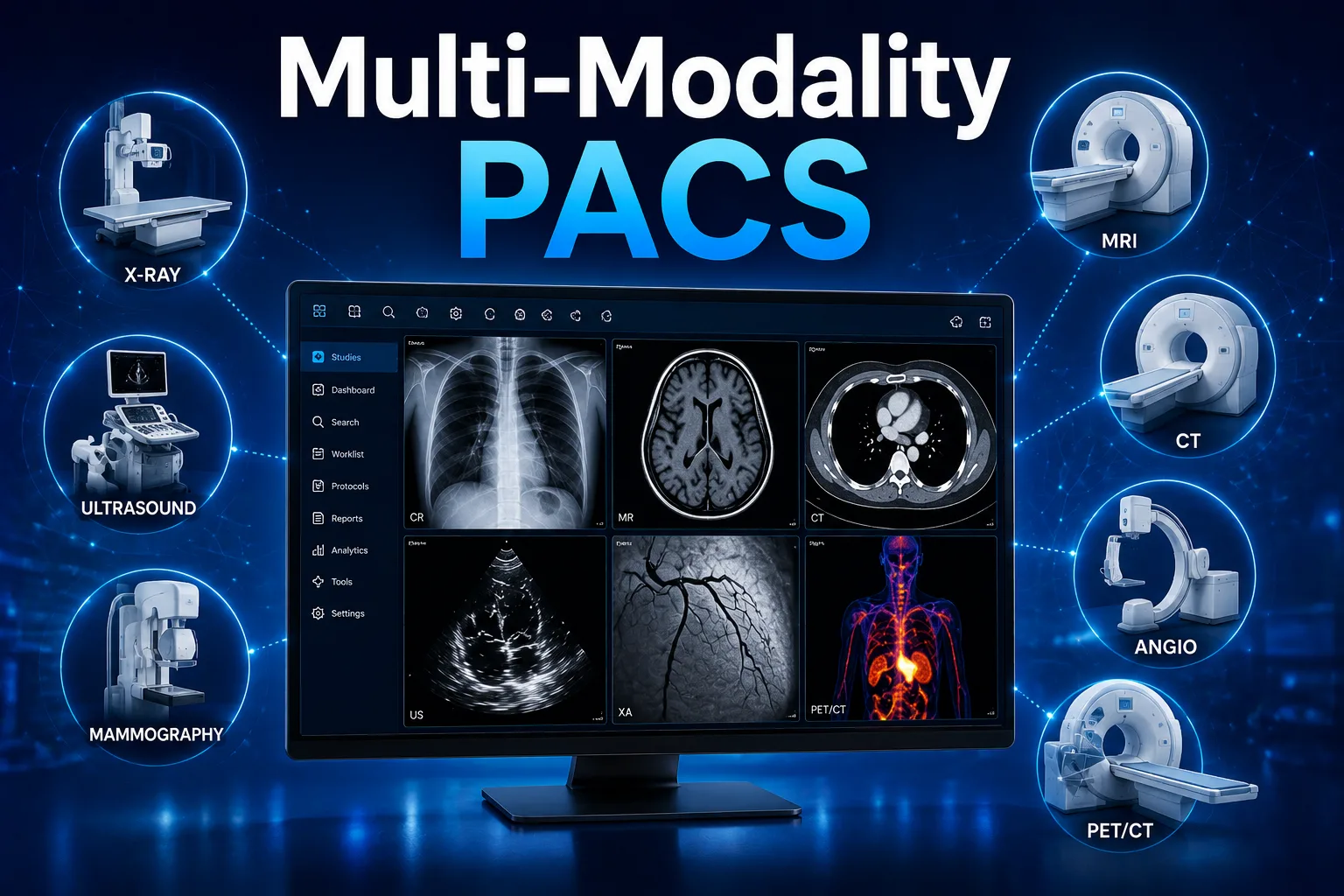
Multi-Modality PACS (Picture Archiving and Communication System) is an advanced imaging platform designed to store, manage, and display images from multiple imaging modalities within a single system. Unlike traditional PACS, which may focus primarily on radiology, multi-modality PACS supports a wide range of imaging types, including:
- X-rays
- CT scans
- MRI
- Ultrasound
- Mammography
- Cardiology imaging (echo, angiography)
- Pathology images
By consolidating all imaging data into one unified system, multi-modality PACS eliminates the need for separate platforms for each specialty, improving efficiency and accessibility.
Why Multi-Modality Imaging Matters
Healthcare is increasingly moving toward a more integrated and patient-centric approach. Patients often undergo multiple imaging studies across different departments, and clinicians need access to all relevant data to make informed decisions.
Without a unified system, imaging data can become fragmented, stored in separate silos across departments. This fragmentation leads to inefficiencies, delays, and potential gaps in patient care.
Multi-modality PACS addresses these challenges by providing a centralized platform where all imaging data is accessible in one place. This enables clinicians to view and analyze images across modalities, leading to better diagnostic accuracy and improved patient outcomes.
How Multi-Modality PACS Works
1. Image Acquisition
The process begins with imaging devices capturing patient data. These devices, such as CT scanners, MRI machines, and ultrasound systems, generate images in standard formats like DICOM.
Each modality sends its data to the PACS system, where it is stored and indexed.
2. Data Integration
Multi-modality PACS integrates data from various imaging devices and systems. It ensures that all images are associated with the correct patient records and organized in a consistent format.
Integration with systems such as RIS (Radiology Information System) and EHR (Electronic Health Records) ensures that imaging data is linked with patient demographics, clinical history, and reports.
3. Centralized Storage
All imaging data is stored in a centralized repository, which can be on-premises, cloud-based, or hybrid. This centralized storage ensures that images are easily accessible and securely managed.
Advanced storage strategies, such as tiered storage and compression, help optimize performance and reduce costs.
4. Image Retrieval and Viewing
Clinicians can access imaging data through specialized viewers that support multiple modalities. These viewers provide tools for image analysis, including zoom, measurements, annotations, and 3D visualization.
By using a single interface, clinicians can compare images from different modalities side by side, improving diagnostic capabilities.
5. Workflow Management
Multi-modality PACS streamlines workflows by automating tasks such as image routing, case prioritization, and report distribution. This reduces manual effort and ensures that imaging studies move efficiently through the system.
Key Benefits of Multi-Modality PACS
Improved Efficiency
By consolidating imaging data into a single system, multi-modality PACS eliminates the need for multiple platforms and reduces administrative workload. Clinicians can access all relevant data quickly, improving productivity.
Enhanced Collaboration
A unified system enables better collaboration between departments. Radiologists, cardiologists, and other specialists can share and review imaging data بسهولة, leading to more coordinated care.
Better Diagnostic Accuracy
Access to comprehensive imaging data allows clinicians to make more informed decisions. Comparing images from different modalities provides a more complete understanding of the patient’s condition.
Cost Savings
Maintaining multiple imaging systems can be expensive. Multi-modality PACS reduces costs by consolidating infrastructure and simplifying system management.
Scalability
Modern PACS solutions are designed to handle growing imaging volumes and support multi-site operations. This scalability ensures that the system can adapt to future needs.
The Role of Enterprise Imaging
Multi-modality PACS is a key component of broader enterprise imaging strategies. An Enterprise Imaging PACS extends the concept of multi-modality integration across the entire healthcare organization, including non-traditional imaging sources such as dermatology and ophthalmology.
Enterprise imaging platforms provide a unified view of all patient imaging data, enabling seamless access and collaboration across departments. This approach enhances care coordination and supports value-based healthcare models.
Challenges to Consider
While multi-modality PACS offers numerous benefits, implementing and managing such systems can be complex. Challenges include:
- Integration Complexity: Connecting multiple devices and systems may require customization
- Data Migration: Transitioning from legacy systems can be time-consuming
- Security Concerns: Protecting sensitive patient data is critical
- User Training: Staff must be trained to use the new system effectively
Addressing these challenges requires careful planning, strong IT support, and collaboration with experienced vendors.
The Future of Multi-Modality PACS
The future of multi-modality PACS is being shaped by emerging technologies such as artificial intelligence, cloud computing, and advanced analytics. AI-powered tools can assist in image interpretation, automate workflows, and provide predictive insights.
Cloud-based PACS solutions are enabling greater flexibility and accessibility, allowing clinicians to access imaging data from anywhere. Integration with enterprise imaging platforms will continue to expand, creating more connected and efficient healthcare ecosystems.
Conclusion
Multi-modality PACS is transforming modern imaging by providing a unified platform for managing diverse imaging data. By integrating multiple modalities into a single system, it improves efficiency, enhances collaboration, and supports better clinical decision-making.
As healthcare continues to evolve, adopting advanced solutions like Enterprise Imaging PACS will be essential for delivering high-quality, patient-centered care. With the right technology in place, healthcare organizations can streamline workflows, reduce costs, and improve outcomes in an increasingly complex imaging landscape.