
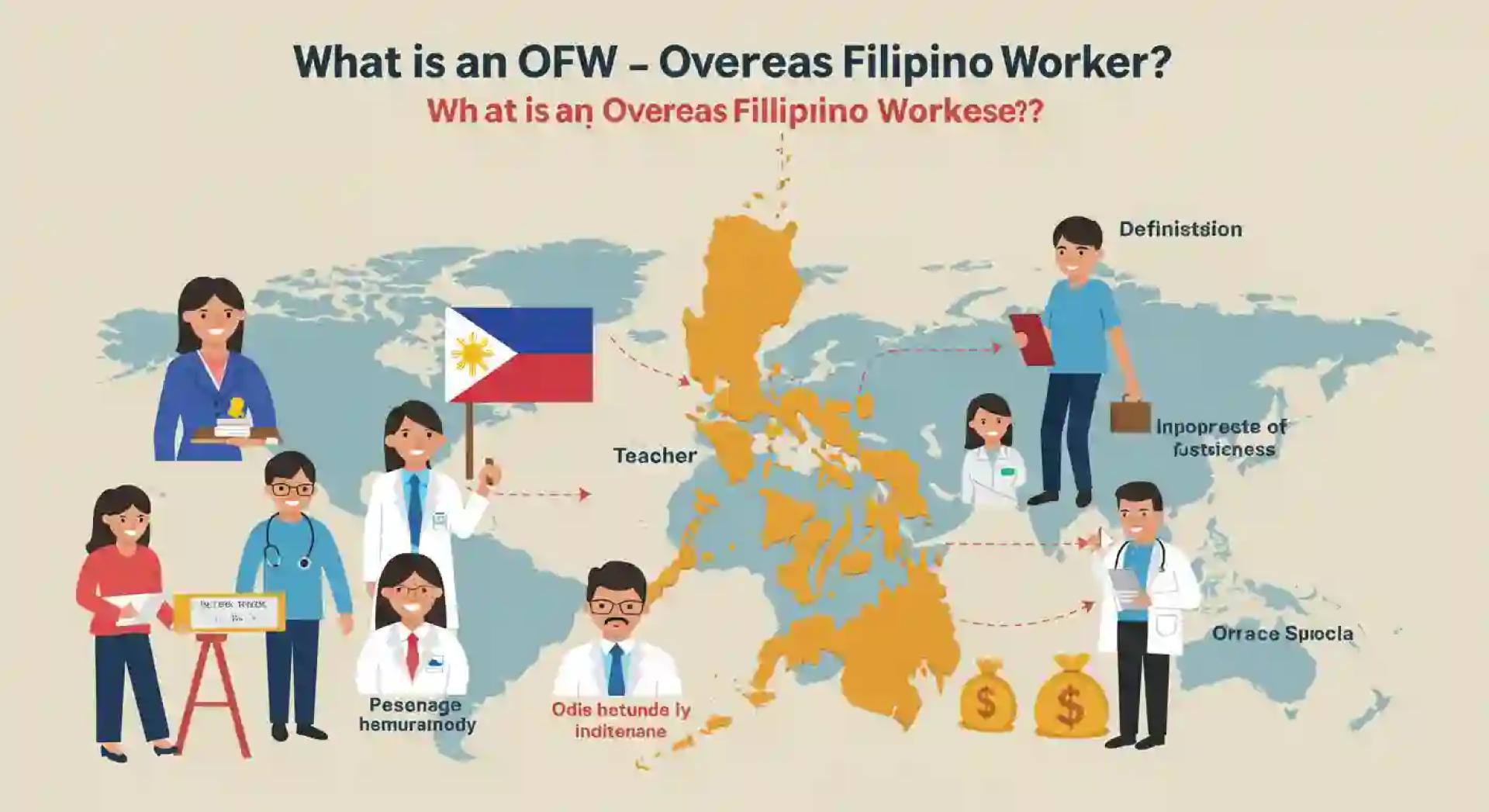
When people search for OFW meaning, they often find the simple answer: “Overseas Filipino Worker.” But behind these three letters is a long history, shaped by migration, culture, politics, and the need for better opportunities abroad. The term “OFW” is now commonly used in the Philippines and even recognized in many parts of the world. But where did it actually come from, and why did it become such a significant part of Filipino identity?
In this article, we’ll dive into the history of the term OFW, how it evolved, why it was chosen, and the story behind it. Understanding this history will help us appreciate the struggles and contributions of millions of Filipinos working abroad today.
The Early Beginnings of Filipino Migration
Long before the word “OFW” even existed, Filipinos were already working outside the Philippines. In fact, migration has been part of Philippine history for centuries.
- During the Spanish era (1500s–1800s): Some Filipinos were taken as sailors and workers on the Manila-Acapulco galleon trade route. They worked as laborers, servants, and crew in foreign lands. Many of them settled abroad, especially in Mexico and the United States.
- During the American period (1900s): Large groups of Filipinos went to Hawaii, California, and Alaska to work in plantations, farms, and canneries. They were not called OFWs yet, but they were already part of the overseas workforce.
- Post-World War II: More Filipinos went abroad as nurses, teachers, and laborers, especially in the United States and the Middle East.
These workers were often referred to as “migrants,” “overseas contract workers,” or simply “Filipino immigrants.” The exact term “OFW” had not been created yet, but the movement of Filipinos across borders was already happening.
The Birth of the Term “Overseas Filipino Worker”
The term “OFW” as we know it today officially came into use in the 1970s during the administration of President Ferdinand Marcos.
- At that time, the Philippines faced a serious economic crisis. Jobs were limited, and many Filipinos were unemployed.
- To solve this, the government created labor export programs that encouraged Filipinos to work abroad, especially in the Middle East, where oil-rich countries needed construction workers, engineers, and domestic helpers.
- These workers were called “Overseas Contract Workers (OCWs)” at first. This label highlighted the fact that they worked abroad under specific contracts.
However, in the 1990s, the term “Overseas Filipino Worker (OFW)” replaced OCW. This change was made official by the Migrant Workers and Overseas Filipinos Act of 1995 (Republic Act 8042).
The term “OFW” was considered better because:
- It highlighted the Filipino identity of the workers, not just the contract.
- It gave a more respectful and dignified title to workers who were often treated unfairly abroad.
- It became a way of recognizing their sacrifices as modern heroes of the nation.
From then on, “OFW” became the official and widely used term.
Why Did the Government Promote the Word OFW?
The change from OCW to OFW was not just a matter of language—it was also political and cultural.
- The Philippine government saw OFWs as an important part of the economy because their remittances (money they send home) became one of the largest sources of national income.
- To encourage more Filipinos to work abroad, the government started calling them “Bagong Bayani” (modern-day heroes).
- The term OFW helped create pride and honor, instead of shame or sadness, about working overseas.
In short, the government promoted “OFW” to make migration seem more positive, even though it was also a sign of the lack of job opportunities in the Philippines.
OFW Meaning Today
When you search for OFW meaning, the simple definition is:
OFW = Overseas Filipino Worker, a person from the Philippines who is employed in a foreign country.
But in reality, the meaning goes deeper:
- It represents sacrifice—parents leaving children behind to earn money.
- It shows resilience—workers adapting to new cultures, languages, and challenges.
- It reflects pride—OFWs contribute not only to their families but also to the Philippine economy.
The term is no longer just about contracts or labor. It has become an identity, a badge of honor, and even a cultural symbol.
The Evolution of the Word Through Time
The journey of the term “OFW” shows how language adapts to history.
- Before the 1970s: Filipinos abroad were simply called migrants, immigrants, or workers.
- 1970s to early 1990s: The term “OCW” (Overseas Contract Worker) was popular.
- 1995 onwards: The official term “OFW” became standard, replacing OCW.
- Today: OFW is a household word in the Philippines, even used in songs, movies, and government documents.
This transformation shows how migration has become deeply connected to the Filipino identity.
The Role of OFWs in Philippine Society
To understand why the term “OFW” matters, we also need to see how OFWs shape Philippine society.
- Economic Impact: Billions of pesos flow into the Philippines every year through remittances. This money supports families, builds homes, and pays for education.
- Social Impact: OFWs are often called the “lifeline” of many families. Their sacrifices allow younger generations to pursue better futures.
- Cultural Impact: OFWs spread Filipino culture worldwide—through food, traditions, and community celebrations.
The word OFW carries so much weight because it is tied to all these realities.
Why the History of the Term Matters
You might ask: Why does it matter where the term came from? Isn’t it just a word?
The answer is simple: words carry meaning and identity. By understanding the history of “OFW,” we see the struggles and triumphs of Filipinos abroad. We realize that the word is more than an abbreviation—it’s a symbol of resilience, sacrifice, and national pride.
Common Misconceptions About the Term OFW
Even though the term is widely used, many people still misunderstand it.
- OFWs are not the same as immigrants.
- Immigrants settle permanently in another country.
- OFWs usually go abroad temporarily for work, though some eventually stay longer.
- Not all overseas Filipinos are OFWs.
- Students, permanent residents, and undocumented workers abroad may not be considered OFWs.
- OFWs are not only domestic helpers.
- While many OFWs work as caregivers or household workers, they can also be engineers, nurses, teachers, IT professionals, and more.
How the Word OFW Shapes Identity
The word “OFW” has grown into something beyond just employment. For many, it is a badge of identity. Families proudly say, “My father is an OFW” or “My mother is an OFW.” It shows sacrifice and success, even though it also comes with challenges like homesickness and separation.
It has also created new communities. In countries like Saudi Arabia, UAE, Hong Kong, and Singapore, OFWs gather in groups, churches, and organizations. They are united not only by their work but by the shared label of being “OFWs.”
The Emotional Side of the Word
Behind the history and meaning, “OFW” is also an emotional term. For millions of families, it means:
- Long-distance parenting – raising children through calls and remittances.
- Missed moments – birthdays, graduations, and family milestones.
- Hope – believing that sacrifices will lead to a better future.
This is why the term is so powerful—it carries stories, sacrifices, and dreams.
Conclusion
So, where did the term OFW come from? It began as OCW (Overseas Contract Worker) in the 1970s when the government encouraged Filipinos to work abroad during an economic crisis. Over time, it evolved into OFW (Overseas Filipino Worker) in the 1990s, officially recognized by the Migrant Workers Act of 1995.
Today, when you hear or search for OFW meaning, it no longer only defines a worker abroad. It represents millions of stories, sacrifices, and the pride of a nation that relies heavily on its people working overseas. The history of the word reminds us that being an OFW is not just about contracts—it’s about resilience, family, and the Filipino spirit.