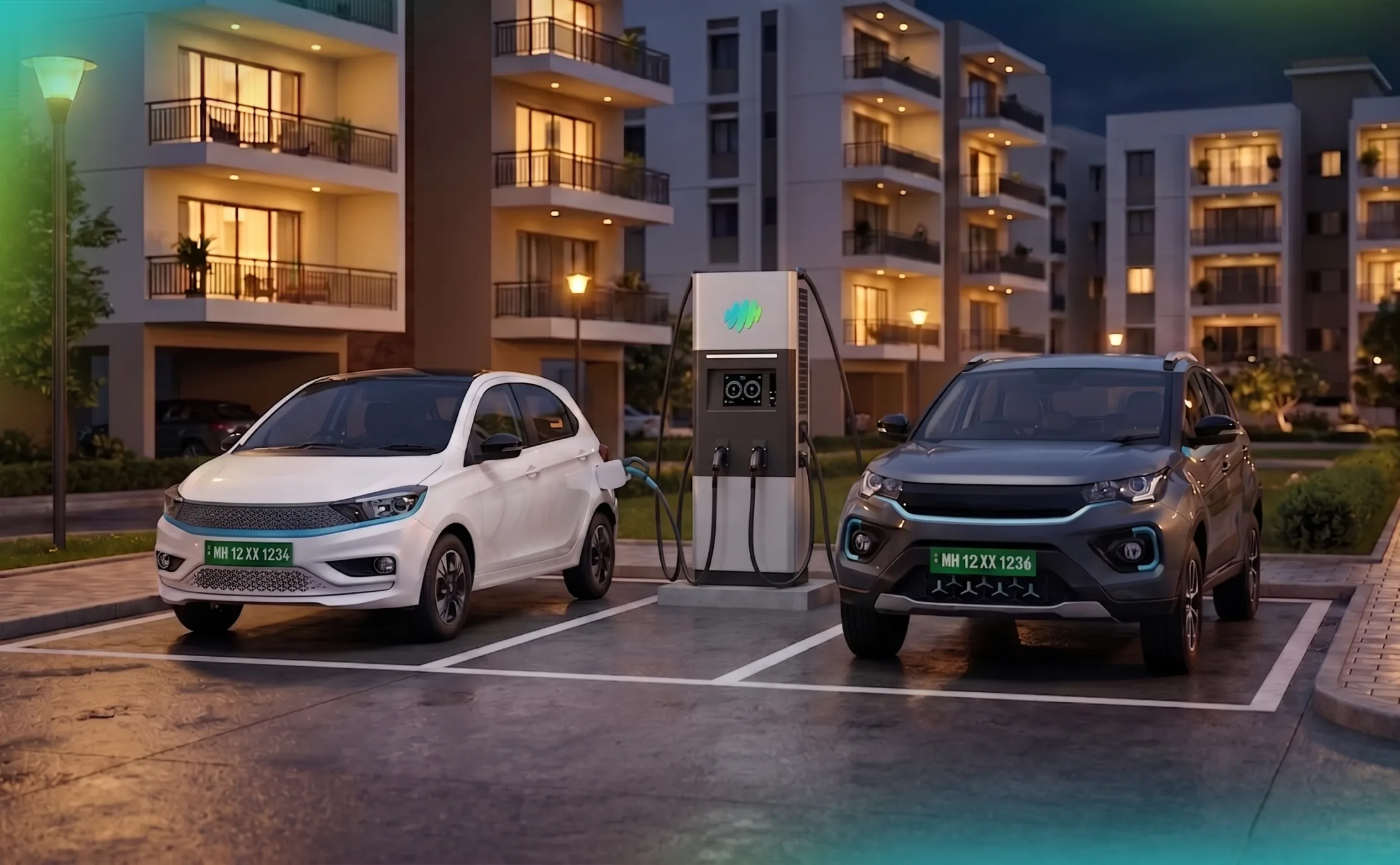
Electric vehicles are becoming a normal part of everyday life.
A few years ago, spotting an EV on Indian roads felt unusual. Today, electric scooters deliver groceries, electric rickshaws transport passengers, and electric cars are increasingly common in residential communities and office parking lots. India's EV adoption continues to grow rapidly as consumers look for cleaner and more economical transportation options.
Yet despite this growth, one concern keeps appearing in conversations among potential EV buyers:
"Where will I charge my vehicle?"
For many people, the concern isn't about the vehicle itself. It's about whether charging can fit seamlessly into daily life.
The Real Problem Isn't EV Adoption
Many assume the biggest challenge for electric mobility is convincing people to buy EVs.
In reality, adoption is happening.
The bigger challenge is making charging convenient enough that people don't have to think about it constantly.
A driver living in an apartment may worry about charger availability.
A commercial property owner may want to offer charging but hesitate because of infrastructure costs.
A fleet operator may be unsure whether demand justifies a large investment.
These concerns are not about EVs. They're about charging accessibility and practicality.
Why Charging Infrastructure Feels Complicated
Unlike traditional fuel stations, EV charging infrastructure must work across many different environments:
- Homes
- Apartments
- Commercial parking facilities
- Office complexes
- Fleet depots
- Highways
- Tourist destinations
Each location has different power requirements, usage patterns, and investment considerations.
For example, a shopping center may see frequent short visits, while a residential community experiences overnight charging demand. A fleet depot may require predictable charging windows, whereas public charging stations must accommodate varying traffic levels.
Because every site is different, there is no one-size-fits-all solution.
The Cost Barrier Many Site Owners Face
One common misconception is that installing an EV charger is simply a matter of purchasing hardware.
In practice, site owners often encounter additional challenges:
- Electrical upgrades
- Utility approvals
- Space constraints
- Civil construction work
- Ongoing maintenance requirements
For smaller businesses or first-time charging operators, these factors can make the initial investment feel risky.
This often leads to delays, even when there is clear demand for charging services.
A Better Approach: Start Small, Scale Later
Many successful infrastructure projects follow a simple principle:
Validate demand before making major investments.
Instead of building large charging installations immediately, operators can begin with smaller deployments and expand as utilization grows.
This approach offers several advantages:
- Lower upfront costs
- Reduced infrastructure risk
- Easier operational management
- Better understanding of local charging behavior
Whether the location is a residential complex, retail parking area, or fleet depot, a phased deployment strategy allows operators to learn from real-world usage before committing significant capital.
Charging Must Fit Daily Routines
The most successful charging solutions are often the ones users barely notice.
Think about how people use their vehicles:
They park while shopping.
They park while working.
They park overnight at home.
Charging works best when it happens naturally during these existing routines rather than requiring dedicated trips.
This shift is changing how businesses think about charging infrastructure. Instead of treating charging as a separate activity, many organizations now view it as an additional service integrated into existing destinations.
Reliability Matters More Than Speed
Many discussions about EV charging focus on charging speed.
While fast charging is important, reliability often matters more.
Drivers want confidence that chargers will be available when needed, payments will work smoothly, and charging sessions will start without unnecessary complications.
Across EV communities, users frequently highlight uptime, ease of use, and charger availability as major factors affecting their charging experience.
A charger that works consistently creates more value than a faster charger that experiences frequent downtime.
The Future of EV Charging
As EV adoption moves beyond early adopters and enters the mainstream, charging infrastructure must evolve accordingly.
The future is likely to include:
- More community charging locations
- Smarter load management
- Better software integration
- Scalable infrastructure models
- Easier deployment processes
The goal is simple: make charging feel as natural as parking.
When charging becomes an effortless part of daily routines, many of the concerns preventing EV adoption begin to disappear.
Final Thoughts
Electric vehicles are already fitting into everyday life.
The next step is ensuring charging does the same.
For charging infrastructure providers, property owners, fleet operators, and community managers, success isn't about installing the biggest charger possible. It's about creating charging experiences that align with how people actually live, work, and travel.
As India's EV ecosystem continues to expand, the winners will be those who focus on convenience, reliability, and scalability rather than simply adding more hardware.
Read more:
https://www.exicom.com/insights/blogs/ev-charging-fitting-everyday-lives