Global trade offers enormous opportunities for businesses willing to innovate, improve efficiency, and expand their reach beyond domestic markets. However, increasing production costs, technological requirements, and global competition often create challenges for exporters and manufacturers. To address these concerns and encourage export-oriented growth, governments introduce schemes that reduce financial burdens and support business expansion.
Among the most beneficial initiatives available to exporters are the Export Promotion of Capital Goods Scheme and the Advance Authorisation Scheme. Both programs are designed to improve competitiveness by lowering import costs and supporting efficient manufacturing operations.
Although these schemes serve different purposes, together they provide businesses with valuable opportunities to modernize production, reduce expenses, and strengthen their position in international markets.
Understanding the Export Promotion of Capital Goods Scheme
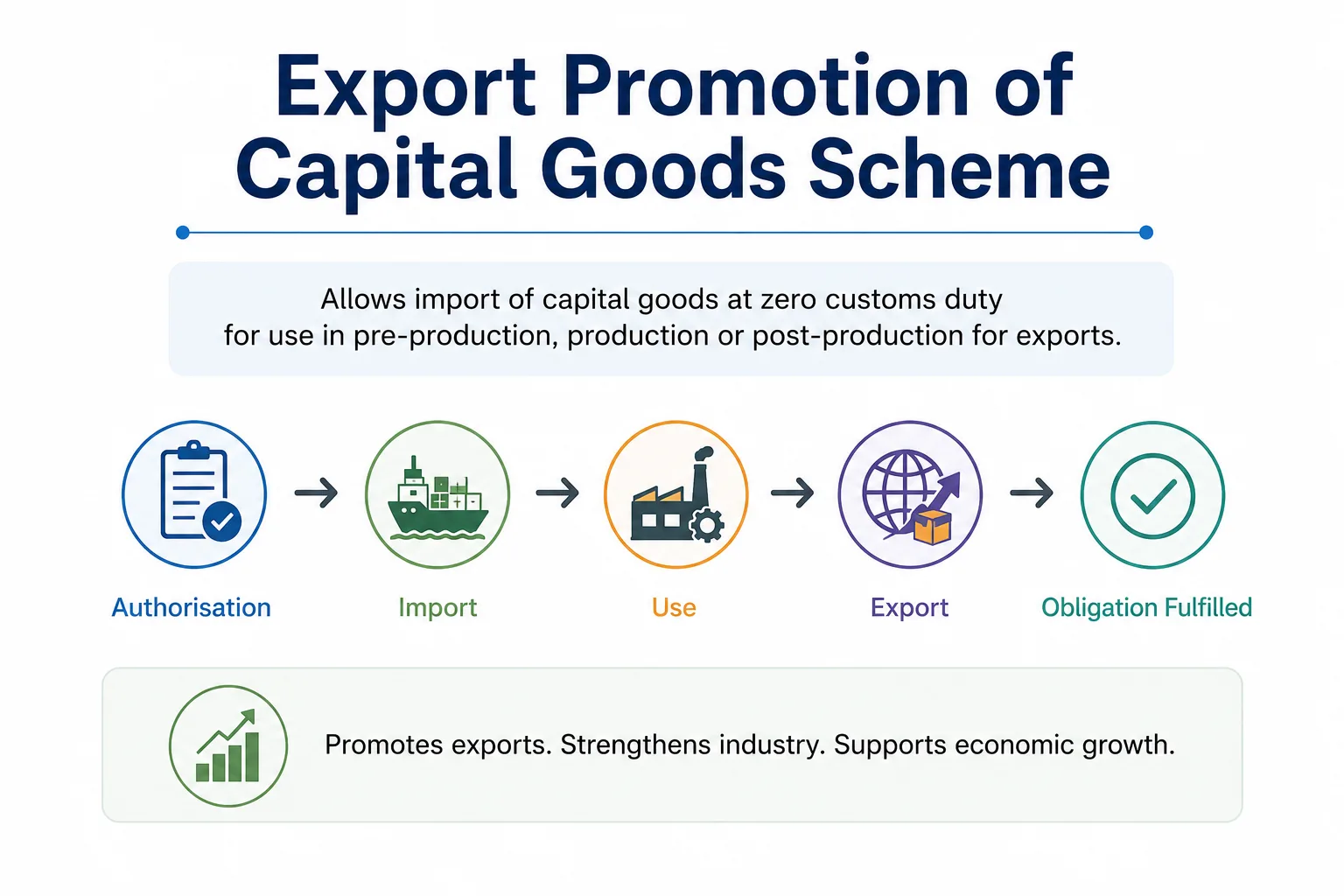
The Export Promotion of Capital Goods Scheme, commonly known as the EPCG Scheme, allows businesses to import capital goods at concessional or zero customs duty rates in exchange for fulfilling specified export obligations.
Capital goods generally include machinery, equipment, production systems, and technologies used in manufacturing processes.
The primary objective of the scheme is to encourage businesses to adopt advanced technologies and improve production capabilities while promoting exports.
By reducing the financial burden associated with importing modern equipment, the scheme enables organizations to enhance efficiency and increase global competitiveness.
Why the Export Promotion of Capital Goods Scheme Is Important
Modern manufacturing requires continuous technological improvements.
Reduces Capital Investment Costs
Modern equipment becomes more affordable.
- Businesses can import advanced machinery without paying substantial customs duties, significantly lowering the cost of production modernization and infrastructure development.
- Lower investment requirements allow companies to allocate financial resources toward innovation, marketing initiatives, and business expansion strategies.
Enhances Manufacturing Efficiency
Technology improves productivity.
- Modern machinery often increases production speed, reduces wastage, and improves product consistency and quality.
- Efficient manufacturing systems help businesses satisfy customer expectations and maintain competitiveness in international markets.
Encourages Export Growth
Improved capabilities support global expansion.
- Better production efficiency and reduced costs help organizations offer competitive pricing and enter new export markets.
Understanding the Advance Authorisation Scheme
The Advance Authorisation Scheme permits businesses to import raw materials, components, and inputs without paying customs duties, provided these imported materials are used to manufacture export products.
The primary objective of the scheme is to reduce production costs and improve the competitiveness of exported goods.
Many industries depend on imported materials that may not be readily available domestically or require specialized specifications. The scheme enables businesses to obtain these materials efficiently and economically.
As a result, companies can maintain product quality while improving profitability and export performance.
Benefits of the Advance Authorisation Scheme
The scheme offers several significant advantages.
Reduces Manufacturing Costs
Duty-free imports improve profitability.
- Eliminating customs duties on imported inputs significantly reduces production expenses and improves overall cost efficiency.
- Lower manufacturing costs allow businesses to compete more effectively in global markets.
Improves Working Capital Management
Financial resources remain available for growth.
- Companies can invest saved resources in research, technology upgrades, market development, and operational improvements.
Supports International Competitiveness
Competitive pricing creates opportunities.
- Businesses can offer high-quality products at attractive prices while maintaining healthy profit margins.
How Both Schemes Work Together
Although these programs address different business requirements, they often complement one another effectively.
For example, a manufacturing company may import advanced machinery under the Export Promotion of Capital Goods Scheme and simultaneously import raw materials under the Advance Authorisation Scheme.
The combination of reduced equipment costs and lower production expenses allows businesses to improve operational efficiency and strengthen export performance.
Organizations that strategically utilize both schemes frequently achieve better productivity, improved profitability, and stronger international competitiveness.
Industries That Benefit from Both Schemes
Several industries regularly utilize these initiatives to support growth and expansion.
Textile and Apparel Industry
Efficiency and quality remain essential.
- Manufacturers often import modern textile machinery and specialized raw materials to improve production capabilities and product quality.
Pharmaceutical Industry
Advanced production standards drive competitiveness.
- Pharmaceutical companies frequently require sophisticated equipment and imported ingredients to meet global regulatory standards.
Engineering Sector
Technology investments support growth.
- Engineering companies rely on advanced machinery and specialized components to maintain production efficiency.
Electronics Industry
Complex supply chains require strategic planning.
- Electronics manufacturers often depend on imported technologies and components to meet market demands and remain competitive.
Best Practices for Utilizing the Export Promotion of Capital Goods Scheme
Proper planning maximizes benefits.
Identify Technology Requirements Carefully
Investments should support business objectives.
- Organizations should select equipment that improves productivity and aligns with long-term expansion strategies.
Monitor Export Obligations Continuously
Compliance requires regular evaluation.
- Businesses should track export performance to ensure commitments are fulfilled within prescribed timelines.
Maintain Accurate Documentation
Records simplify administration.
- Import approvals, invoices, production information, and export records should remain organized and accessible.
Best Practices for Utilizing the Advance Authorisation Scheme
Strategic management improves outcomes.
Forecast Material Requirements Accurately
Planning minimizes operational disruptions.
- Businesses should estimate raw material needs carefully to maintain smooth production schedules.
Track Material Usage
Accountability supports compliance.
- Organizations should maintain detailed records regarding imported materials and their use in export production.
Stay Updated with Regulations
Awareness prevents complications.
- Monitoring policy changes helps businesses remain compliant and maximize scheme benefits.
Common Challenges Businesses Face
Managing export incentive schemes requires careful coordination.
Documentation Requirements
Administrative responsibilities can be extensive.
- Maintaining complete records requires dedicated effort and attention to detail.
Understanding Regulatory Procedures
Requirements may appear complicated.
- Businesses often require professional guidance to navigate procedural complexities effectively.
Resource Management
Successful implementation demands commitment.
- Companies may need trained personnel and effective systems to manage compliance activities efficiently.
Organizations that establish structured compliance processes generally experience smoother operations and greater long-term benefits.
Long-Term Benefits of Strategic Utilization
Businesses that effectively leverage both schemes often enjoy substantial advantages.
Improved Production Capabilities
Technology investments strengthen operations.
- Modern machinery and quality inputs support efficient and scalable manufacturing systems.
Greater International Competitiveness
Lower costs improve market positioning.
- Efficient operations enable businesses to compete successfully in global markets.
Better Financial Performance
Duty savings contribute to profitability.
- Reduced import costs positively influence long-term financial stability.
Sustainable Business Growth
Strategic investments create resilience.
- Organizations that modernize production and manage costs effectively are better prepared for future opportunities.
Why Businesses Should Consider Both Schemes
The Export Promotion of Capital Goods Scheme and Advance Authorisation Scheme are more than financial incentives. They represent strategic opportunities that enable businesses to improve productivity, reduce costs, and strengthen global competitiveness.
The Export Promotion of Capital Goods Scheme supports technological modernization, while the Advance Authorisation Scheme reduces manufacturing expenses through duty-free import of essential inputs.
Businesses that integrate both initiatives into their long-term strategies often achieve stronger growth and greater export success.
Conclusion
The Export Promotion of Capital Goods Scheme and Advance Authorisation Scheme play crucial roles in supporting exporters and manufacturers. While the Export Promotion of Capital Goods Scheme encourages investment in advanced capital goods, the Advance Authorisation Scheme helps businesses lower production costs by eliminating customs duties on imported inputs.
Together, these initiatives improve operational efficiency, strengthen competitiveness, and create opportunities for sustainable business growth. Organizations that strategically utilize both schemes are often better positioned to expand globally and achieve long-term success in international trade.
Looking to reduce manufacturing costs and improve your export performance? Consult experienced trade professionals to understand how the Export Promotion of Capital Goods Scheme and Advance Authorisation Scheme can help your business modernize operations, strengthen competitiveness, and achieve sustainable growth in global markets.