Online fandom has always been more than reading stories.
It is a culture of discovery, discussion, creativity, and shared language. Fans explore tags, tropes, summaries, pairings, genres, character dynamics, and emotional themes. They remember tiny details from stories, recognize patterns across fandoms, and enjoy testing how well they understand the communities they belong to.
This is one reason fandom guessing games are becoming more popular.
They turn reading culture into a quick, interactive challenge. Instead of only browsing stories, sharing recommendations, or joining discussions, players can test their recognition skills in a playful way.
For readers who spend time in fandom spaces, this kind of game feels familiar and fun.
Why Fandom Culture Works Well for Games
Fandom communities are full of recognizable signals.
A story summary can suggest a genre. A tag can reveal a trope. A few character names can define an entire emotional setup. A phrase may immediately remind readers of a specific type of fan work or community joke.
Experienced readers often notice these clues quickly.
They understand the difference between comfort fic, slow burn, hurt/comfort, alternate universe, enemies to lovers, found family, canon divergence, fix-it stories, and many other familiar patterns.
This makes fandom culture perfect for guessing games.
The challenge is not only about memory. It is about understanding context, tone, and community language.
The Popularity of Daily Guessing Games
Daily guessing games have become popular because they are simple and repeatable.
Players can open a site, look at a clue, make a guess, and compare their result. The format does not require a long tutorial or a large time commitment. It fits naturally into a short break, a morning routine, or a casual scroll through the internet.
The best daily games become small rituals.
People return each day because they want a new challenge. They also enjoy sharing results, comparing guesses, and discussing whether the clue was easy or difficult.
A fandom-based guessing game adds another layer because the clues are connected to something players already care about: stories, tags, characters, and reading habits.
A New Way to Play With Reading Knowledge
Traditional trivia games usually ask direct questions.
They may ask for a release date, a character name, a title, or a fact. Fandom guessing games can feel different because they often rely on interpretation.
Players may need to recognize a trope, identify a pattern, understand a summary style, or connect clues to a familiar reading category.
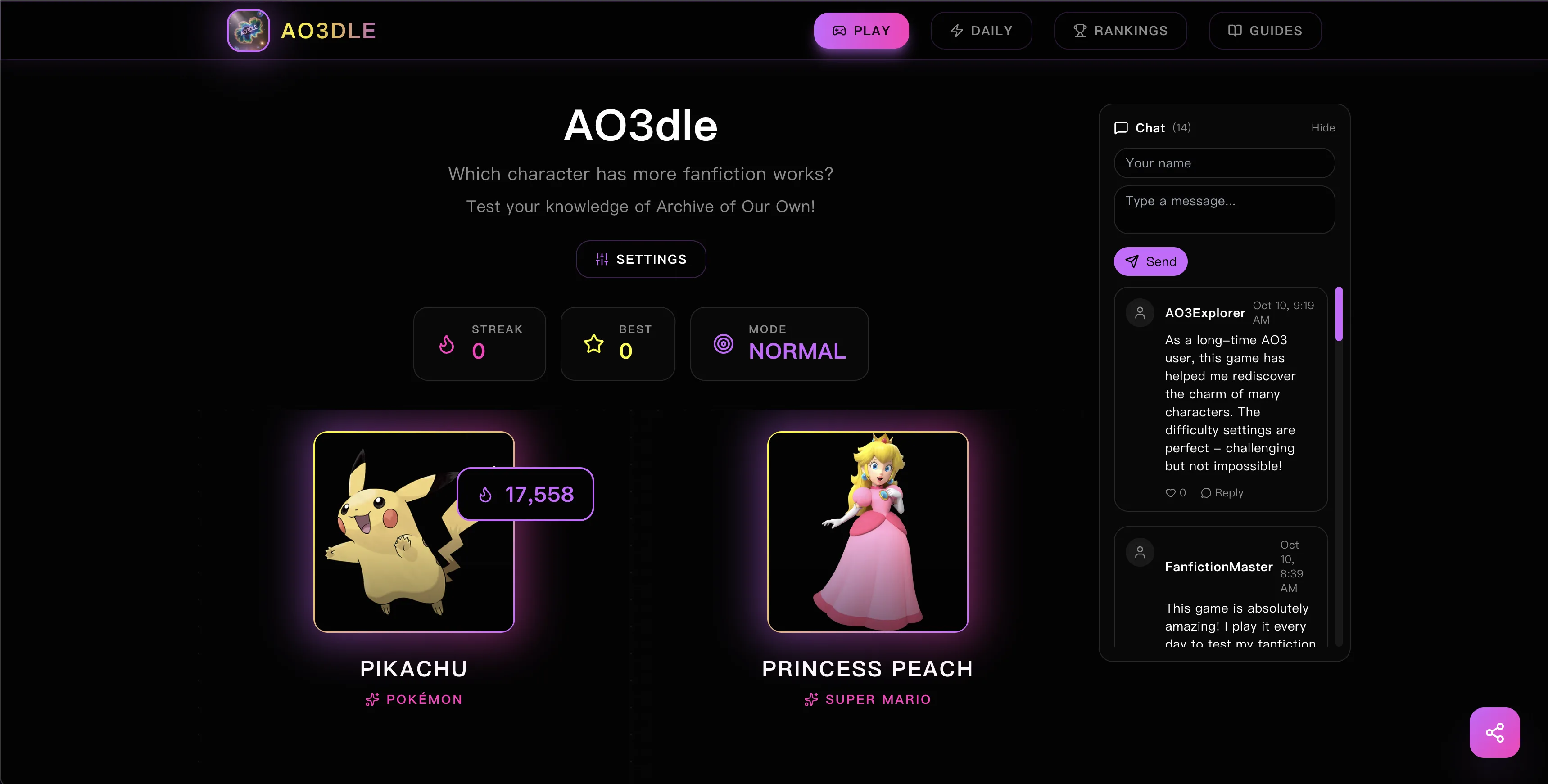
A site like ao3dle gives fandom readers a browser-based way to test their knowledge of fanfic-style clues, story patterns, and online reading culture through a simple guessing format.
The appeal is not only solving the puzzle. It is the feeling of recognition when everything suddenly makes sense.
Why Readers Enjoy Recognition-Based Challenges
Reading communities reward attention to detail.
Fans remember favorite tropes, recurring character dynamics, common tags, famous story structures, and the way different fandoms describe emotional themes. Over time, this knowledge becomes part of the reading experience.
A guessing game gives that knowledge a place to shine.
When a player recognizes a clue quickly, it feels satisfying because it proves they understand the culture behind it. They are not just guessing randomly. They are using experience built from reading, browsing, and participating in fandom spaces.
That kind of recognition-based challenge is especially rewarding for niche communities.
Fun for Both Casual and Dedicated Fans
One strength of fandom guessing games is that they can appeal to different types of players.
Casual readers may enjoy the simple puzzle format and learn more about common fandom language along the way. Dedicated fans may enjoy deeper challenges that require more specific knowledge of tropes, tags, and story patterns.
This balance helps the game feel approachable.
A player does not need to be an expert to start. But the more time someone spends in fandom spaces, the more clues they may recognize.
That makes the game easy to enter but still rewarding to master.
Why Browser Games Are Easy to Share
Browser-based games are perfect for online communities because they are easy to access.
Players do not need to download an app, install software, or create a complex account. They can open a link, play a round, and share it with friends.
This matters because fandom communities already share links constantly.
They share stories, recommendations, screenshots, memes, playlists, art, comments, and discussion threads. A quick guessing game fits naturally into that behavior.
Someone can play a round and send it to a friend with a message like, “You should try today’s clue,” or “I can’t believe I missed this one.”
That kind of sharing helps games spread organically.
The Social Side of Fandom Games
Fandom is social by nature.
Even when people read alone, they often want to discuss what they read. They comment, recommend, analyze, joke, and compare interpretations. A guessing game gives fans another reason to talk.
After playing, people may discuss:
- How many guesses it took
- Whether the clue was obvious
- Which trope gave it away
- Why one answer seemed likely
- Which fandom habits helped them solve it
- Whether the puzzle was fair or tricky
These conversations make the game more than a solo activity.
It becomes part of the community rhythm.
Learning Fandom Language Through Play
Fandom language can be confusing for newcomers.
Tags, abbreviations, trope names, ratings, warnings, relationships, and archive-style descriptions may feel overwhelming at first. A guessing game can help new readers learn these patterns in a more relaxed way.
Instead of reading a long glossary, players see clues in context.
They make guesses, notice patterns, and gradually understand how different terms are used. This kind of learning feels natural because it happens through play.
For new community members, that can make fandom spaces feel less intimidating.
Why Niche Games Can Build Loyal Audiences
Not every successful online game needs to appeal to everyone.
Some of the most memorable browser games are designed for a specific community. They feel special because they understand the habits, humor, and knowledge of that audience.
A fandom guessing game is a good example.
It may not be made for every internet user, but for readers who understand fanfic culture, it can feel personal. The game rewards knowledge that they already have but rarely get to use in a structured way.
This is why niche games often create loyal players.
They make people feel seen.
Respectful Design Matters
Fandom-based games should be created with respect for readers and writers.
Fan communities include many different interests, identities, emotional themes, and creative styles. A good game should celebrate fandom knowledge without mocking the people who create or enjoy fan works.
The tone should feel playful, not judgmental.
This matters because fandom is personal for many users. People invest time, emotion, and creativity into stories and communities. A respectful game can be fun while still honoring that culture.
How These Games Support Community Engagement
A simple guessing game can support community engagement in several ways.
It gives users a reason to return daily.
It creates easy discussion topics.
It encourages sharing.
It helps people learn community language.
It rewards long-time fans for their knowledge.
It gives casual readers a low-pressure activity.
For websites and communities, this kind of lightweight interaction can be powerful.
People may not always have time to read a long story or join a deep discussion, but they may have time for one quick puzzle.
That small interaction can keep them connected.
The Future of Fandom-Based Games
As online communities continue to grow, more niche games will likely appear.
People enjoy games that reflect their specific interests. We already see guessing games for movies, music, geography, sports, anime, books, and internet culture. Fandom and reading communities are a natural fit for this trend.
Future games may use summaries, tags, quotes, themes, timelines, character clues, or writing-style hints.
The possibilities are wide because fandom itself is rich with patterns.
As long as people enjoy stories, they will also enjoy playful ways to test how well they know them.
Final Thoughts
Fandom guessing games are becoming popular because they combine recognition, memory, creativity, and community.
They give readers a quick way to test their knowledge of tropes, summaries, tags, and online reading culture. They are easy to play, easy to share, and fun to discuss.
For casual readers, they can be a light daily challenge. For dedicated fans, they can feel like a clever test of deep community knowledge.
In a digital world where fandom is built around stories and shared meaning, games like this offer a new way for readers to connect, play, and celebrate the culture they love.