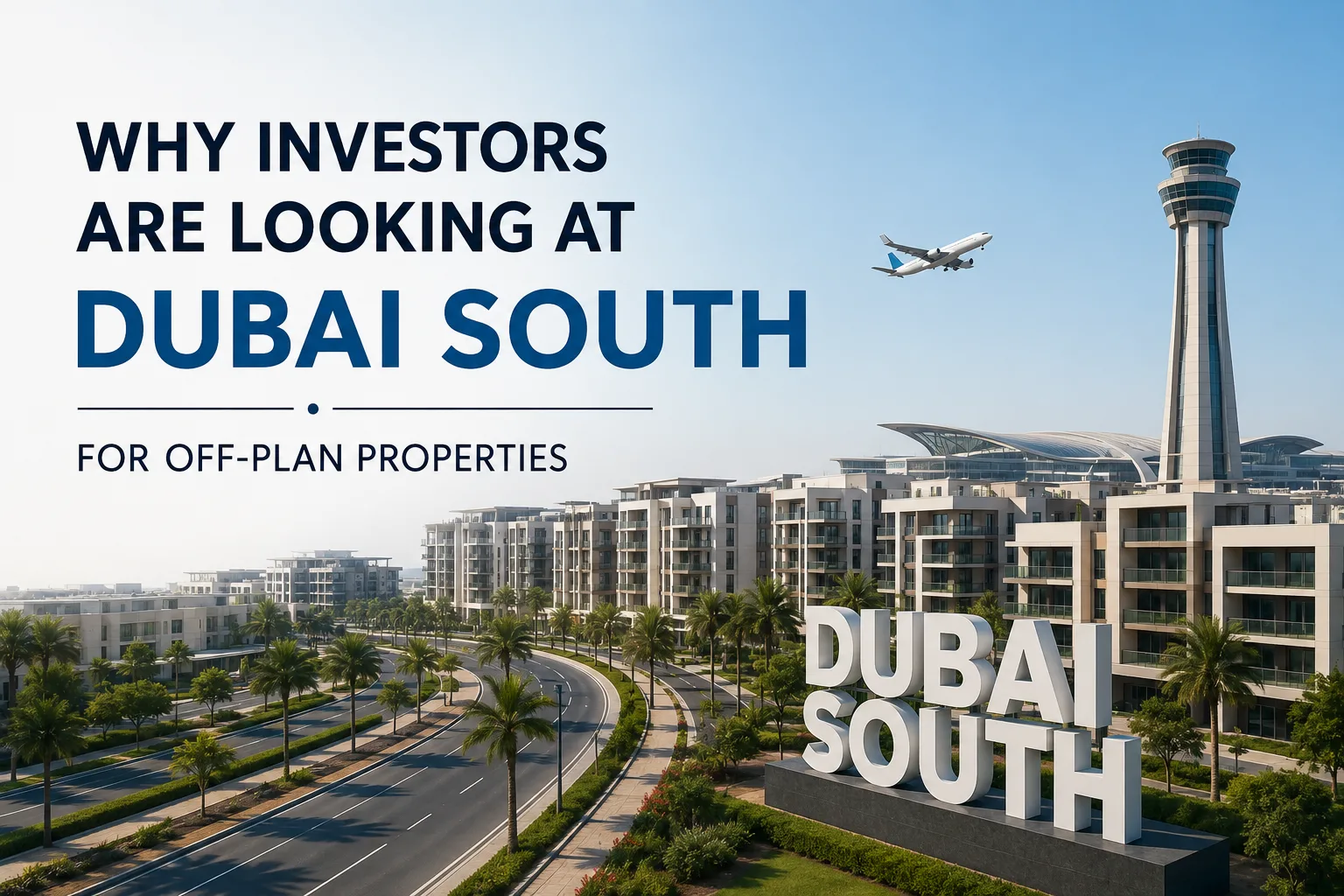
If you've been scanning Dubai's property market lately, you've probably noticed one name coming up more often than expected: Dubai South. It's not the flashiest address in the city, and it doesn't have the skyline recognition of Downtown or the beach appeal of Palm Jumeirah. Yet it's quietly becoming one of the most discussed districts among investors evaluating Dubai South off-plan properties in 2026.
The reason isn't hype. It's a combination of infrastructure timing, pricing that hasn't yet caught up to fundamentals, and a master plan built around one of the largest airport developments in the world.
What Exactly Is Dubai South?
Dubai South is a 145-square-kilometre master-planned district built around Al Maktoum International Airport, the aviation hub that's set to eventually become the world's largest airport once fully operational. The area is organized into five distinct sub-districts, covering residential, logistics, aviation, commercial, and golf-and-leisure zones.
Unlike older Dubai communities that grew organically, Off plan in Emaar South was designed top-down as a self-contained city, homes, schools, business parks, and transport links planned together rather than added piecemeal.
Why Investors Are Paying Attention Right Now
1. Off-Plan Is Already the Dominant Way People Buy in DubaiOff-plan isn't a niche strategy anymore — it's the mainstream one. Dubai recorded 87,800 real estate transactions worth Dh291.7 billion in the first half of 2026, with off-plan properties accounting for 71 per cent of all deals. That context matters: when the majority of the market is moving off-plan, the conversation naturally shifts to which off-plan locations offer the best entry point, not whether off-plan is worth considering.
2. Dubai South Is Named as a Key Growth Corridor
Industry analysts aren't just mentioning Dubai South in passing. Off-plan sales are expected to rise a further 10–15 per cent in 2026 as developers roll out large-scale projects in high-growth corridors, particularly Dubai South and Dubai Islands, according to Metropolitan Premium Properties' deputy director for off-plan sales.
3. Pricing Still Sits Below Comparable Areas
One of the clearest draws is entry cost. Off-plan pricing in Dubai South typically opens 10-20 percent below comparable secondary product, with common payment structures split roughly 60/40 or 50/50 between the construction period and post-handover.
Current prices across the area range roughly between AED 950 and AED 1,600 per square foot, and the average asking price for tracked off-plan projects sits near AED 1.7 million, or about AED 2,000 per square foot. That's meaningfully lower than established central districts, which is exactly why value-focused investors are circling it.
4. Rental Yields Are Genuinely Competitive
Yield is where Dubai South earns real attention. The area runs a gross rental yield of around 7.1 percent based on live DLD rent and price data, with a broader range of 6.5–9 percent depending on unit type and sub-district. Studios and one-bedroom units aimed at the airport and logistics workforce tend to post the strongest gross yields in the area.
5. Infrastructure Is the Real Long-Term Driver
Every long-term Dubai South thesis comes back to one thing: International Airport. As the airport scales up capacity over the coming years, demand for nearby housing, logistics staff accommodation, and commercial space is expected to scale with it — which is the core argument behind buying early, before that demand is fully priced in.
What the Data Actually Shows: A Quick Snapshot
MetricDubai South (2026)Price rangeAED 950–1,600 per sq ftAverage off-plan asking price~AED 1.7 millionGross rental yield6.5%–9% (avg. ~7.1%)Typical off-plan discount vs. resale10%–20% lowerCommon payment plan structure50/50 or 60/40 (construction/post-handover)Scored off-plan projects tracked33+Numbers sourced from DLD-linked market data and industry reporting current as of 2026; always verify live figures before committing.
The Risks Nobody Should Skip Over
This is where a genuinely useful article has to slow down, because Dubai South isn't risk-free and treating it that way does readers a disservice.
Oversupply Is a Real Concern in Mid-Market Segments
Dubai South is explicitly named among the districts facing the heaviest wave of new mid-market supply. This wave is concentrated in mid-market apartment areas, particularly Jumeirah Village Circle, Business Bay, Dubai South, and Dubailand, and a large influx of new completions in a specific segment can put downward pressure on both prices and rents in that segment.
Current forecasts suggest moderate appreciation of 3 to 8 percent in prime segments, but potential softening in some cases a correction of up to 10 to 15 percent — in oversupplied mid-market areas. That range should factor directly into how aggressively you price your expected returns.
Delivery Delays Happen More Than Marketing Suggests
Off-plan always carries handover risk. Only 64% of 2025 deliveries completed on time across Dubai's broader market, which is a reminder to check a developer's actual track record not just their sales brochure before signing.
It's a Longer Investment Horizon
Dubai South isn't a quick-flip market in the way some central districts can be. It's often considered by investors who prefer emerging districts and a longer holding period, and the strategy differs from buying in an established central community realistic exit timelines and district development patience matter more here than short-term speculation.
Practical Checklist Before You Buy
- Verify the developer's delivery history on at least two prior projects
- Confirm escrow account details through DLD's official channels
- Compare the specific sub-district's supply pipeline, not just the Dubai South average
- Model returns using the lower end of yield and appreciation ranges, not the headline figures
- Clarify post-handover payment obligations and service charges before signing
If you're weighing Dubai South against other emerging corridors, it's worth reading a comparison of off-plan versus ready properties in Dubai to understand which trade-offs matter most for your specific goals timeline, liquidity needs, and risk appetite all point in different directions depending on the buyer.
Who Dubai South Actually Suits
Dubai South tends to make the most sense for:
- Investors comfortable holding for 5+ years while infrastructure matures
- Buyers prioritizing yield over immediate capital appreciation
- Those targeting the aviation, logistics, and airport-adjacent workforce rental market
- Investors who've already done due diligence on developer track record and escrow compliance
It tends to make less sense for buyers seeking quick resale flips, or those unwilling to track localized oversupply risk closely.
Conclusion
Dubai South's appeal isn't manufactured hype, it's the product of genuine infrastructure investment meeting prices that haven't fully caught up yet. The airport expansion, the yield numbers, and the discount to comparable secondary markets are all real and verifiable.
But it's not a guaranteed win either. Oversupply in the mid-market segment, delivery timeline risk, and the need for a longer holding period are equally real, and any credible analysis has to hold both sides at once.
The investors who do well here tend to be the ones who treat Dubai South as a patient, research-driven position not a shortcut.
Ready to Explore Dubai South Off-Plan Opportunities?
If you're considering an off-plan purchase in Dubai South, the details matter more than the headline numbers, developer track record, payment structure, and sub-district supply data should all shape your decision. Speak with a licensed, DLD-registered advisor before committing to any project, and always request live transaction data rather than relying on marketing projections.