Web3 marketing looks exciting on the surface but behind the scenes, most campaigns fail.
Projects launch with strong ideas, invest in influencer promotions, and generate initial hype. But within weeks, engagement drops, communities become inactive, and growth slows down.
The problem isn’t a lack of effort. It’s a lack of strategy.
In 2026, successful Web3 marketing is no longer about short-term visibility. It’s about building systems that combine attention, engagement, and retention. This is where Discord marketing and KOL strategy come together.
In this blog, we’ll break down why most Web3 marketing campaigns fail and how to fix them using a more structured, community-driven approach.
What Goes Wrong in Most Web3 Marketing Campaigns
1. Over-Reliance on Hype
Many Web3 marketing campaigns focus heavily on hype-driven tactics announcements, influencer posts, and token buzz.
While this can generate attention, it doesn’t sustain it.
Without a system to capture and retain users, hype fades quickly, leaving projects with inactive communities and little long-term value.
2. No Clear Community Strategy
A major gap in Web3 marketing is the lack of a defined community plan.
Projects often create a Discord server but don’t treat Discord marketing as a core growth strategy. As a result:
- New users join but don’t engage
- Channels remain inactive
- Community members lose interest
Without structured Discord marketing, growth becomes short-lived.
3. Disconnected KOL Campaigns
KOL campaigns are often executed in isolation.
Influencers promote a project, generate traffic, and move on. There is no clear path for users to follow after discovering the project.
This leads to:
- Low retention
- Weak community growth
- Poor campaign ROI
4. Focusing on Vanity Metrics
Many campaigns measure success using:
- Impressions
- Likes
- Follower count
While these metrics show visibility, they don’t reflect real growth.
Effective Web3 marketing focuses on:
- Active users
- Community engagement
- Retention rates
- Conversions
5. Lack of Consistency
One-time campaigns don’t build momentum.
Web3 marketing requires consistent engagement, regular updates, and ongoing interaction. Without this, even strong campaigns lose impact over time.
How to Fix Web3 Marketing Campaigns with Discord + KOL Strategy
To succeed in 2026, Web3 marketing needs to be structured around both visibility and retention.
This is where Discord marketing and KOL campaigns work together.
1. Turn KOL Traffic into Community Growth
KOL campaigns should not just drive awareness they should drive users into your ecosystem.
The key is to:
- Direct traffic to your Discord server
- Provide a clear reason to join
- Align influencer messaging with your community
This ensures that attention converts into active participation.
2. Build a Strong Discord Marketing Foundation
Discord marketing is the backbone of Web3 community growth.
A well-structured server should include:
- Clear onboarding channels
- Organized discussions
- Regular updates and announcements
- Active moderation and engagement
When done right, Discord marketing turns new users into long-term members.
3. Create an Engagement System (Not Just Events)
Many projects rely on occasional AMAs or announcements.
Instead, build a system that encourages daily interaction:
- Discussions and prompts
- Polls and feedback
- Community-driven content
- Small but consistent activities
This keeps your Discord marketing strategy active and effective.
4. Align Campaigns with Product Milestones
Successful Web3 marketing campaigns are tied to real progress.
Coordinate:
- KOL promotions
- Discord announcements
- Product updates
This creates a continuous narrative that keeps users engaged and informed.
5. Focus on Retention, Not Just Acquisition
Growth doesn’t come from how many users join it comes from how many stay.
To improve retention:
- Reward active users
- Encourage participation
- Build relationships within the community
Strong Discord marketing plays a key role in keeping users engaged over time.
The Real Growth Loop in Web3 Marketing
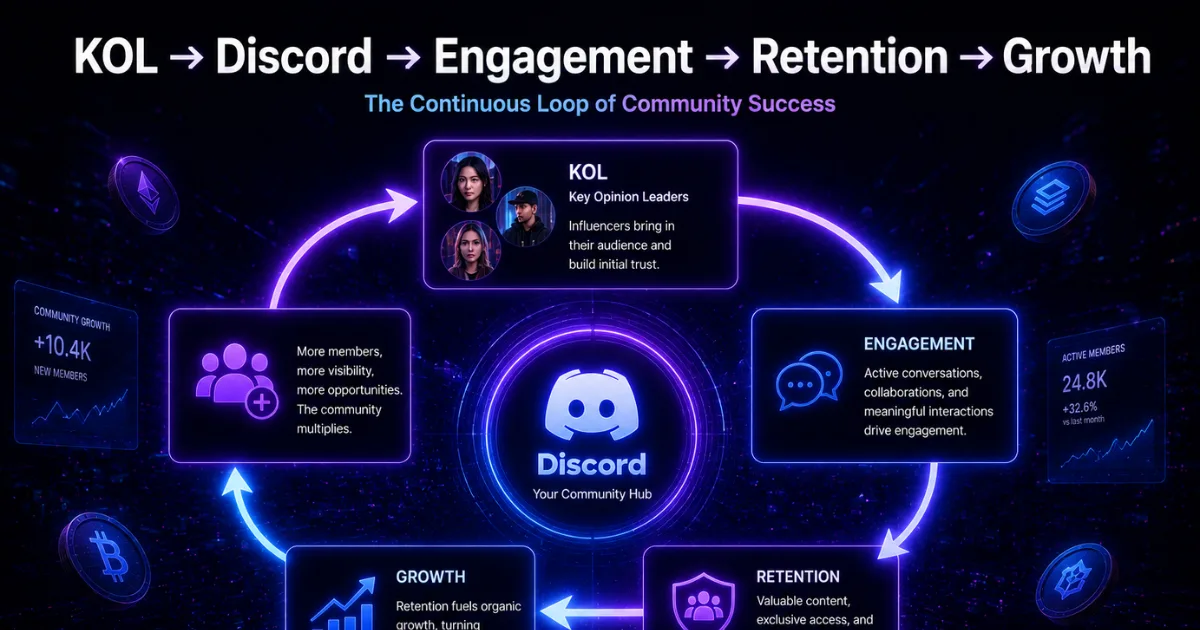
When done correctly, Web3 marketing follows a structured loop:
KOL Campaigns → Discord Marketing → Engagement → Retention → Organic Growth
Each stage supports the next.
Instead of relying on one-time spikes, this system creates compounding growth over time.
Common Mistakes to Avoid
Even with the right strategy, avoid these pitfalls:
- Driving traffic without optimizing Discord onboarding
- Running KOL campaigns without clear calls-to-action
- Ignoring community engagement
- Focusing only on numbers instead of activity
- Treating Discord marketing as secondary
Fixing these can significantly improve campaign performance.
A Practical Perspective
From what many Web3 teams experience, campaigns start performing better when Discord marketing and KOL strategies are planned together rather than separately.
Projects that focus on both attracting users and keeping them engaged tend to see more consistent growth. Some teams structure their approach by combining influencer campaigns with community-building systems, ensuring that every new user has a place to engage and contribute.
If you’re evaluating your current strategy, it’s worth looking at how well your Web3 marketing efforts connect visibility with retention.
Final Thoughts
Most Web3 marketing campaigns don’t fail because of poor ideas they fail because of disconnected execution.
Focusing only on hype, visibility, or short-term campaigns leads to temporary results. What truly drives success is a system that connects attention with engagement and turns engagement into long-term community growth.
This is why combining Discord marketing with KOL strategy is so effective. KOL campaigns bring users in, while Discord marketing keeps them engaged, builds trust, and creates a sense of belonging.
In 2026, the projects that succeed in Web3 marketing will be the ones that move beyond isolated tactics and focus on building complete growth systems. They will prioritize community, consistency, and meaningful interaction over quick wins.
Because in the end, sustainable growth in Web3 doesn’t come from how many people notice your project it comes from how many people choose to stay.