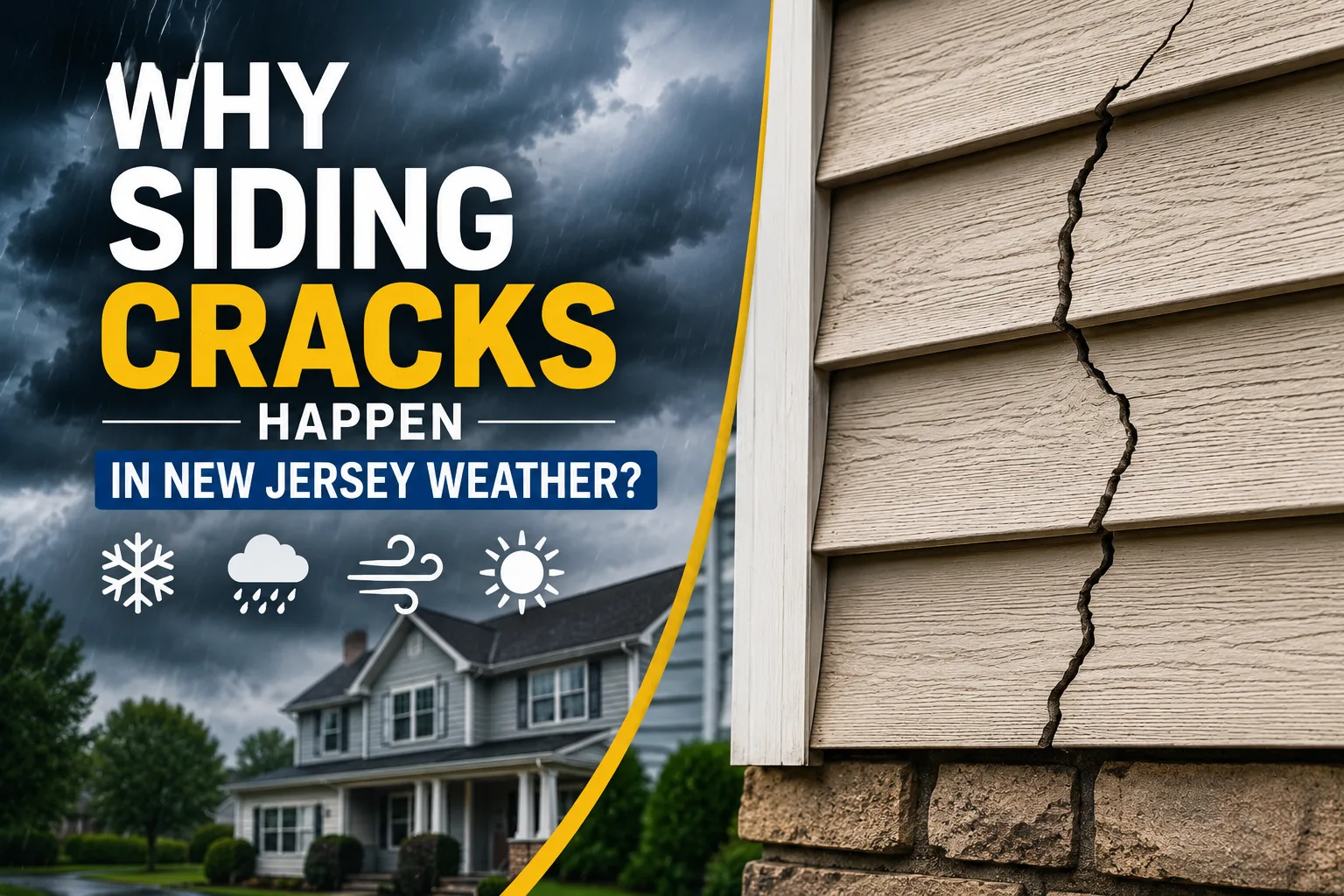
Siding plays a major role in protecting your home from outdoor damage. It helps block moisture, wind, heat, and debris while also improving curb appeal. But in New Jersey, changing weather conditions can be tough on exterior materials. Many homeowners notice cracks forming in their siding after years of exposure to heat, cold, humidity, and storms.
Understanding why siding cracks happen can help homeowners prevent bigger problems and avoid expensive repairs later.
Extreme Temperature Changes
New Jersey weather changes quickly throughout the year. Winters can bring freezing temperatures, while summers often become hot and humid. These constant temperature shifts force siding materials to expand and contract repeatedly.
Over time, this movement weakens the siding surface. Small stress points slowly develop into visible cracks, especially on older homes. Vinyl siding is especially vulnerable when exposed to years of rapid temperature changes.
Homes near coastal areas may experience even faster wear because of moisture in the air combined with heat exposure.
Storm Damage and Strong Winds
New Jersey storms can place heavy stress on siding panels. Strong wind gusts may loosen sections of siding or cause impact damage from flying debris.
When siding becomes loose, even slightly, pressure from future storms can make the problem worse. Small cracks may grow larger after repeated exposure to wind and rain.
Once severe weather passes, it’s important for homeowners to thoroughly check their siding for signs of damage, such as:
- Hairline cracks
- Loose corners
- Warping panels
- Missing sections
- Moisture stains
Ignoring early damage can allow water to enter behind the siding.
Moisture and Humidity Problems
Humidity levels in New Jersey often stay high during warmer months. Constant exposure to moisture can gradually damage siding, particularly when water gets stuck underneath the panels.
Once moisture enters small cracks, the problem can spread quickly. Water expansion during freezing temperatures may enlarge the cracks even more during winter.
Wood siding tends to absorb moisture faster, but even vinyl and fiber cement siding can develop issues when ventilation is poor.
This is one reason many homeowners contact a professional siding contractor after noticing mold spots, bubbling, or soft siding areas.
Poor Installation Mistakes
Poor installation practices are also a major cause of siding cracks developing sooner than expected.
If siding panels are nailed too tightly, they may not have enough room to expand during hot weather. As temperatures rise, the pressure can lead to cracking or buckling.
Poor alignment and missing moisture barriers can also shorten siding lifespan.
Unfortunately, installation problems may not appear immediately. Some homeowners only notice cracking years later, after seasonal weather stress begins affecting the siding structure.
Working with experienced professionals helps reduce the risk of premature siding failure.
Aging Siding Materials
Like most exterior products, siding does not last forever.
Older siding naturally becomes weaker after years of exposure to:
- UV rays
- Rain
- Snow
- Ice
- Coastal air
- Dirt buildup
Over time, the material may dry out, fade, or lose flexibility. Once siding becomes brittle, even small impacts can create visible cracks.
Many New Jersey homes built decades ago still have original siding that may now be reaching the end of its lifespan.
Regular inspections help homeowners identify aging areas before severe damage occurs.
Tree Branches and Outdoor Impact
Tree branches rubbing against siding can slowly wear down the surface. During storms, branches may scrape or hit the siding hard enough to create cracks.
Outdoor equipment can also cause accidental damage. Lawnmowers, sports equipment, ladders, and patio furniture sometimes strike siding without homeowners realizing the long-term effect.
Even small impact marks can allow moisture to enter later.
Keeping trees trimmed and maintaining safe spacing around exterior walls helps reduce these risks.
Why Small Cracks Should Not Be Ignored?
Some homeowners delay repairs because small cracks may seem harmless at first. But even tiny openings can create larger problems over time.
Cracked siding may lead to:
- Water leaks
- Mold growth
- Pest intrusion
- Higher energy bills
- Interior wall damage
- Rot behind siding panels
The longer moisture stays trapped behind the siding, the more expensive repairs can become.
Fixing minor cracks early is usually far more affordable than replacing large damaged sections later.
How to Prevent Siding Cracks?
While weather exposure cannot be avoided completely, homeowners can take steps to protect their siding.
Inspect Siding Regularly
Walk around the home a few times each year and look for:
- Cracks
- Loose panels
- Warping
- Moisture spots
- Fading areas
Early detection helps prevent bigger structural problems.
Clean the Exterior
Dirt and moisture buildup can weaken siding surfaces over time. Gentle cleaning helps remove mold, mildew, and debris that may trap moisture.
Trim Nearby Trees
Branches hanging too close to the home increase the risk of impact damage during storms and windy conditions.
Schedule Professional Inspections
A trusted siding contractor can identify hidden damage that homeowners may overlook.
Professional inspections are especially helpful after major storms or harsh winters.
Final Thoughts
New Jersey weather can be tough on home siding. Constant temperature swings, humidity, storms, moisture, and aging materials all contribute to cracking over time.
The good news is that early maintenance and routine inspections can help homeowners catch problems before serious damage develops. Addressing siding cracks quickly helps protect your home, improve energy efficiency, and maintain curb appeal for years to come.