When production volume increases, batch heat treatment systems often become a bottleneck. Operators spend time loading, unloading, and waiting for cycles to complete. This slows down throughput and creates inconsistent heating between batches. That’s where Roller Hearth Furnaces make a major difference. These furnaces are designed specifically for high production lines, where parts must move continuously through heating zones without interruption.
In real production, I’ve seen roller hearth furnaces replace multiple batch furnaces in a single line. Instead of stopping and starting, components move steadily on rollers, pass through controlled heating zones, and exit ready for the next stage. This continuous flow improves productivity and keeps quality consistent across thousands of parts.
What Is a Roller Hearth Furnace?
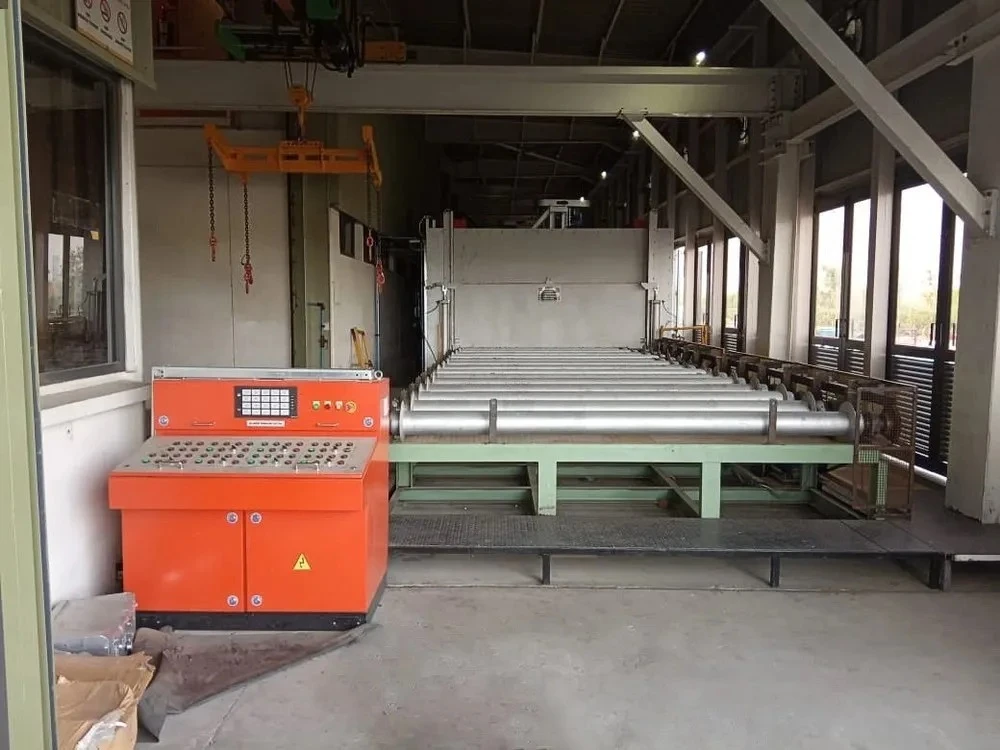
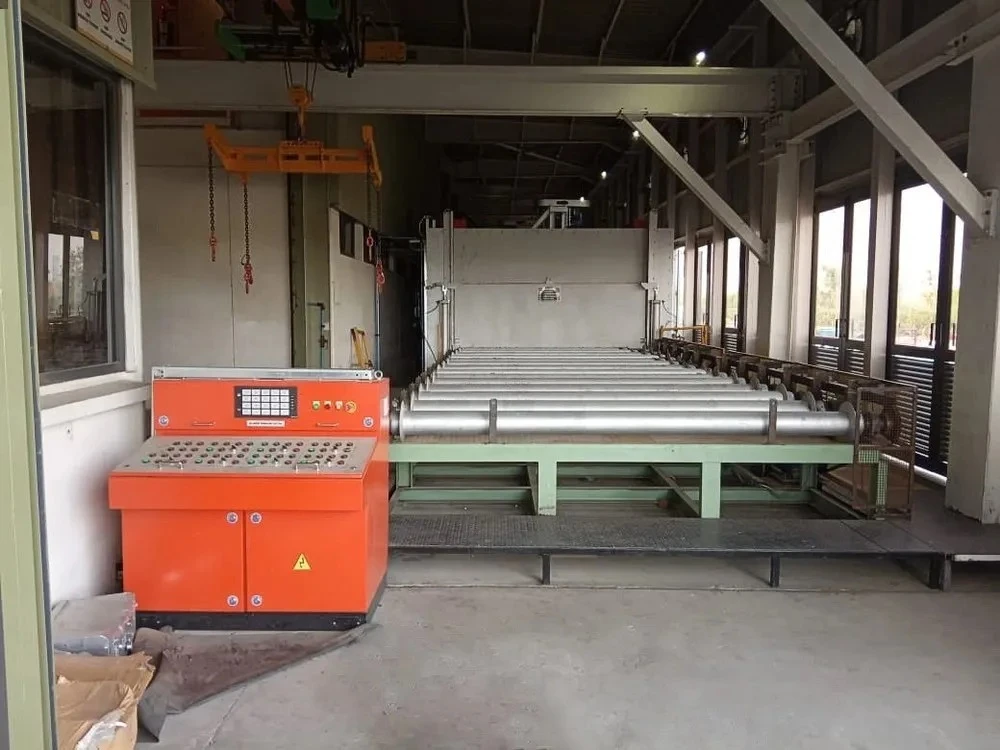
A Roller Hearth Furnace is a continuous heat treatment furnace that transports components using motor-driven rollers. Parts sit directly on the rollers and move through preheating, heating, soaking, and cooling zones.
Unlike mesh belt furnaces, roller hearth systems can handle heavier components and flat products. The rollers rotate slowly and move the load forward at a controlled speed. What actually happens is that cycle time depends on roller speed. Slower movement increases heating time, while faster movement reduces cycle duration.
This design makes roller hearth furnaces ideal for:
- Steel plates
- Billets and bars
- Forgings
- Pipes and tubes
- Automotive components
- Fabricated structures
Why Roller Hearth Furnaces Are Ideal for High Production Lines
Continuous High Throughput
The biggest advantage of Roller Hearth Furnaces is continuous production. Parts enter one side and exit the other without stopping the furnace.
In real production, this eliminates downtime between batches. Operators don’t need to wait for cooling before loading the next set. This alone can increase production capacity significantly.
Continuous movement also allows:
- Predictable output
- Stable cycle times
- Higher daily throughput
- Reduced handling delays
For high production lines, this consistency becomes essential.
Uniform Heating Across All Components
Maintaining temperature uniformity in high production lines can be difficult. Roller hearth furnaces solve this with multi-zone heating and steady movement.
Each zone maintains a specific temperature:
- Preheating zone
- Heating zone
- Soaking zone
- Controlled cooling zone
One common issue I’ve seen in batch systems is uneven heating between loads. Roller hearth furnaces avoid this because every component follows the same path and temperature profile.
This results in:
- Uniform metallurgical properties
- Consistent hardness
- Reduced distortion
- Lower rejection rates
Automation for High Production Lines
Roller hearth furnaces integrate easily into automated production lines. Parts can move directly from upstream processes into the furnace and then to quenching, cooling, or machining.
Automation typically includes:
- PLC temperature control
- Roller speed control
- Load detection sensors
- Alarm and safety systems
- HMI monitoring interface
What actually happens is that once parameters are set, the system runs continuously with minimal operator intervention.
This reduces:
- Manual handling
- Operator dependency
- Process variation
- Human error
Energy Efficiency in Continuous Operation
High production lines consume large amounts of energy. Roller hearth furnaces reduce energy waste through continuous heating.
Unlike batch furnaces, these systems do not cool down between cycles. The furnace maintains stable temperature, which improves thermal efficiency.
Energy-saving features include:
- Ceramic fiber insulation
- Recuperative burners
- Zoned heating control
- Sealed entry and exit doors
- Heat recovery options
In real production, stable temperature reduces fuel consumption and improves consistency.
Handling Heavy and Flat Components
Roller hearth furnaces are particularly useful for heavy or flat products. The roller system supports distributed weight across the load.
This makes them suitable for:
- Steel plates
- Sheet metal components
- Long shafts
- Forged parts
- Tubes and pipes
One practical advantage is that parts move smoothly without tilting. This prevents distortion during heating.
Flexible Speed Control for Different Processes
High production lines often require different heating cycles. Roller hearth furnaces allow variable speed control.
Operators can adjust:
- Roller speed
- Zone temperature
- Heating time
- Cooling rate
This flexibility supports multiple heat treatment processes.
Common applications include:
- Annealing
- Normalizing
- Stress relieving
- Tempering
- Reheating
- Preheating before forging
Reduced Labour Requirement
Manual loading and unloading slow down production. Roller hearth furnaces reduce labor by automating material movement.
Parts move automatically:
- Into furnace
- Through heating zones
- Into cooling section
- Out to next process
In real production, this reduces manpower and improves safety. Operators focus on monitoring rather than handling hot parts.
Consistent Quality for High Volume Production
High production lines demand consistent output. Roller hearth furnaces provide repeatable heating cycles.
Because:
- Speed remains constant
- Temperature zones remain fixed
- Movement is controlled
- Parts follow identical paths
One common observation is that hardness variation reduces significantly after switching to roller hearth systems.
This improves:
- Product quality
- Process reliability
- Inspection results
- Customer acceptance
Integration With Production Lines
Roller hearth furnaces integrate easily into continuous manufacturing systems.
They can connect with:
- Loading conveyors
- Robotic feeders
- Quench systems
- Cooling beds
- Transfer tables
This creates a fully automated heat treatment line.
For high production plants, this reduces:
- Material handling time
- Work-in-progress inventory
- Cycle delays
Typical Industries Using Roller Hearth Furnaces
Roller hearth furnaces are widely used in industries requiring continuous processing.
Common applications include:
- Steel processing plants
- Automotive component manufacturing
- Tube and pipe industries
- Forging industries
- Heat treatment shops
- Engineering component manufacturers
These industries benefit from high production capability and consistent heating.
When Should You Use Roller Hearth Furnaces?
Roller hearth furnaces are ideal when:
- Production volume is high
- Continuous processing required
- Parts are heavy or flat
- Uniform heating necessary
- Automation needed
- Labor reduction required
- Cycle consistency important
If your production line runs continuously, this furnace type provides better performance than batch systems.
Practical Observations From Real Production
In real production, roller hearth furnaces stabilize workflow. Parts move steadily without interruption. This improves scheduling and reduces delays.
Another observation is improved dimensional control. Because parts move smoothly on rollers, they remain stable during heating.
Maintenance is also predictable. Rollers can be replaced individually without shutting down the entire system.