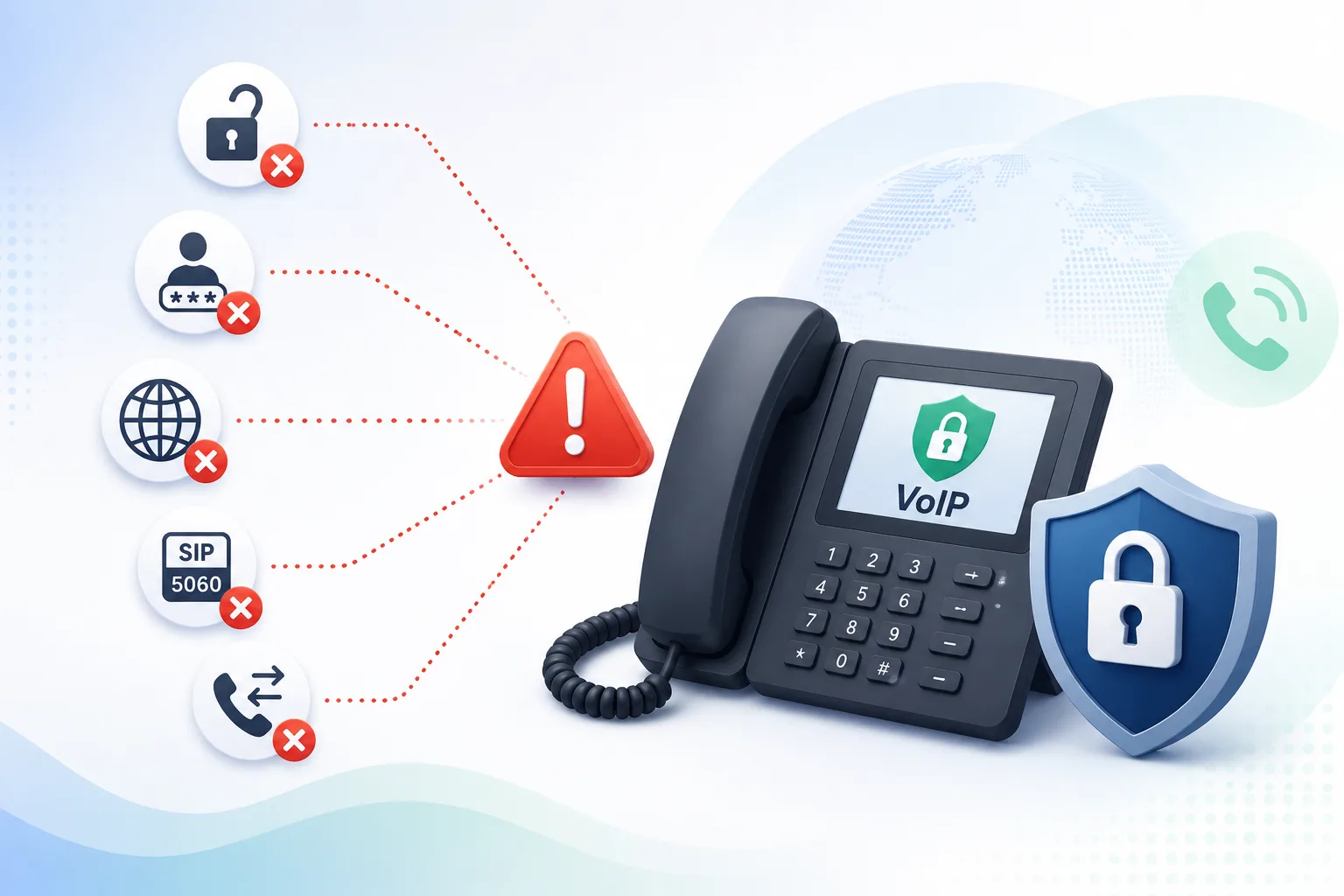
Toll fraud costs businesses a fortune every year, and a lot of that comes down to a handful of comfortable assumptions that turn out to be wrong. The beliefs feel reasonable. They are also exactly what attackers count on. Here are five of the most common ones, and why each is worth dropping.
Myth 1: "We are too small to be a target"
This is the big one, and it is completely backwards. Attackers are not sitting there hand-picking juicy enterprise targets. They run automated scanners across the entire internet, all day, hunting for any exposed system with weak protection. Your size never enters into it. A small business with a poorly secured SIP platform is actually a better target than a large one, because it is more likely to have gaps and less likely to be watching. Being small does not hide you. It just makes you easier.
Myth 2: "It works fine, so it must be secure"
These are two completely different things, and the gap between them is where toll fraud lives. A system can place and receive calls perfectly while sitting wide open to abuse. Working means the phones ring. Secure means an attacker cannot quietly turn those phones into a money machine over a weekend. Plenty of platforms that "work fine" have a default password and an open port just waiting to be found.
Myth 3: "There is nothing we can really do about it"
People assume toll fraud is some sophisticated attack they have no hope of stopping. It almost never is. The vast majority of it comes down to basic gaps: weak credentials, an exposed service, no limits on dialing or spend, nobody watching the logs. Every one of those is fixable with standard configuration. Toll fraud is one of the more preventable problems in VoIP, not one of the least.
Myth 4: "Our provider handles security for us"
This one catches a lot of businesses out. Your VoIP or SIP provider secures their side, but how your platform is configured, your passwords, your dialplan, which destinations you allow, who can reach your service, is usually your responsibility rather than theirs. When toll fraud hits, it is almost always through the customer's own configuration, not the provider's network. Assuming someone else has it covered is exactly how the gap stays open.
Myth 5: "We would notice if it happened"
Would you, though? Toll fraud is built to be quiet. It runs on weekends and overnight, precisely when nobody is looking at call activity. It can rack up tens of thousands of dollars across a single Saturday while every phone still works and the website is still up. Unless you have real-time monitoring specifically watching for the warning signs, the honest answer is that you probably would not catch it until the invoice landed. And by then, the IRSF and toll fraud calls are already billed and rarely refundable.
The common thread
Every one of these myths shares the same root. Assuming the problem is someone else's, or too advanced to worry about, or something you would obviously catch. Attackers rely on all three. Drop the assumptions, check the basics, and put real monitoring in place, and you go from an easy target to a hard one.
If you want the practical side, there is a full guide to preventing toll fraud and IRSF on SIP platforms that covers the layered VoIP security controls, the warning signs, and what to do during an active attack. Teams like Hire VoIP Developer work on exactly this.
The businesses that get hit are rarely the ones with bad luck. They are the ones who believed one of these five a little too comfortably.