A fund looks great on an app: a high five-star rating, a bold return figure and a "top pick" tag. It takes three taps to invest. What it does not tell you is whether the fund suits you. A few good questions, asked before you click, protect you far better than a good-looking number.
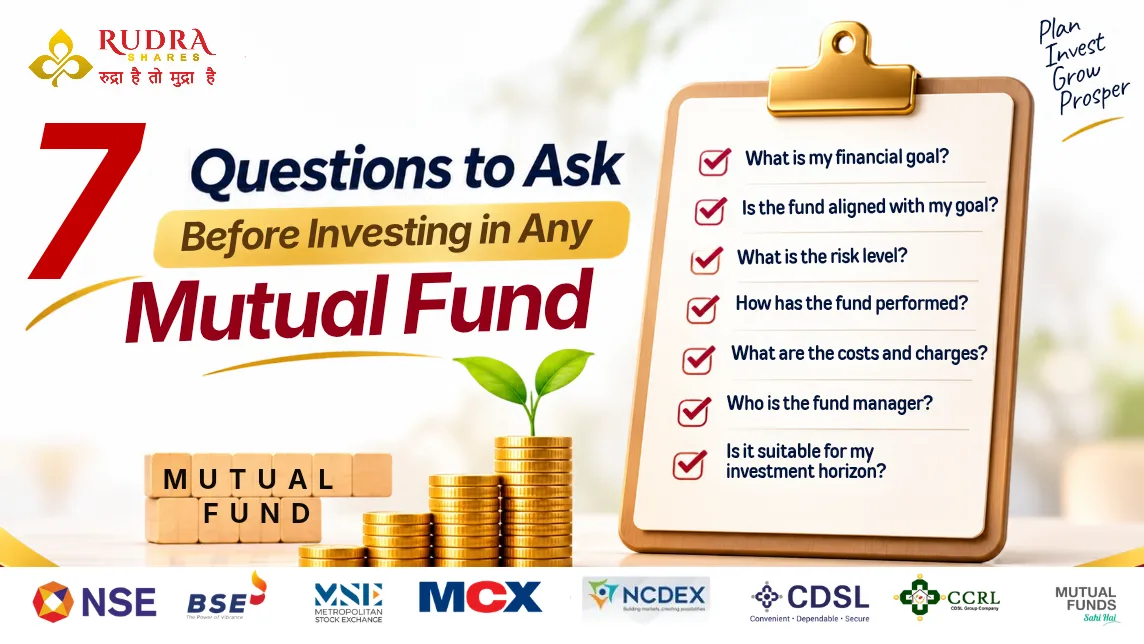
The choice is vast. Here are seven questions that cut through the noise.
1. What is this fund for?
Start with your goal and date. A fund for a house down payment in three years is very different from one for retirement in 25. If you cannot say what the money is for, you cannot judge whether a fund fits. Match the fund's category and typical holding period to your time frame.
2. How risky is it?
Check the riskometer on the scheme documents, which ranges from low to very high, and understand what drives the risk. An equity fund can fall sharply in a bad year. A debt fund faces interest rate and credit risk. Ask yourself whether you could stay invested if the fund fell 20%.
3. What does it cost?
Look at the expense ratio, the yearly fee deducted from the fund, and any exit load for early redemption. Direct plans carry lower expense ratios than regular plans because they have no distributor commission. Small differences compound over decades, so compare costs across similar funds.
4. How has it performed, and through what?
Look beyond last year's return. Check performance over three, five and ten years against its benchmark and its category, and see how it held up in falling markets. Past performance does not guarantee future returns, but a long record shows whether the fund has been consistent.
5. What does it hold?
Read the factsheet. See the top holdings, sector concentration and, for debt funds, the credit ratings of what it owns. If you already hold other funds, check for overlap. Five funds that own the same large companies are one bet, not five.
6. How is it taxed, and how easily can I exit?
For FY 2026-27, equity funds are taxed at 20% on short-term gains and 12.5% on long-term gains above ₹1.25 lakh a year, while debt funds bought after April 1, 2023 are taxed at your slab rate. Check the exit load and any lock-in, such as the three-year lock-in on ELSS. Know what leaving costs before you enter.
7. Who is selling it to me, and why?
A recommendation may come from a distributor who earns a commission or from an advertisement for a new fund offer. New is not the same as better. Ask how the person is paid, check that a distributor holds a valid AMFI registration number (ARN), and verify the platform's SEBI registration. A fund that suits the seller's incentives may not suit your goals.
A simple example
Tanvi, 30, is tempted by a mid-cap fund that returned strongly last year. She asks her seven questions. The goal is retirement in 25 years, so equity suits her. The fund is very high risk, which she can accept in a small slice. But its expense ratio is higher than a similar direct plan, and it overlaps with another fund she owns. She chooses a diversified index fund for the core and a smaller allocation to the mid-cap fund.
Mistakes to avoid
Common errors include picking funds by star ratings alone, ignoring costs, buying too many similar funds, investing in a new fund offer because of hype, and checking performance daily. The most important is skipping the first question.
Where a broker fits in
Rudra Shares and Stock Brokers Ltd. is a SEBI-registered stock broker and CDSL depository participant that offers mutual funds alongside equity and bonds, so you can compare schemes and track your holdings in one place. Whichever platform you use, verify its SEBI registration and read the charges before you invest.
Keep a one-page checklist
Write the seven questions on a single page and fill it in for each fund you consider. Seeing the answers side by side makes weak choices obvious, and it gives you a record to review when you reassess a fund a year later.
Ask first, invest second
These seven questions take ten minutes and can save years of regret. Write the answers down so you can check them again at your yearly review.
If you would like help applying these questions to a fund you are considering, reach out to the Rudra Shares team for a consultation.
Mutual fund investments are subject to market risks. Read all scheme related documents carefully. Past performance may or may not be sustained in the future. This article is for education and is not investment advice.How to Buy Bonds Online in India: Step by Step