
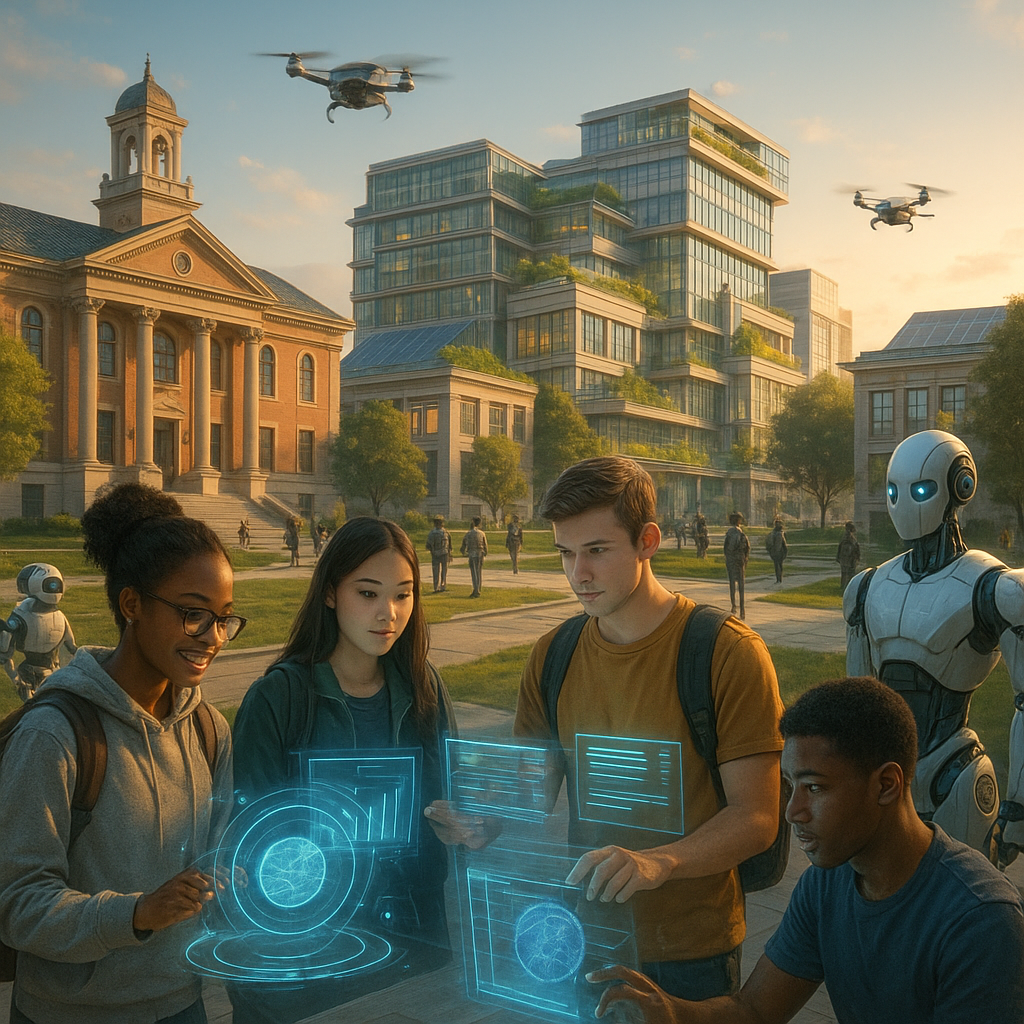
Redefining the University Experience: A Modern Awakening
Imagine a sprawling campus where artificial intelligence tutors guide students through personalized learning paths, where blockchain secures academic credentials, and where global classrooms blend seamlessly through virtual reality. This vision is no longer futuristic fantasy but part of the evolving reality of universities in 2026. Across continents, higher education institutions are undergoing rapid transformation, catalyzed by technological advancements, shifting economic demands, and cultural expectations. The traditional image of universities as ivory towers dedicated solely to academic scholarship is giving way to dynamic hubs of innovation, inclusivity, and adaptability.
Enrollment patterns reflect this change dramatically. According to data from the National Center for Education Statistics, global university enrollment has increased by 15% since 2020, with a significant rise in non-traditional students pursuing flexible online and hybrid programs. This evolution is not merely about access but about how knowledge is created, shared, and applied. As universities adapt, they influence economic opportunities, social mobility, and the broader knowledge economy.
“Universities today are not just places to learn but ecosystems where technology and human creativity intersect to solve real-world challenges,” says Dr. Eliza Hammond, Dean of Innovation at the Global Institute of Higher Learning.
Tracing the Trajectory: How We Arrived at This Crossroads
The university model has been in flux for decades, shaped by societal needs and technological progress. Historically, universities were elite institutions focused on classical education and research. The post-World War II era saw massification, opening doors to a broader population and diversifying disciplines. By the early 21st century, digital disruption began to challenge the monopoly universities held on knowledge dissemination, with MOOCs and open educational resources democratizing learning.
However, it was the 2020–2025 period that accelerated transformation most visibly. The COVID-19 pandemic forced an unprecedented pivot to remote learning, exposing both vulnerabilities and opportunities. Universities invested heavily in digital infrastructure, pedagogy redesign, and hybrid models. Simultaneously, employers demanded skills aligned with rapidly changing industries, prompting universities to rethink curricula and partnerships.
Policy shifts also played a role. Governments worldwide increasingly emphasized lifelong learning and skills retraining to combat automation-driven job displacement. Funding models evolved, with more emphasis on performance-based allocations and private sector collaborations. The rise of interdisciplinary research centers and innovation hubs within campuses signaled a departure from rigid academic silos.
“The past ten years have been a crucible for universities, forcing them to shed outdated paradigms and become agile, learner-centered institutions,” notes Professor Mark Liu, education futurist and author.
The Current University Landscape: Data and Dynamics in 2026
The university ecosystem in 2026 is characterized by several defining features, underpinned by data-driven insights and technological integration. According to the International Association of Universities, there are over 23,000 recognized universities worldwide, with more than 220 million enrolled students. Yet, the raw numbers only tell part of the story. The quality, mode, and purpose of education are evolving significantly.
Key trends shaping 2026 universities include:
- Hybrid Learning Models: Over 65% of universities now offer fully hybrid degree programs combining in-person and virtual instruction, reflecting student demand for flexibility.
- AI and Personalized Education: Artificial intelligence tools analyze student performance in real-time, adapting content and pacing to individual needs, improving retention and success rates by up to 30%, according to the Educational Progress Consortium.
- Global Collaborative Networks: Universities form strategic alliances across borders to co-deliver courses and research projects, enabling students to participate in multi-country virtual classrooms.
- Work-Integrated Learning: Nearly 70% of programs incorporate mandatory internships, apprenticeships, or industry projects, bridging the gap between academia and employment.
- Credential Innovation: Digital badges, micro-credentials, and blockchain-verified certificates supplement traditional diplomas, facilitating lifelong learning and skills recognition.
Financial pressures remain a challenge. Tuition inflation continues, though universities increasingly rely on diversified revenue streams such as research commercialization, online course platforms, and community partnerships. Simultaneously, student debt concerns have sparked debates around funding reform and free education models in several countries.
Universities are also frontline actors in addressing social justice and equity. Programs targeting underrepresented groups, mental health support services, and inclusive curriculum design have expanded, reflecting a broader societal mandate.
This multifaceted transformation is highlighted in the recent article Rethinking University: How Institutions Are Transforming Education and Opportunity, which documents case studies from North America, Europe, and Asia on innovative education delivery.
Voices of Change: Expert Perspectives and Industry Impact
Leading voices in education policy, university leadership, and industry shed light on the implications of these transformations. Dr. Amina Yusuf, Vice Chancellor at the Pan-African University Consortium, emphasizes the role of universities in regional development: “Universities are no longer ivory towers but engines of economic and social progress, especially in emerging economies where skill gaps are acute.”
Industry leaders echo this sentiment. Tech giants and startups alike partner with universities to co-create curricula that reflect cutting-edge technologies such as quantum computing, renewable energy, and biotech. Amazon Web Services’ expansion of its AI education initiative with Tuskegee University illustrates this trend, as detailed in How Tuskegee University and AWS Are Shaping AI and Machine Learning Education. These collaborations enhance employability and drive innovation ecosystems around campuses.
Pedagogical innovation is another focal point. Dr. Miguel Herrera, a leading cognitive scientist, explains, “We are witnessing a shift from content delivery to critical thinking, creativity, and problem-solving. Universities invest in experiential learning, gamification, and AI-assisted tutoring to foster deeper engagement.”
“The future of universities hinges on their ability to integrate technology with human-centered learning and societal relevance,” asserts Dr. Herrera.
Challenges persist, notably digital inequality, data privacy concerns, and balancing academic freedom with industry influence. However, the consensus among experts is that universities must evolve or risk obsolescence.
Case Studies: Innovation in Action Across the Globe
Examining real-world examples illustrates the spectrum of university reinvention. At the Massachusetts Institute of Technology (MIT), the Open Learning initiative now engages over 15 million learners globally through modular courses, blending AI-driven personalization with peer collaboration. Their MicroMasters credential has become a benchmark for flexible, stackable education.
Meanwhile, the University of Cape Town has pioneered community-engaged scholarship programs addressing local challenges such as water scarcity and urban planning, integrating students into impactful research from day one. Their model exemplifies how universities serve as catalysts for regional development and social equity.
Closer to the technology frontier, the National University of Singapore has embedded quantum computing modules into undergraduate curricula, partnering with industry leaders to provide hands-on labs and internships. Their cross-disciplinary approach prepares students for emerging sectors.
These examples demonstrate the diversity and adaptability of universities, responding contextually to their environments while sharing common goals of accessibility, relevance, and innovation.
Looking Ahead: What to Watch in University Evolution
The trajectory of universities suggests several critical developments on the horizon. First, the integration of metaverse technologies promises immersive learning experiences that transcend geography and physical constraints. Virtual campuses with realistic social interactions could redefine community and collaboration.
Second, the rise of decentralized education platforms leveraging blockchain may disrupt traditional credentialing and funding mechanisms, empowering learners with greater autonomy and control over their education pathways.
Third, universities are poised to deepen their role in societal problem-solving, aligning research and teaching with sustainability goals, public health, and social justice. Their engagement with policymakers and communities will likely intensify.
Finally, the ongoing tension between commercialization and academic integrity will require vigilant governance frameworks to preserve trust and quality.
- Expansion of AI tutors and adaptive learning systems
- Growth of interdisciplinary and transnational degree programs
- Increased emphasis on lifelong learning and micro-credentials
- Enhanced university-industry-government collaborations
- Greater focus on equity, inclusion, and mental well-being
For students and educators alike, mastering this complex environment demands continuous adaptation and strategic planning. The strategies outlined in Mastering University Success: Proven Strategies from Leading Experts provide valuable guidance for navigating this evolving landscape.
Universities in 2026 are far from static relics; they are vibrant, responsive institutions shaping the future of knowledge and opportunity across the globe.