Introduction
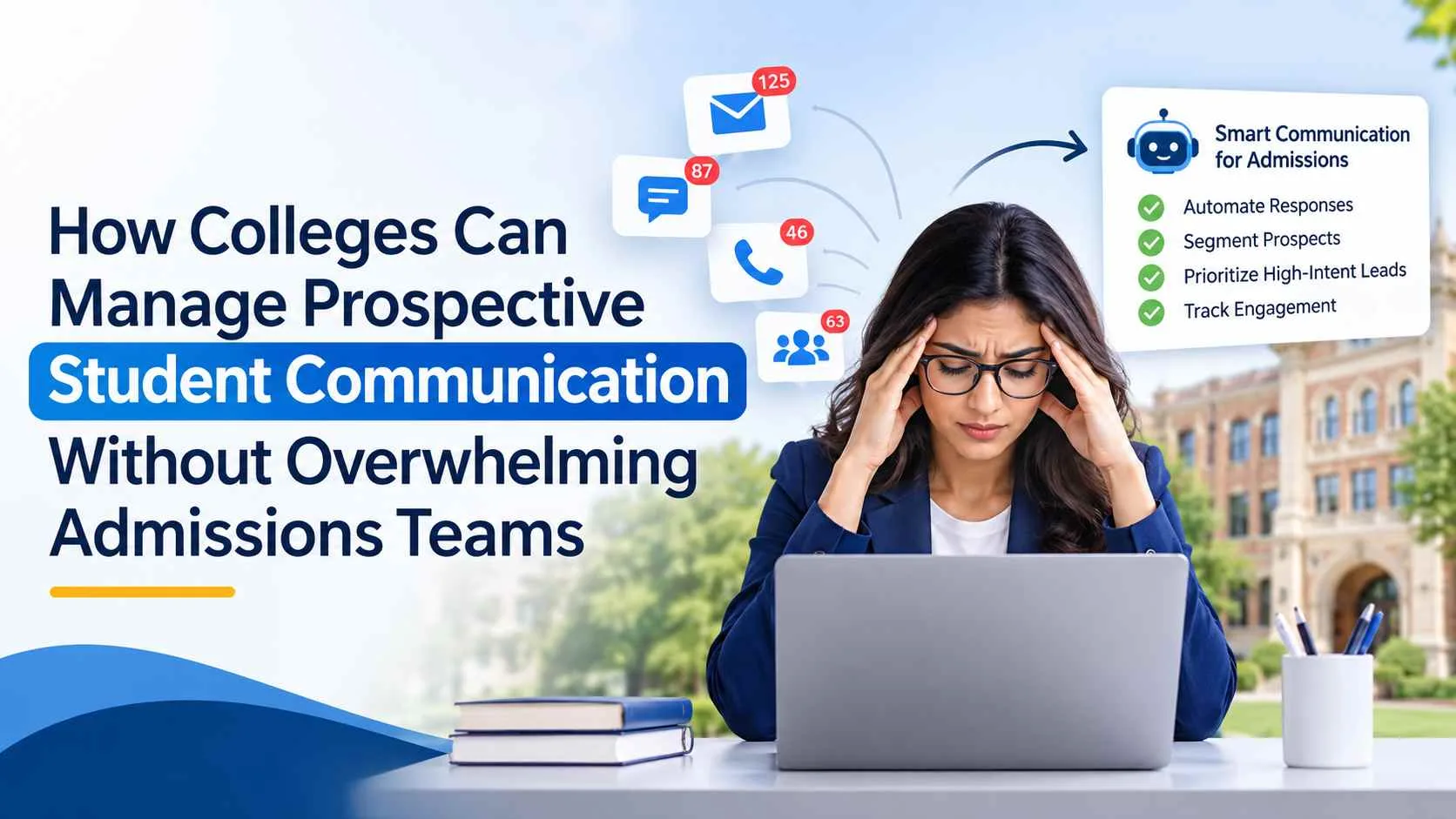
Managing communication with prospective students has become an increasingly important challenge for colleges and universities. Admissions teams receive enquiries from multiple channels, including websites, email, social media, digital advertising campaigns, and education events. Each prospective student may have different questions, interests, academic goals, and expectations.
As enquiry volumes increase, admissions teams often struggle to maintain timely and meaningful communication with every prospective student. Sending generic messages, manually following up with enquiries, and targeting broad audiences can consume valuable time without necessarily improving student recruitment outcomes.
To address these challenges, colleges need a more strategic approach to student recruitment. By combining economic demand intelligence, targeted performance marketing, and personalized direct engagement, institutions can identify relevant prospective student audiences and make their communication more focused.
Talisma Intelligent Prospecting helps higher education institutions understand course-level market demand, identify suitable prospective student audiences, run targeted digital campaigns, and engage potential students through personalized communication. This allows recruitment teams to focus their efforts on more relevant conversations rather than relying on broad, time-consuming outreach strategies.
Why Do Colleges Struggle to Manage Prospective Student Communication?
Before improving communication strategies, colleges need to understand the challenges that make prospective student engagement difficult.
1. Increasing Volumes of Student Enquiries
During admission seasons, colleges receive enquiries from hundreds or thousands of prospective students. Each enquiry may require information about course eligibility, fees, scholarships, admission requirements, and application deadlines.
Managing these enquiries manually can become difficult, particularly when admissions teams have limited staff and resources. As a result, some prospective students may receive delayed responses or insufficient information.
2. Generic Communication Across Different Student Audiences
Not every prospective student has the same academic interests or career objectives. A student interested in business management may require different information from someone considering data analytics or healthcare programmes.
However, many institutions continue using generic communication strategies that deliver similar messages to different audiences. This reduces relevance and makes it harder to establish meaningful engagement.
3. Difficulty Identifying the Right Prospective Students
Generating a high volume of enquiries does not necessarily mean attracting students who are interested in the programmes an institution offers.
Without understanding labour market trends, industry growth, salary expectations, and regional demand, colleges may struggle to identify the right audiences for specific courses.
This can lead to inefficient marketing campaigns and unnecessary communication with audiences who may not be interested in the programmes being promoted.
4. Limited Time for Personalized Engagement
Admissions counsellors need to balance several responsibilities, including answering enquiries, conducting counselling sessions, sharing programme information, and guiding students through admission requirements.
When most of their time is spent managing broad outreach activities and repetitive communication, they have fewer opportunities to engage in meaningful conversations with prospective students.
5. Difficulty Maintaining Consistent Follow-Ups
Prospective students often need multiple interactions before deciding which college or programme to choose. They may initially enquire about a course, compare different institutions, and return with additional questions before applying.
Without a structured engagement strategy, maintaining consistent communication with these students can become challenging.
7 Ways Colleges Can Manage Prospective Student Communication More Effectively
Colleges can improve student engagement by making their recruitment strategies more focused, relevant, and data-driven. The following approaches can help admissions teams manage communication without creating unnecessary workloads.
1. Identify the Right Prospective Student Audiences
Instead of targeting broad student audiences, colleges should identify prospective students who are more closely aligned with their academic programmes.
Understanding labour market demand, industry growth, salary trends, and employment opportunities can help institutions identify which courses have stronger market relevance and where potential student demand may exist.
For example, a university planning to promote a Data Analytics programme can examine industry demand for data-related roles, salary trends, and regional employment opportunities. These insights can help develop an ideal prospect profile and guide recruitment campaigns towards more relevant audiences.
Talisma Intelligent Prospecting supports this approach by combining economic demand intelligence with audience identification, helping institutions make more informed student recruitment decisions.
2. Segment Prospective Students Based on Their Interests
Sending the same message to every prospective student can make communication less effective. Colleges should organize their recruitment audiences based on relevant characteristics, such as:
- Programme or course interests.
- Geographic location and target markets.
- Academic and career interests.
- Preferred study options.
- Engagement with previous recruitment campaigns.
For example, prospective students interested in postgraduate business programmes may respond better to information about career advancement, industry connections, and programme outcomes.
Similarly, students exploring undergraduate technology programmes may be more interested in industry demand, technical skills, and employment opportunities.
Relevant audience segmentation helps institutions create communication that addresses different student interests without requiring admissions teams to develop every message individually.
3. Use Targeted Digital Campaigns Instead of Broad Outreach
Digital advertising can help colleges reach prospective students at scale, but campaign effectiveness depends on targeting the right audiences.
Rather than running broad campaigns for every programme, institutions should use course-specific prospect profiles to guide their advertising strategies.
For example, a university promoting a healthcare management programme can develop targeted campaigns for audiences interested in healthcare, management, and related career opportunities.
Talisma Intelligent Prospecting uses economic demand insights to guide precision performance marketing across platforms such as Google and Meta. This helps institutions align their advertising activities with relevant audience profiles instead of depending entirely on generalized targeting.
More focused campaigns can help reduce irrelevant enquiries and make better use of student recruitment budgets.
4. Personalize Communication Across Multiple Channels
Prospective students interact with colleges through different communication channels. Some prefer email, while others may respond more actively to SMS or professional networking platforms.
Institutions should consider these preferences when planning their engagement strategies.
Personalized communication can include:
- Sharing relevant programme information based on student interests.
- Providing details about admission requirements and application processes.
- Communicating programme benefits and career opportunities.
- Sending relevant updates about upcoming admission cycles.
- Following up with students who have previously expressed interest.
Talisma supports personalized direct engagement through channels such as email, SMS, and LinkedIn. Using validated student inquiry information, institutions can make their outreach more relevant to the programmes and opportunities prospective students are considering.
5. Focus Admissions Teams on Meaningful Student Conversations
Not every recruitment interaction requires the same level of personal attention. Some prospective students may only need general programme information, while others may have specific questions about career opportunities, academic requirements, or choosing between programmes.
Colleges should structure their recruitment activities so that admissions teams can dedicate more time to conversations that require personal guidance.
For example, digital campaigns can introduce prospective students to relevant programmes, while direct engagement can help answer specific questions and encourage further interaction.
By combining targeted marketing with personalized engagement, institutions can make recruitment activities more focused and reduce unnecessary outreach efforts.
6. Develop a Consistent Student Engagement Strategy
Prospective student communication should follow a clear engagement approach rather than relying on occasional messages or unplanned follow-ups.
Colleges can create a communication framework based on different stages of the student recruitment journey.
For example:
- Initial Interest: Share relevant programme information and introduce the institution.
- Programme Consideration: Provide details about curriculum, learning opportunities, and career pathways.
- Further Engagement: Address individual questions and provide additional information based on student interests.
- Application Consideration: Share relevant application information, requirements, and deadlines.
The communication strategy should focus on providing useful information at the right time rather than sending frequent messages without meaningful value.
7. Measure Recruitment Campaign Performance and Improve Engagement
Colleges should regularly evaluate their recruitment activities to understand whether their communication strategies are reaching relevant audiences.
Instead of focusing only on enquiry volumes, institutions should measure indicators that provide a clearer picture of recruitment performance.
Important metrics include:
- Number of qualified student enquiries.
- Cost per qualified enquiry.
- Campaign engagement rates.
- Inquiry-to-application conversion rates.
- Cost per enrolled student.
- Programme-level enrolment performance.
These metrics help institutions understand which programmes, audiences, and campaigns are generating meaningful recruitment outcomes.
Talisma Intelligent Prospecting supports a data-driven recruitment approach by connecting economic demand insights, targeted performance marketing, and direct engagement. Institutions can use campaign performance and recruitment outcomes to refine their audience strategies and improve future campaigns.
How Talisma Intelligent Prospecting Helps Colleges Improve Student Engagement
Managing prospective student communication effectively requires more than simply increasing the number of messages sent. Colleges need to understand which programmes have market demand, identify relevant student audiences, and create meaningful engagement opportunities.
Talisma Intelligent Prospecting brings together three important elements of student recruitment.
1. Economic Demand Intelligence
Understanding market demand can help colleges make better decisions about which programmes to promote and which audiences to target.
Talisma Intelligent Prospecting uses insights from labour market trends, salary information, industry growth, and economic forecasting to help institutions understand demand for specific academic programmes.
These insights can support the development of ideal prospect profiles and help colleges identify potential recruitment opportunities.
2. Precision Performance Marketing
Once institutions understand their programme demand and target audiences, they can use these insights to develop more focused digital campaigns.
Talisma Intelligent Prospecting uses audience insights to guide targeted advertising across platforms such as Google and Meta.
This allows colleges to align their marketing activities with programme-specific prospect profiles and reach audiences who are more relevant to their recruitment objectives.
3. Personalized Direct Engagement
Attracting prospective students is only one part of the recruitment process. Institutions also need to establish meaningful communication with potential applicants.
Through Talisma Engage, institutions can support personalized outreach using channels such as email, SMS, and LinkedIn.
Using validated student inquiry data, colleges can tailor their communication based on programme interests and engagement requirements.
Together, these three elements help institutions move towards a more focused recruitment strategy, where marketing activities and direct student engagement are guided by relevant demand and audience insights.
Practical Example: Managing Communication for a Data Analytics Programme
Consider a university planning to increase enrolments in its Data Analytics programme.
A broad recruitment strategy may involve running general digital advertisements and sending similar programme information to a large audience. Although this approach can generate enquiries, it may not consistently attract students who are genuinely interested in the programme.
With an intelligent prospecting approach, the university can take a more structured path:
Step 1: Understand Market Demand
Analyse labour market trends, industry growth, salary information, and demand for data analytics professionals.
Step 2: Develop an Ideal Prospect Profile
Identify relevant audiences based on programme interests, geographic opportunities, and other suitable targeting indicators.
Step 3: Launch Targeted Campaigns
Use the prospect profile to guide Google and Meta advertising campaigns focused on relevant audiences.
Step 4: Engage Interested Prospects
Use personalized email, SMS, and LinkedIn communication to share programme information and encourage further engagement.
Step 5: Evaluate Recruitment Performance
Review qualified enquiries, campaign performance, inquiry-to-application conversion rates, and enrolment outcomes to identify opportunities for improvement.
This approach helps the university connect programme demand with targeted recruitment and personalized engagement instead of depending solely on broad advertising and generic communication.
Conclusion
Managing prospective student communication does not have to mean increasing the workload of admissions teams. Colleges can improve their recruitment strategies by understanding market demand, identifying relevant student audiences, and delivering more personalized communication.
A combination of economic demand intelligence, precision performance marketing, and direct engagement can help institutions make better recruitment decisions and create more meaningful interactions with prospective students.
Talisma Intelligent Prospecting helps colleges bring these elements together through labour market insights, targeted Google and Meta campaigns, and personalized engagement across email, SMS, and LinkedIn.
By adopting a more data-driven approach to student recruitment, higher education institutions can focus their efforts on relevant audiences, improve communication quality, and make their recruitment activities more effective.
Frequently Asked Questions
1. How Can Colleges Manage Communication With Large Numbers of Prospective Students?
Colleges can manage prospective student communication more effectively by segmenting audiences, using targeted digital campaigns, personalizing outreach, and establishing a consistent engagement strategy. Understanding programme demand also helps institutions focus their recruitment activities on more relevant audiences.
2. How Can Colleges Personalize Communication With Prospective Students?
Colleges can personalize communication by considering programme interests, geographic preferences, career objectives, and previous engagement. They can use email, SMS, and LinkedIn to share relevant programme information and updates based on prospective students' interests.
3. What Is Intelligent Prospecting in Higher Education?
Intelligent Prospecting is a data-driven student recruitment approach that combines economic demand intelligence, audience identification, precision performance marketing, and personalized engagement. It helps colleges identify relevant prospective student audiences and develop more focused recruitment strategies.
4. How Does Talisma Intelligent Prospecting Help Colleges With Student Recruitment?
Talisma Intelligent Prospecting helps colleges understand programme-level demand through labour market insights, identify suitable prospect audiences, and guide targeted advertising campaigns across Google and Meta. It also supports personalized direct engagement through email, SMS, and LinkedIn using validated student inquiry information.
5. Which Communication Channels Can Colleges Use to Engage Prospective Students?
Colleges can engage prospective students through email, SMS, LinkedIn, websites, digital advertising, and other relevant channels. The choice of channel should depend on the institution's recruitment objectives and the preferences of its target audiences.
6. How Can Colleges Improve the Quality of Student Enquiries?
Colleges can improve enquiry quality by understanding market demand, developing programme-specific prospect profiles, and using targeted digital advertising. This helps institutions focus their campaigns on audiences that are more closely aligned with their academic offerings.
7. How Can Colleges Measure the Effectiveness of Student Recruitment Communication?
Colleges can measure recruitment effectiveness through qualified enquiry volumes, campaign engagement, cost per qualified enquiry, inquiry-to-application conversion rates, and cost per enrolled student. These metrics help institutions understand the impact of their recruitment and engagement strategies.