
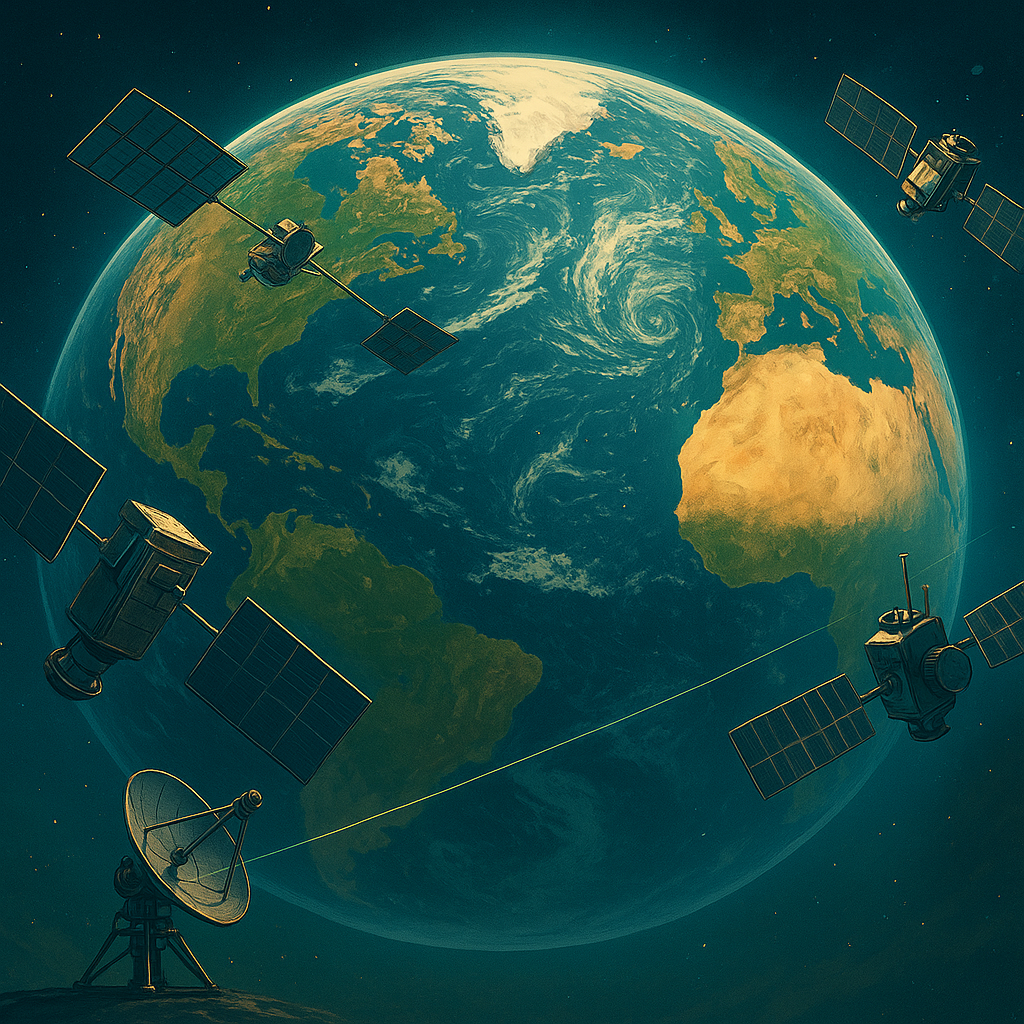
Opening the Window on a Changing World
On a crisp morning in October 2026, a team of scientists in the Arctic Circle detected a startling phenomenon: permafrost melting at rates nearly 40% faster than projected a decade ago. This alarming discovery, captured by a network of autonomous sensors and satellite imagery, encapsulates the urgent realities that climate research is grappling with today. Far beyond the academic realm, these findings are the frontline indicators of a planet undergoing rapid transformation — and they bring with them the stark imperative for action.
Climate research, once confined to isolated labs and obscure journals, has become a global priority, shaping policy, economics, and societal norms. As extreme weather events multiply, glaciers recede, and ecosystems falter, the science underpinning our understanding of these changes is more critical than ever. This article explores the complex landscape of climate research in 2026, revealing how cutting-edge science is reshaping our grasp of Earth's future and informing the strategies that might yet save it.
Tracing the Trajectory: How Climate Research Evolved
The foundations of modern climate research date back to the mid-20th century, when pioneering scientists like Charles David Keeling began meticulously measuring atmospheric CO2 at Mauna Loa Observatory. His iconic Keeling Curve, showing the relentless rise in carbon dioxide levels, laid bare the human fingerprint on climate change. Since then, the field has expanded exponentially, integrating satellite technologies, climate modeling, and interdisciplinary approaches.
By the early 2000s, the Intergovernmental Panel on Climate Change (IPCC) had galvanized international understanding and cooperation, synthesizing thousands of studies into comprehensive assessments. Yet, despite mounting evidence and international agreements like the Paris Accord, emissions continued to rise, amplifying the urgency for more precise and actionable research.
Today’s climate research stands on the shoulders of this legacy, but it operates in a vastly different technological and geopolitical landscape. The integration of artificial intelligence, quantum computing, and global sensor networks has revolutionized data collection and analysis. Furthermore, the democratization of climate science through open access and citizen science projects has broadened participation and accountability.
Decoding the Data: Advances and Insights as of 2026
Climate research now relies on a vast array of data streams, from deep-ocean probes to high-resolution satellite imagery. The 2026 Global Climate Report, compiled by the World Climate Institute, highlights several key findings shaping current understanding:
- Accelerated Arctic Warming: The Arctic is warming nearly three times faster than the global average, with sea ice extent reaching unprecedented lows.
- Carbon Feedback Loops: Permafrost thaw is releasing methane, a greenhouse gas 25 times more potent than CO2, creating a feedback loop that accelerates warming.
- Ocean Heat Uptake: Over 90% of excess heat from global warming is absorbed by oceans, leading to rising sea levels and more frequent marine heatwaves.
- Extreme Weather Intensification: There is a documented increase in the frequency and severity of hurricanes, droughts, and floods linked to climate change.
- Biodiversity Loss: Climate shifts are driving habitat loss and species extinction at rates comparable to the historic five mass extinction events.
These data points are not isolated; they form a complex web of interrelated processes that climate models are striving to simulate with ever-greater accuracy. The latest generation of Earth System Models (ESMs) incorporates feedback mechanisms, human land-use changes, and socio-economic factors, offering nuanced projections that guide policy and mitigation efforts.
“Our ability to predict climate outcomes has improved dramatically, but the window for effective intervention is closing,” warns Dr. Helena Morse, lead climatologist at the Global Climate Institute.
In parallel, breakthroughs in paleoclimatology — the study of past climates — have enriched models by providing context from ice cores and sediment layers, revealing patterns of abrupt climate shifts and resilience thresholds.
2026 Breakthroughs: Emerging Technologies and Global Collaboration
Recent years have witnessed remarkable strides in climate research methodologies and international cooperation. In 2026, several developments stand out:
- Quantum-Enhanced Climate Modeling: Quantum computing has begun to tackle the immense computational demands of climate simulations, increasing resolution and reducing uncertainty.
- Global Sensor Networks: Projects like EarthWatch 2.0 deploy millions of miniaturized sensors across land, ocean, and atmosphere, enabling real-time monitoring of environmental variables.
- AI-Driven Predictive Analytics: Machine learning algorithms analyze vast datasets to identify emerging climate patterns and optimize mitigation strategies.
- International Data Sharing Agreements: Enhanced frameworks facilitate open data exchange across nations, fostering transparency and accelerated research.
- Community-Based Monitoring: Indigenous and local communities increasingly contribute traditional knowledge and observational data, enriching scientific understanding and respecting cultural perspectives.
These advancements have translated into tangible outcomes. For example, improved early warning systems for extreme weather have reduced disaster casualties by 20% worldwide, according to the United Nations Office for Disaster Risk Reduction. Moreover, climate research is now tightly integrated with climate finance, guiding investments towards resilient infrastructure and sustainable technologies.
“The democratization of climate data empowers everyone—from policymakers to farmers—to make informed decisions,” notes Dr. Samuel Ortiz, coordinator of the EarthWatch 2.0 initiative.
Despite progress, challenges remain. Political fragmentation and funding disparities continue to hamper global coordination, while climate misinformation campaigns persist. Yet the scientific community’s commitment to transparency and innovation remains a beacon of hope.
Real-World Impact: Case Studies Shaping Policy and Practice
Concrete examples illustrate how climate research is influencing real-world outcomes. Two notable cases from 2026 highlight this interplay:
The Netherlands’ Flood Defense Revamp
Drawing on advanced climate projections, Dutch engineers redesigned coastal defenses to withstand a 1-in-10,000-year storm surge scenario. This proactive approach incorporates nature-based solutions such as mangrove restoration alongside traditional dikes, exemplifying integrated climate adaptation. The project, informed by multidisciplinary research, serves as a global model for climate resilience.
Kenya’s Agroforestry Transformation
In East Africa, climate researchers partnered with local farmers to implement agroforestry practices that boost carbon sequestration and enhance food security. Satellite monitoring verified increased soil moisture retention and reduced erosion, while community surveys documented improved livelihoods. This case underscores the importance of blending scientific innovation with indigenous knowledge.
- Key elements of effective climate adaptation strategies include:
- Collaboration across disciplines and sectors
- Inclusion of marginalized voices and local expertise
- Leveraging technology for precise monitoring and feedback
- Embedding flexibility to cope with uncertainty
These examples resonate with themes explored in How Cutting-Edge Climate Research Is Reshaping Our Planet’s Future, highlighting the transformative potential of science when aligned with societal needs.
Looking Ahead: Navigating Uncertainty and Opportunity
Climate research in 2026 stands at a crossroads. The accelerating pace of environmental change demands not only enhanced scientific understanding but also nimble policy responses and public engagement. What should observers and stakeholders watch in the coming years?
- Emergence of Climate Geoengineering Research: Ethical and practical debates intensify as experiments with solar radiation management and carbon dioxide removal expand, raising questions about governance and unintended consequences.
- Integration of Socioeconomic Dynamics: New models increasingly incorporate human behavior, economic incentives, and equity considerations to better forecast and influence climate trajectories.
- Expansion of Climate Justice Frameworks: Research into disproportionate impacts and reparations mechanisms will shape international negotiations and domestic policies.
- Next-Gen Climate Education: Enhanced curricula and immersive technologies aim to cultivate climate literacy and empower younger generations.
- Private Sector Innovation: Corporations accelerate investments in sustainable technologies, driven partly by climate risk assessments rooted in scientific research.
These trends underscore a fundamental truth: climate research is not static knowledge but a dynamic, evolving dialogue between science and society. As stressed in Unveiling Climate Research: New Data, Global Insights, and Future Challenges, the path forward hinges on collaboration, transparency, and an unwavering commitment to evidence-based action.
Ultimately, the future of our planet depends on how well we harness climate research—not only as a tool for understanding but as a catalyst for transformation.