WSH Coordinator
Workplace safety has become a top priority for organizations across Singapore. From construction sites to manufacturing facilities, employers rely on Workplace Safety and Health (WSH) Coordinators to identify hazards, prevent accidents, and ensure compliance with safety regulations.
But what skills does a successful WSH Coordinator actually need?
Whether you're planning to start a career in workplace safety or considering enrolling in a WSH Coordinator course, understanding these essential competencies can help you prepare for success.
What Does a WSH Coordinator Do?
A WSH Coordinator supports organizations in maintaining a safe and healthy work environment. They work closely with management, supervisors, and employees to identify risks, implement safety measures, conduct inspections, and promote a positive safety culture.
Their responsibilities often include:
- Conducting workplace inspections
- Identifying hazards and assessing risks
- Ensuring compliance with safety regulations
- Organizing safety training sessions
- Investigating incidents and recommending improvements
- Promoting workplace safety awareness
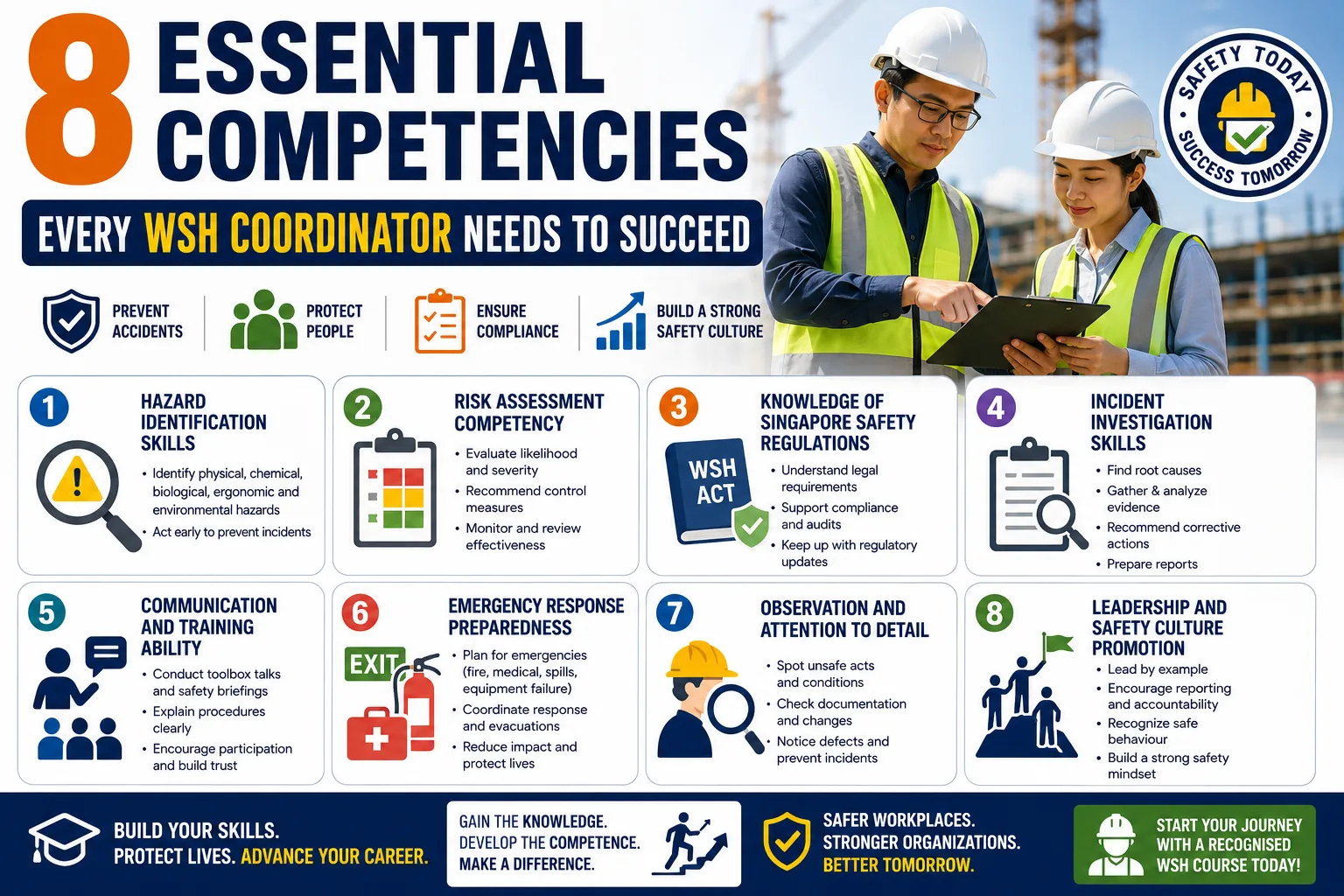
1. Hazard Identification Skills
One of the most important competencies is the ability to recognize workplace hazards before they lead to accidents.
WSH Coordinators must be able to identify:
- Physical hazards
- Chemical hazards
- Biological hazards
- Ergonomic risks
- Environmental dangers
Early identification helps organizations take preventive action and reduce workplace incidents.
2. Risk Assessment Competency
After identifying hazards, WSH Coordinators need to evaluate the level of risk involved.
This includes:
- Determining the likelihood of an incident
- Assessing the severity of consequences
- Recommending suitable control measures
- Monitoring the effectiveness of implemented controls
Effective risk assessments help organizations make informed safety decisions.
3. Knowledge of Singapore Workplace Safety Regulations
A competent WSH Coordinator should understand the relevant workplace safety requirements in Singapore.
This knowledge enables them to:
- Support legal compliance
- Assist during audits
- Maintain proper documentation
- Ensure workplace practices align with regulations
Keeping up with regulatory updates is essential in the ever-evolving safety landscape.
4. Incident Investigation Skills
When incidents occur, identifying the root cause is critical.
WSH Coordinators should know how to:
- Gather evidence
- Interview witnesses
- Analyze contributing factors
- Recommend preventive actions
- Prepare investigation reports
The goal is not to assign blame but to prevent similar incidents from happening again.
5. Communication and Training Ability
Safety information is only effective when employees understand it.
Strong communication skills allow WSH Coordinators to:
- Deliver toolbox meetings
- Conduct safety briefings
- Explain procedures clearly
- Encourage employee participation
- Build trust among workers
Good communication strengthens the overall safety culture of an organization.
6. Emergency Response Preparedness
Every workplace should be prepared for emergencies.
WSH Coordinators play a role in planning and coordinating responses to situations such as:
- Fires
- Medical emergencies
- Chemical spills
- Equipment failures
- Evacuations
Preparation can significantly reduce injuries and minimize disruption during emergencies.
7. Observation and Attention to Detail
Small warning signs often indicate larger safety issues.
Successful WSH Coordinators pay close attention to:
- Unsafe acts
- Unsafe conditions
- Incomplete documentation
- Changes in workplace practices
- Equipment defects
Their ability to notice details can prevent serious accidents.
8. Leadership and Safety Culture Promotion
Safety leadership is not limited to managers.
WSH Coordinators influence employee attitudes and behaviours by:
- Leading by example
- Encouraging hazard reporting
- Recognizing safe practices
- Promoting accountability
- Motivating teams to prioritize safety
A positive safety culture contributes to long-term organizational success.
Why These Competencies Matter
Organizations today seek safety professionals who can do more than complete paperwork. They need individuals who can identify risks, communicate effectively, solve problems, and inspire safer behaviours.
Developing these competencies can improve career opportunities and help professionals become valuable contributors to workplace safety initiatives.
How to Develop These WSH Competencies
Formal training provides structured knowledge and practical skills required in the industry.
The WSQ Advanced Certificate in Workplace Safety and Health (Level B) equips aspiring WSH Coordinators with competencies in:
- Workplace hazard identification
- Risk management
- Incident investigation
- Emergency preparedness
- Safety communication
- Regulatory compliance
- Safety system implementation
Through industry-relevant training, learners gain the confidence needed to perform effectively in workplace safety roles.
Frequently Asked Questions
What qualifications do I need to become a WSH Coordinator in Singapore?Many aspiring professionals pursue recognized workplace safety training programmes, such as the WSQ Advanced Certificate in Workplace Safety and Health (Level B), to build the required competencies.
Is being a WSH Coordinator a good career?Yes. Workplace safety professionals continue to be in demand across industries including construction, manufacturing, logistics, marine, and facilities management.
What is the most important skill for a WSH Coordinator?Hazard identification and risk assessment are among the most critical skills, as they form the foundation of accident prevention.
Final Thoughts
A successful WSH Coordinator combines technical knowledge with practical skills and strong communication abilities. By mastering these eight essential competencies, professionals can contribute to safer workplaces while building rewarding careers in the safety and health sector.
If you're considering a future in workplace safety, developing these competencies through recognized training can be an excellent first step toward long-term professional growth.