
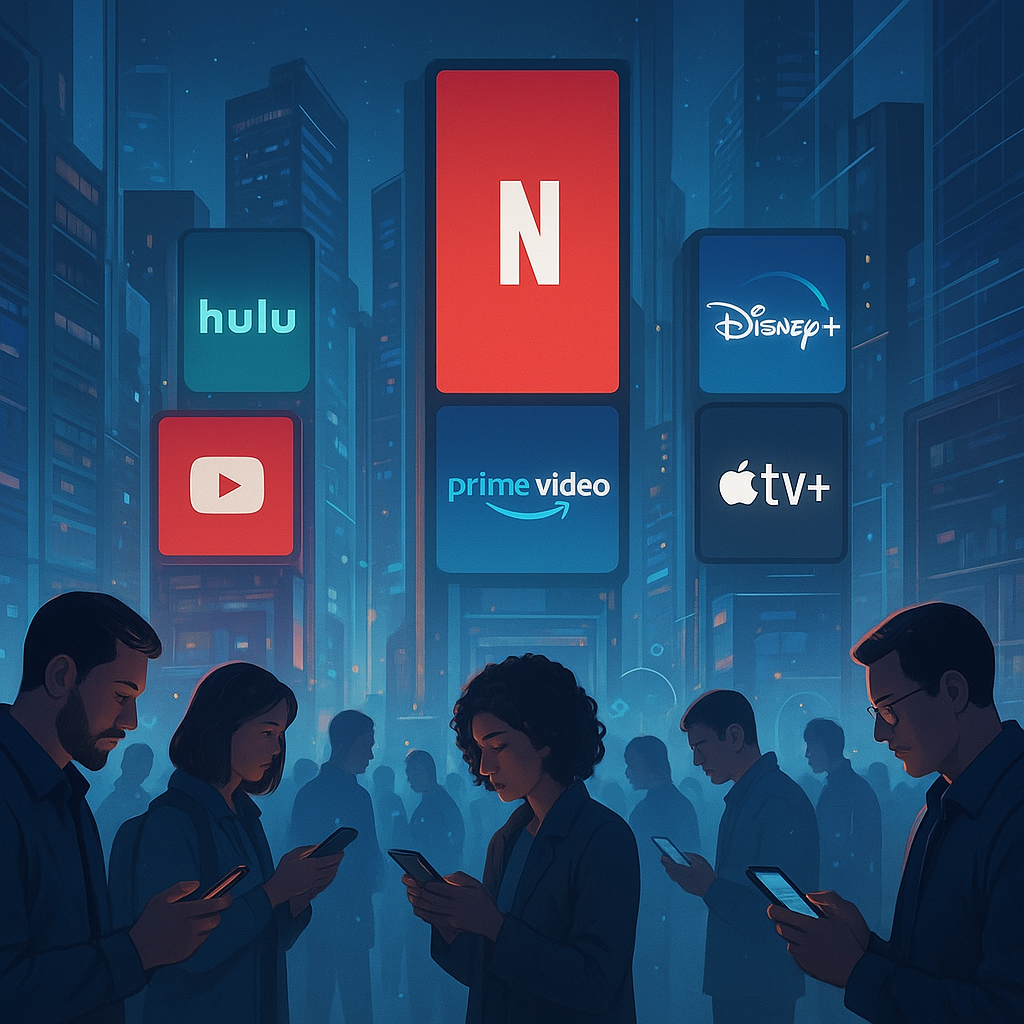
Streaming's Quiet Revolution: A Scene from 2026
On a crisp autumn evening in November 2026, millions worldwide tuned in simultaneously to the live release of a new interactive sci-fi series. Unlike traditional broadcasts, viewers weren't passive; they shaped the storyline in real time, influencing character decisions and plot twists through intuitive interfaces embedded within streaming platforms. This moment reflects the culmination of a decade-long evolution in streaming technology and content delivery, where passive consumption has given way to active engagement. This new era is not just about convenience but about transforming entertainment into a dynamic, personalized experience.
The global streaming market, valued at over $230 billion in 2026 according to industry analysts, now dominates the entertainment sector, eclipsing traditional cable and satellite TV. This shift has profound implications for content creators, distributors, and consumers alike. The interplay of advanced AI, immersive technologies like AR and VR, and real-time data analytics has rewritten the rules of storytelling and audience interaction.
As experts note, “Streaming platforms have evolved from mere content libraries into interactive ecosystems that redefine how stories are told and experienced.” This transformation challenges legacy media and offers unprecedented opportunities for innovation and audience connection.
From DVDs to Dynamic Ecosystems: The Background of Streaming's Rise
The streaming phenomenon didn’t emerge overnight. Its roots trace back to the early 2000s with the rise of broadband internet and the initial forays into video-on-demand services. Netflix’s pivot from DVD rentals to streaming in 2007 marked a watershed moment. Over the next decade, other players like Amazon Prime Video, Hulu, and Disney+ expanded the landscape, driving competition and content diversification.
The 2010s saw a steady increase in streaming penetration worldwide, but it was the 2020s that accelerated the industry’s transformation. The COVID-19 pandemic in 2020 acted as a catalyst, pushing consumers en masse to digital platforms amid lockdowns. This surge in demand forced providers to innovate rapidly, investing heavily in original content and technology upgrades.
By 2025, streaming had overtaken traditional TV as the primary medium for entertainment consumption in most developed markets. The convergence of AI-powered personalization algorithms, edge computing for low-latency delivery, and cloud-native infrastructures enabled platforms to scale globally while tailoring content to individual tastes.
Moreover, regional content production exploded, propelled by platforms investing billions in local-language originals to capture diverse audiences. This strategy not only broadened global appeal but also challenged Hollywood’s long-standing dominance.
Streaming in 2026: Data-Driven Insights and Industry Impact
As of 2026, streaming platforms collectively boast over 2.5 billion subscribers worldwide, with penetration rates exceeding 80% in many urban centers. According to recent Statista reports, the average household now subscribes to 3.7 streaming services, reflecting a crowded marketplace and consumer appetite for niche content.
Key trends shaping the industry include:
- AI-Enhanced Content Creation: Machine learning algorithms assist in scriptwriting, casting recommendations, and editing, improving efficiency and creative experimentation.
- Interactive and Immersive Experiences: Platforms increasingly integrate AR/VR elements, allowing viewers to explore story worlds beyond the screen.
- Hyper-Personalization: Real-time data analytics enable dynamic content recommendations and adaptive storylines tailored to user preferences.
- Global Market Expansion: Investments in emerging markets with customized content and localized payment solutions have fueled subscriber growth.
- Sustainability Initiatives: Streaming companies are adopting green data centers and carbon-offset programs to address environmental concerns.
Financially, the sector is robust. Netflix, Amazon Prime, Disney+, and newcomers like ByteWave and StreamSphere collectively generated revenues exceeding $280 billion in 2025, with projections indicating continued double-digit growth. However, profitability pressures remain due to soaring content production costs and competitive subscription pricing.
“The streaming industry today is defined by its ability to blend technology and storytelling into a seamless package that anticipates and adapts to audience desires,” says media analyst Dr. Karen Li.
Current Developments: What 2026 Brings to Streaming
This year marks several pivotal shifts in streaming’s trajectory. Chief among them is the integration of AI-driven narrative customization. Platforms now offer viewers branching story arcs that respond to their engagement patterns, effectively making each viewing experience unique. This innovation has been accelerated by breakthroughs in natural language processing and real-time rendering technologies.
Furthermore, the rise of decentralized streaming networks is challenging traditional infrastructure models. Blockchain-based platforms enable peer-to-peer content distribution, reducing bandwidth costs and enhancing security. This decentralization also empowers independent creators by providing direct monetization channels without intermediaries.
Platform consolidation continues, but with a twist. Instead of mergers focused solely on scale, companies are forming ecosystem alliances to offer bundled services encompassing gaming, music, and live sports alongside video streaming. This multi-vertical approach aims to lock in subscribers by delivering comprehensive entertainment packages.
Consumer behavior is also evolving. Recent surveys reveal growing demand for social viewing features, where friends and communities watch and interact during live streams. This social layer adds a communal dimension previously missing in solo streaming experiences.
On the regulatory front, governments worldwide are implementing stricter content moderation and data privacy laws, compelling platforms to balance innovation with compliance. The European Union’s Digital Services Act and similar policies in Asia are reshaping operational frameworks.
“Streaming in 2026 is not just about what you watch, but how you watch it and with whom,” highlights streaming consultant Javier Morales.
Expert Perspectives: Industry Voices on Streaming’s Evolution
Industry leaders emphasize that streaming’s future hinges on marrying technology with storytelling authenticity. Emma Chen, Chief Content Officer at StreamSphere, notes, “Our mission is to leverage AI not to replace creators but to augment their vision, enabling stories that resonate on a deeper, more personalized level.”
Meanwhile, technology architect Arun Patel points to infrastructure advancements: “Edge computing and 5G networks have eliminated many latency issues, opening doors to interactive formats that were previously impossible at scale.”
However, experts caution about challenges ahead. Content saturation risks overwhelming audiences, making discovery tools and curation critical. Additionally, ethical concerns around AI-generated content and deepfakes require vigilant oversight.
Academic researchers also highlight the cultural impact. Dr. Lila Fernandez from the University of California remarks, “Streaming’s globalization fosters cross-cultural exchange but also risks homogenizing narratives unless platforms continue investing in diverse, localized content.”
For consumers, the evolving landscape means more choice but also complexity. Subscription fatigue has led to the rise of aggregator services and hybrid ad-supported models to maintain accessibility.
These insights echo themes explored in our previous analysis on Why Streaming Giants and AI Are Rewriting Movie-Making Rules and Why Streaming's Silent Revolution Is Redefining Entertainment Consumption, highlighting the interplay between innovation and audience adaptation.
Looking Ahead: What to Expect from Streaming in the Next Five Years
As 2026 unfolds, the streaming sector is poised for further transformation. Key future developments to watch include:
- Fully Immersive Storytelling: The integration of holographic and mixed reality elements into mainstream streaming, creating experiences indistinguishable from physical presence.
- AI as Co-Creator: More sophisticated AI tools collaborating with human creators to generate content at scale while maintaining emotional nuance.
- Subscription Model Evolution: Increased adoption of flexible, modular subscriptions allowing consumers to customize packages by genre, interactivity level, or social features.
- Enhanced Social Interactivity: Virtual gathering spaces embedded within streaming platforms fostering communities and shared experiences beyond passive viewing.
- Regulatory and Ethical Frameworks: Development of international standards governing AI usage, content authenticity, and data ethics in streaming.
For industry stakeholders, agility and innovation will be paramount. Creators must embrace new tools while preserving storytelling integrity. Platforms need to balance growth with sustainability, both economic and environmental.
Consumers stand to gain unparalleled control and engagement but must navigate an increasingly complex ecosystem. Educational initiatives on digital literacy and content awareness will be vital.
Ultimately, streaming’s evolution reflects broader shifts in media consumption and technology’s role in shaping culture. As outlined in our coverage of How Streaming, AI, and Global Audiences Are Reshaping Movie Magic, the future belongs to adaptable, audience-centric models that prioritize experience and inclusivity.
Streaming is no longer just a method of delivery; it is the canvas upon which entertainment’s future is being painted.