In today’s fast-paced world, time management has become more essential than ever. Whether you are managing your daily tasks, scheduling important meetings, or even planning future events, having precise control over time and understanding date differences is crucial. One of the most helpful tools for this purpose is a date and time calculator. This article will explore what a date and time calculator is, how it works, and the various uses it can have in both personal and professional settings.
What Is a Date and Time Calculator?
A date and time calculator is a tool that enables you to calculate the difference between two specific dates, add or subtract time from a given date, or determine specific time intervals. These calculators are essential for a wide range of applications, including event planning, project management, travel scheduling, and legal matters. Essentially, it simplifies complex calculations involving days, weeks, months, years, hours, minutes, and seconds.
How Does a Date and Time Calculator Work?
At its core, a date and time calculator operates on basic principles of arithmetic combined with the concept of the Gregorian calendar and timekeeping systems. It computes the difference between two given dates or times using algorithms that take into account:
- Leap years: Every four years, an extra day is added to the calendar (February 29) to account for the additional 0.25 days it takes for the Earth to orbit the sun beyond 365 days. A good date calculator ensures that this is factored in.
- Days in months: Not all months have the same number of days, and date calculators take this into account—some months have 31 days, others 30, and February has 28 or 29 days.
- Time of day: Date and time calculators also consider the hours, minutes, and seconds in addition to the date itself. This makes it possible to determine the exact difference down to the second or compute the resulting time when a specific number of hours, minutes, or seconds are added or subtracted.
Types of Date and Time Calculations
A date and time calculator can handle a wide variety of calculations, some of the most common include:
- Date Difference Calculation:
- This is perhaps the most commonly used function in date and time calculators. It calculates the number of days, months, and years between two specific dates. For example, if you want to know how many days are left until your birthday or how many days have passed since a particular event, this feature would provide an accurate answer.
- Time Interval Calculation:
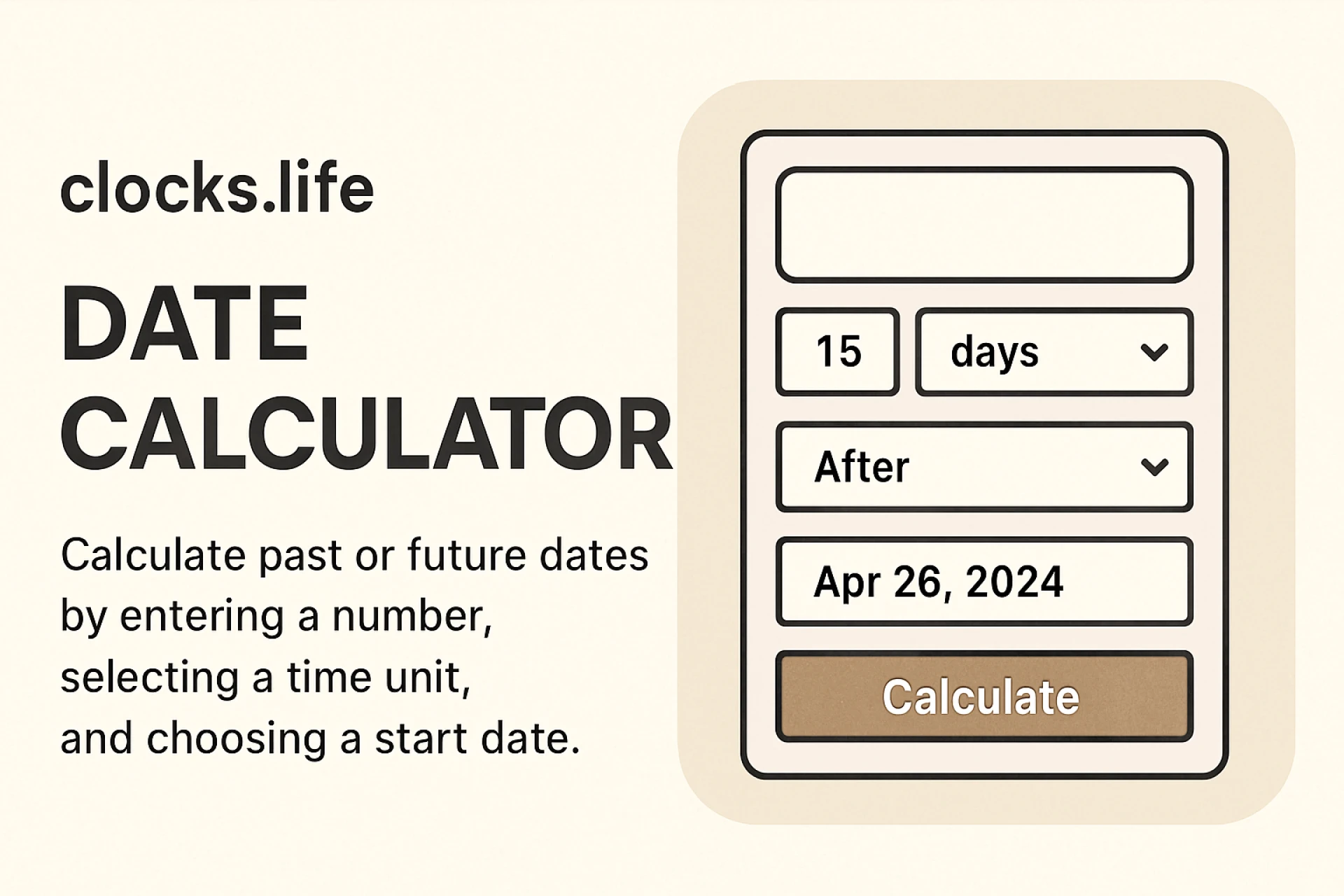
- Time interval calculators allow you to add or subtract specific time units (days, weeks, months, years, or even hours and minutes) from a starting point. For example, you can use it to find out the date and time that will occur 100 days from today or calculate the end time of an event that lasts 3 hours and 45 minutes.
- Age Calculator:
- One popular use of date and time calculators is for determining age. By inputting a person's birthdate and the current date, the calculator can determine the exact age in years, months, and days.
- Working Days Calculator:
- Many businesses, organizations, and individuals need to calculate workdays between two dates. A working day calculator excludes weekends and public holidays from the total, giving you the number of business days between two dates.
- Convert Time Zones:
- Time zone conversion is another key feature. A date and time calculator can help you convert a specific time from one time zone to another. This is particularly useful when planning events that involve participants in multiple countries and time zones.
- Countdown Timer:
- Many date and time calculators include a countdown function, which tells you how much time remains until an event occurs. This could be a countdown to a wedding, the launch of a product, or any important event you’re looking forward to.
- Elapsed Time:
- This function calculates the total time that has passed between two points in time, such as the amount of time spent on a task, project, or event. It’s useful for assessing project timelines or determining how long an event took to unfold.
The Importance of Date and Time Calculators
Time is one of the most precious resources we have, and managing it effectively is key to both personal productivity and business success. A date and time calculator can significantly improve efficiency and accuracy in various areas of life, such as:
- Project Management:
- When managing projects, there are often deadlines, milestones, and schedules that need to be adhered to. Calculating the number of days, weeks, or months until a deadline or determining the exact start and end times of tasks are critical functions that date and time calculators perform. Project managers rely on accurate date and time calculations to avoid project delays and ensure smooth workflows.
- Event Planning:
- Whether planning a wedding, a birthday party, or a corporate event, understanding time is essential. Event planners can use date and time calculators to determine the number of days left until an event, adjust schedules for guest arrival times, or plan for different time zones if participants are from various parts of the world.
- Legal and Financial Calculations:
- Many legal and financial matters depend on specific time frames, such as calculating interest rates, loan terms, or the duration of contracts. Lawyers and accountants use date and time calculators to ensure that all legal deadlines are met, taxes are filed on time, or contracts are executed within a certain time frame.
- Personal Use:
- On a personal level, people use date and time calculators for various purposes such as planning vacations, scheduling appointments, or simply keeping track of important dates like anniversaries or birthdays. The ability to precisely calculate dates or times can also help you avoid conflicts and misunderstandings.
Online Tools and Apps for Date and Time Calculation
With the digital age, many online tools and apps have emerged, making date and time calculation simpler and more accessible. Some of the most popular online calculators and apps include:
- TimeAndDate.com: One of the leading online tools for date and time calculations, offering various features such as a date calculator, time zone converter, and world clock.
- Time Calculator by Calculator: A simple and easy-to-use date and time calculator that allows users to add or subtract time and compute date differences.
- Google Search: Google itself offers built-in date and time calculator functions. For instance, searching for “days between April 1, 2025, and September 1, 2025” will instantly provide the difference.
- Mobile Apps: There are also mobile apps such as “Date Calculator” and “Time Zone Converter” that are handy when you need to perform calculations on the go.
Common Use Cases for Date and Time Calculators
- Countdown to Special Events: Planning a wedding, the release of a new product, or a long-awaited trip? You can calculate the exact countdown until the event.
- Legal Deadlines: Lawyers use these tools to track deadlines for court filings or contract expiration dates.
- Financial Calculations: Investors and financial planners use date and time calculators to track investment maturity dates or determine loan terms and interests.
- Project Deadlines: Managers use these calculators to ensure they meet deadlines, even in multi-phase projects.
Conclusion
Date and time calculators are invaluable tools that streamline daily life, improve productivity, and help ensure the accurate tracking of time-related events. They are useful for individuals and professionals alike, offering a simple yet powerful way to perform essential calculations. Whether you need to track deadlines, calculate an age, convert time zones, or plan for the future, a date and time calculator can be your best companion. By simplifying these often complicated tasks, they allow us to focus on what really matters – making the most of the time we have.