
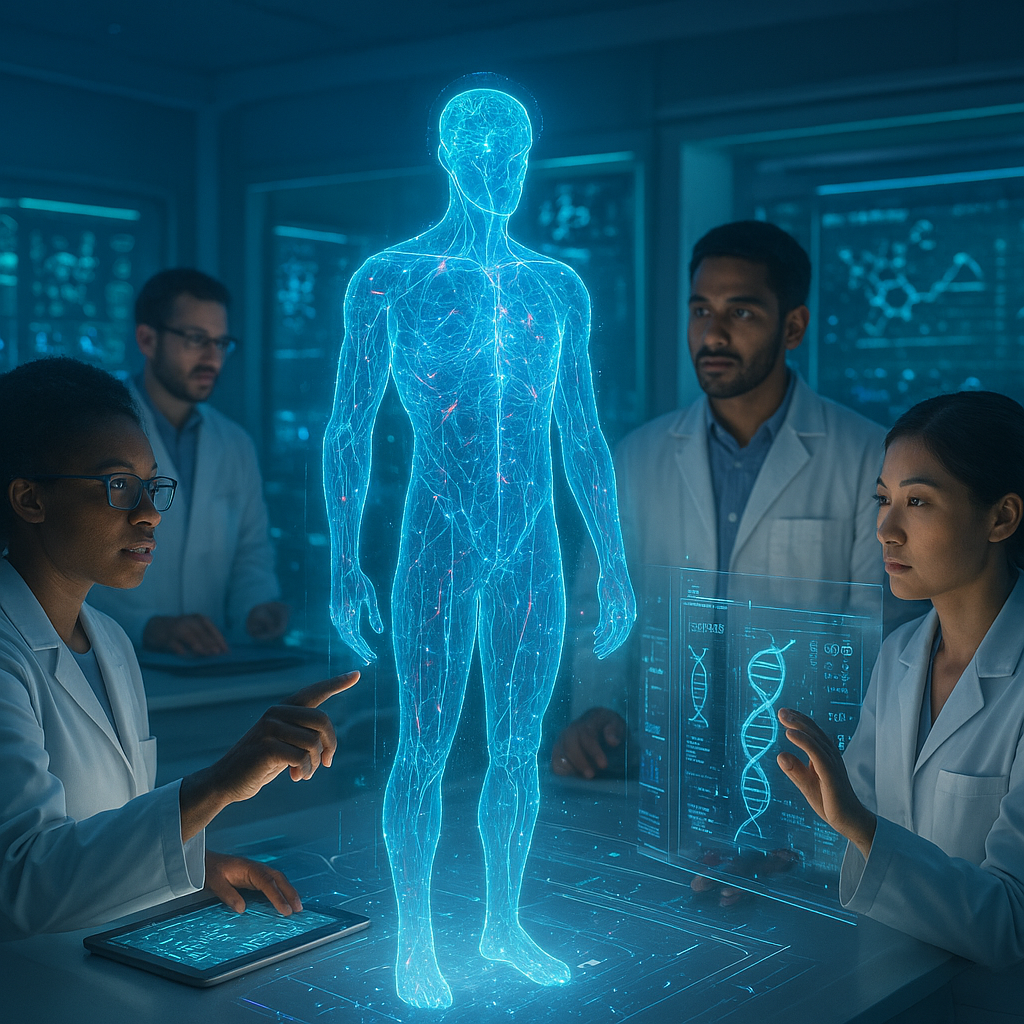
Unlocking New Frontiers: The Current Landscape of Medical Research
In a small laboratory nestled within the University of Cambridge, a team of researchers recently announced a breakthrough in gene-editing technology that promises to revolutionize treatment options for rare genetic disorders. This achievement is just one of many that highlight the vibrant and rapidly evolving field of medical research in 2026. As the world grapples with complex health challenges ranging from chronic diseases to emerging infections, medical research stands as a beacon of hope, driving innovation and transforming healthcare outcomes globally.
The sheer scale of medical research today is staggering. According to the World Health Organization’s 2026 report, global investment in health research and development has surged past $250 billion annually, with an increasing share dedicated to precision medicine, immunotherapy, and AI-driven drug discovery. This increased funding reflects the urgent need to tackle persistent diseases and the growing potential of new technologies to unlock unprecedented therapeutic avenues.
Yet, the real story lies in how these advancements are reshaping patient care and public health strategies. The integration of multi-omics data, real-world evidence, and sophisticated computational models has enabled researchers to understand diseases at molecular and systemic levels, forging new paths for personalized interventions.
"The convergence of big data and biotechnology is not just accelerating discovery but fundamentally changing how we approach disease prevention and treatment," notes Dr. Helena Vu, Director of Genomic Medicine at the National Institutes of Health.
This article explores the trajectory of medical research, spotlighting pivotal developments in 2026, the underlying scientific and technological foundations, expert perspectives, and the promising road ahead.
Tracing the Evolution: From Serendipity to Strategic Science
Medical research has evolved dramatically over the past century. Early discoveries, often serendipitous, laid the groundwork for modern scientific inquiry. The 20th century witnessed landmark breakthroughs such as the discovery of penicillin, the elucidation of DNA’s structure, and the development of vaccines that eradicated or controlled deadly diseases like smallpox and polio.
By the late 20th and early 21st centuries, the Human Genome Project (completed in 2003) emerged as a watershed moment. This massive international effort decoded the human genetic blueprint, catalyzing a paradigm shift from symptom-based diagnosis to molecularly informed medicine. The subsequent decades saw the rise of targeted therapies, especially in oncology, where drugs like trastuzumab and checkpoint inhibitors began reshaping cancer treatment.
Parallel to these biological advances, computational power and data science transformed medical research methodologies. The ability to analyze vast datasets accelerated clinical trial design, biomarker identification, and epidemiological modeling.
Despite these successes, several challenges persisted into the 2020s: high costs of drug development, regulatory hurdles, disparities in research accessibility, and ethical questions surrounding data privacy. These hurdles motivated a more collaborative and patient-centric research culture, emphasizing open science and global partnerships.
"Understanding the history of medical research is crucial for appreciating the sophistication and ambition of today’s efforts," explains Professor Mark R. Thompson, a medical historian at Oxford University.
Dissecting the 2026 Innovations: Data, AI, and Therapeutics
In 2026, medical research is characterized by unprecedented convergence of technology, biology, and clinical practice. The latest data from the International Clinical Trials Registry Platform reveals over 20,000 active interventional studies worldwide, many leveraging advanced technologies.
Artificial Intelligence and Machine Learning have become indispensable tools. AI algorithms now routinely analyze imaging data to detect early-stage cancers with accuracy exceeding 95%, surpassing human radiologists in some settings. Moreover, AI accelerates drug discovery by predicting molecular interactions and optimizing compound libraries, significantly reducing time-to-market.
Multi-Omics Integration—the combined analysis of genomics, proteomics, metabolomics, and epigenomics—has become standard practice. This holistic view enables more precise disease classification and tailored therapies. For example, in autoimmune diseases like multiple sclerosis, researchers have identified distinct molecular subtypes that respond differently to treatment.
Immunotherapy Advances remain a dominant force, with new CAR-T cell variants engineered to target solid tumors more effectively and with fewer side effects. Furthermore, advances in mRNA vaccine platforms, initially propelled by COVID-19, now extend to infectious diseases such as malaria and tuberculosis, and even to therapeutic cancer vaccines.
- Key 2026 Medical Research Milestones:
- CRISPR-Cas9 gene editing refined for safer in vivo applications
- First FDA approval of AI-designed small molecules for rare diseases
- Expansion of decentralized clinical trials utilizing wearable biosensors
- Breakthrough in blood-brain barrier penetration for neurodegenerative drugs
- Global consortiums publishing open-access datasets for accelerated collaboration
These advances are not isolated. They represent interconnected progress that collectively elevates the efficacy and accessibility of medical research outcomes.
Voices from the Field: Experts Weigh In on Medical Research’s Impact
Leading experts emphasize the transformative potential and persistent challenges within medical research today. Dr. Anika Shah, Chief Scientific Officer at BioNova Therapeutics, highlights the shift towards patient-centered research models: "Engaging patients as partners rather than subjects enriches the research process, ensuring that outcomes align with real-world needs and improve quality of life."
On the regulatory front, agencies like the FDA and EMA have adapted frameworks to accommodate novel modalities such as gene therapies and digital therapeutics. Dr. Luis Martinez, a regulatory affairs expert, notes, "Adaptive trial designs and rolling reviews have shortened approval times without compromising safety, accelerating access to life-saving treatments."
However, disparities remain. Low- and middle-income countries often face barriers to participation in cutting-edge research, limiting global health equity. Initiatives to democratize research infrastructure and data sharing are gaining momentum but require sustained commitment.
"The promise of medical research can only be fully realized if inclusivity and ethical standards are prioritized at every stage," asserts Dr. Maria Chen, WHO advisor on global health research.
Furthermore, the ethical landscape continuously evolves alongside technological advances. Issues such as genome editing in embryos, data privacy, and AI bias demand vigilant oversight and public dialogue.
Looking Forward: What Medical Research Holds for the Next Decade
The future of medical research is poised for even more radical transformation. Emerging fields such as synthetic biology, nanomedicine, and quantum computing are expected to open new frontiers. Precision medicine will likely become the norm across diverse disease areas, supported by increasingly sophisticated biomarker discovery and digital health integration.
Key areas to watch include:
- Neurodegenerative Disease Therapies: With greater understanding of brain networks and molecular pathology, effective treatments for Alzheimer’s and Parkinson’s may finally emerge.
- Microbiome Manipulation: Research into gut-brain and gut-immune axes could revolutionize approaches to mental health and autoimmune disorders.
- Global Health Collaborations: Enhanced data sharing and coordinated clinical trials will address neglected diseases and pandemic preparedness more robustly.
- AI-Driven Personalized Prevention: Predictive analytics using wearable and genomic data will enable tailored lifestyle interventions to prevent disease onset.
Despite these advances, challenges such as equitable access, ethical governance, and sustainable funding models will require ongoing attention. As TheOmniBuzz detailed in Why Medical Research Remains Humanity’s Best Hope Against Disease and Harnessing Innovation: Advanced Strategies Transforming Medical Research Today, the field’s trajectory depends on balancing innovation with responsibility.
Case Studies: Breakthroughs That Illustrate Medical Research’s Promise
Consider the case of Lumina Therapeutics, a biotech startup whose AI-powered platform identified a novel compound for a rare pediatric neurodegenerative disorder in under six months—a process that traditionally took years. Following rigorous clinical trials, the drug received conditional approval in mid-2026, offering hope to hundreds of families worldwide.
Another example comes from the international consortium led by the Global Vaccine Alliance, which recently completed a multi-center phase 3 trial of an mRNA-based malaria vaccine. This vaccine demonstrated 85% efficacy in preventing infection, a milestone that could drastically reduce malaria mortality in endemic regions.
These successes underscore the importance of interdisciplinary collaboration, patient engagement, and innovative methodologies in accelerating medical breakthroughs.
"These case studies highlight the real-world impact of integrating technology, science, and human insight," says Dr. Emily Rodriguez, clinical research director at Lumina Therapeutics.
- Lessons from Leading Case Studies:
- Rapid iteration through AI-driven discovery expedites drug development
- Global trial networks enable robust data collection and diverse participant inclusion
- Public-private partnerships amplify resource availability and dissemination
As the global community continues to invest in and prioritize medical research, the promise of healthier, longer lives becomes increasingly achievable.
For readers interested in a deeper exploration of how modern research is reshaping healthcare, TheOmniBuzz’s Revolutionizing Health: The Unseen Power and Promise of Modern Medical Research offers a comprehensive examination of emerging trends and technologies.