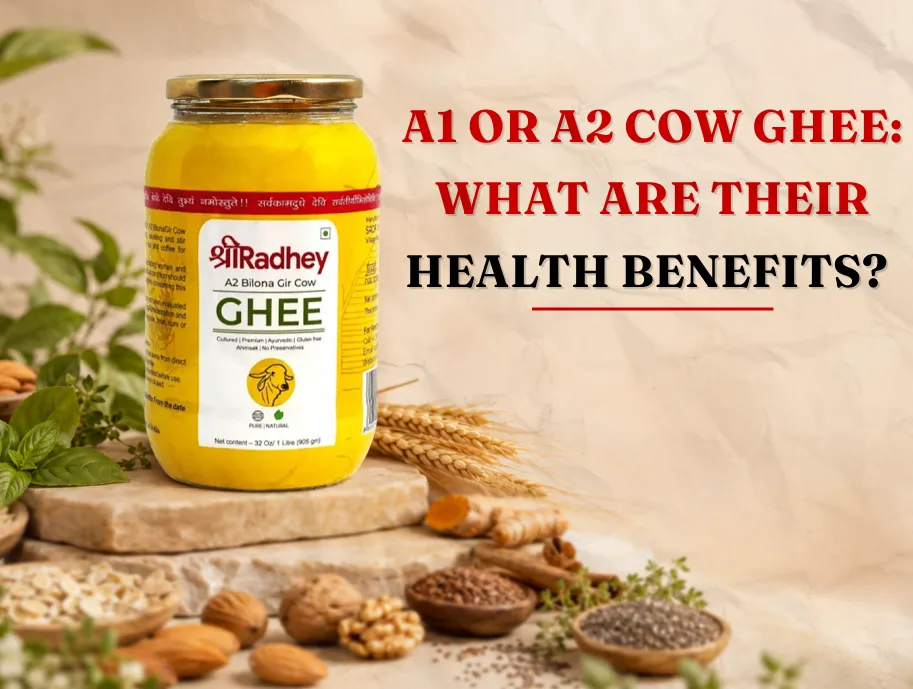
Ghee has been a trusted part of traditional diets for generations, valued for its rich flavor, nutritional profile, and versatility in cooking. Today, as more people pay attention to the quality of dairy products they consume, the discussion around A1 and A2 pure cow ghee has become increasingly popular. Many consumers want to understand the difference between these two types of Ghee.
If you’ve been curious about A1 ghee vs A2 ghee, it’s all about the protein within the milk that was used to create the ghee. Although both forms of ghee contain valuable nutrients and healthy fats, there are distinct differences that may have implications depending on your dietary requirements or preferences.
In this article, we'll dive into the differences between A2 ghee vs A1 ghee and the health advantages that are associated with each.
Understanding the Difference Between A1 and A2 Ghee
A1 ghee is made from milk of cows having A1 beta-casein protein. Most of the breeds that are normally believed to produce A1 milk are the few species of cows found in Europe. Whereas A2 ghee is extracted from milk of cows having naturally occurring A2 beta-casein protein. Usually, the native species of the Indian cow produces A2 milk.
The only thing they are different is the milk from which they are produced. All A1 ghee and A2 ghee are purified (by clarification) by the same method to be called ghee. A health-conscious person, therefore, compares A1 ghee vs A2 ghee before purchasing.
A1 Ghee: Health Benefits and Nutritional Value
The fats present in A1 ghee are rich in various vitamins and nutrients, and can be an added benefit for the nutritional balance of the diet. Similar to other types of ghee, it contains the fat-soluble vitamins like A, D, E, and K, which are responsible for the wellness of bones, immune systems, etc.
The presence of healthy saturated fats in A1 ghee can also serve as an energy source in the diet and can benefit digestion if used sparingly. A1 ghee can also be used as a cooking medium due to its high smoke point, and it can be used to sauté and roast foods until they are nicely cooked and brown.
A lot of households are now regularly consuming A1 ghee because of its low cost and easy availability. They feel that A2 ghee may be less invigorating when you compare A1 with A2 ghee.
A2 Ghee: Why Is It Gaining Popularity?
A2 ghee has increased growing interest due to claims that A2 dairy may be more easily digestible by some people. A2 ghee is typically made from the milk of indigenous cow breeds and has its place in the world of traditional wellness.
One aspect that is often discussed is the rich nature of bilona cow ghee. It is rich in useful fats that can assist with energy production and may also help with the uptake of other nutrients. The ghee is also free of lactose and is made without the milk solids; due to these facts, numerous people find that it is a far more digestible food.
One more aspect that has people making comparisons between A2 vs A1 cow ghee is due to the fact that it is said to have been made using traditional methods such as bilona churning, which they say help in maintaining its health values as well as taste.
A1 Ghee vs A2 Ghee: Which One Is Better?
A2 ghee may be preferred by some individuals as it often comes from an indigenous Indian cow, as well as those who feel more confident buying a naturally sourced dairy product. Many consumers may find it a little more easily digestible, although individual results may vary.
A1 ghee is also a healthy and convenient option to be consumed for cooking purposes.
When comparing A2 cow ghee vs A1 cow ghee, the right choice ultimately depends on your preferences, budget, health goals, and how your body responds to different dairy products.
Factors to Consider Before Choosing Ghee
In comparing A2 ghee vs A1 ghee, you can go beyond just labels and evaluate a product on its quality. The origin, processing of the product, as well as the brand, are important decision factors.
It may be important to purchase the ghee without any additional ingredients and with traceable origins. Knowing what the description says and whether the ghee was made traditionally or from cows fed with grass will help you make this decision. Knowing how to choose a good quality organic ghee can also help you make a more informed purchase.
For the typical buyer looking for ghee, they aren't searching to pick one over the other, but rather to decide upon an alternative that meets their own needs.
Conclusion
A2 Cow Desi Ghee is gaining popularity as customers turn out to be very conscious about their diet. It offers both nutritional value and health benefits, and also serves many culinary purposes.
While A1 ghee is easily available and appropriate for everyday consumption, A2 ghee is chosen for its traditional characteristics and digestive properties. Knowing the a1 vs a2 ghee difference can help you in choosing better, as per your requirements. Taking ghee in appropriate amounts would enhance health benefits. Click to buy the best A2 cow ghee in India.
Originally Posted On: A1 or A2 Cow Ghee: What are their Health Benefits?