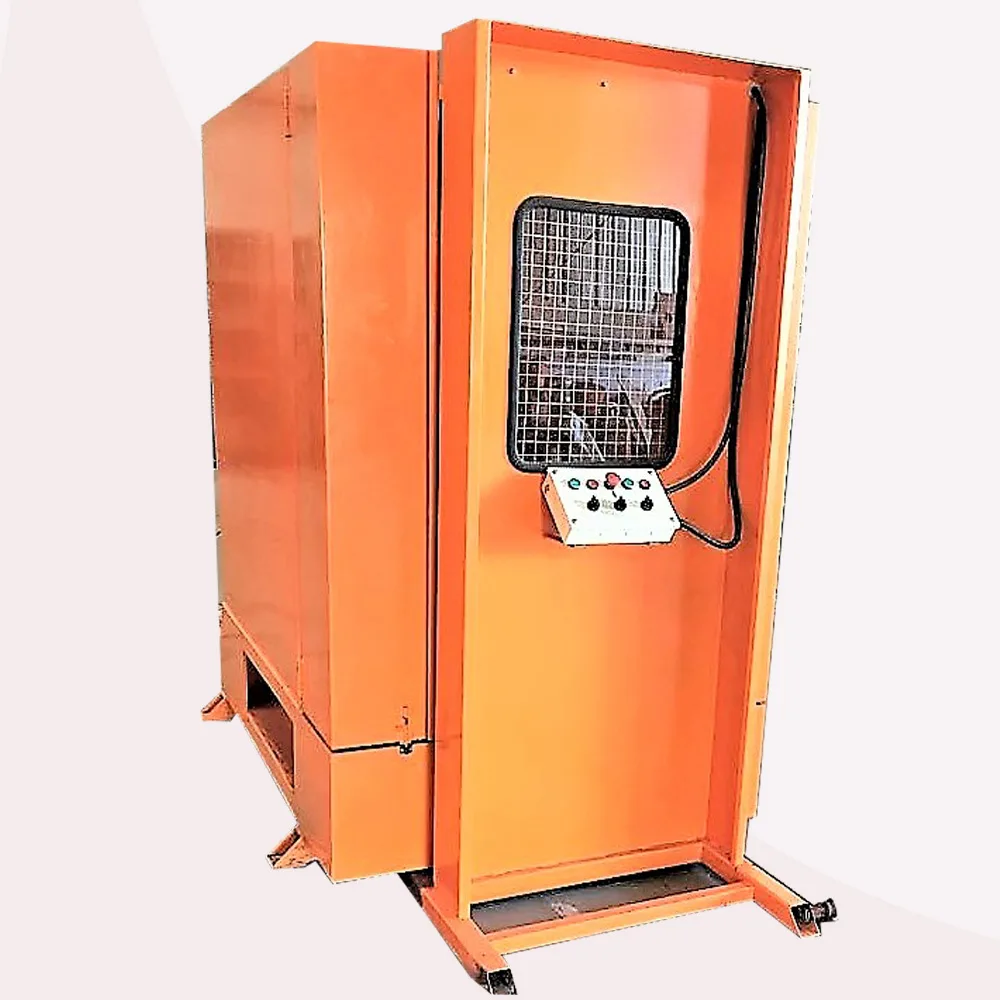
Quick Answer: An abrasive gate cut-off machine trims gates, runners, and risers off investment castings with a high-speed abrasive wheel. Faster than a bandsaw. Cleaner than a torch. Easier on the part. Laxminarayan Technologies has built these cut-off machines for Indian foundries since 1986.
The gate that ruined a good casting
Nine times out of ten, a chipped casting isn't the pour's fault. It's the cut. Pick the wrong wheel, or let the part overheat, and you scrap a good pour at the last step. That's why the abrasive gate cut-off machine matters more than most foundries admit. We're Laxminarayan Technologies, and since 1986 we've built casting cutoff machines for shops running everything from valve bodies to turbine blades. This machine solves one blunt problem. How do you separate the casting from its gating system fast, safely, and without cracking the part you spent all week making?
What is an abrasive gate cut-off machine?
It's a fixed or swing-frame machine that spins a bonded abrasive wheel at high surface speed to cut gates, sprues, and risers from castings. The wheel abrades rather than saws. That gives a fast, controlled cut on hardened alloys where a toothed blade would stall or shatter.
Why abrasive beats the alternatives
Bandsaws struggle with hardened steel. Torches warp thin sections and leave slag. The abrasive route sits in between, and for most investment casting work it wins.
Here's the honest comparison, no marketing gloss:
Abrasive cut-off: fast cycle, clean kerf, handles hardened alloys, some heat at the cut face. Wheel is a consumable.
Bandsaw: cool cut, but slow on hard steel and blades wear quick.
Plasma or torch: cheap, but heat-affected zones and rework kill your finish on precision parts.
For near-net-shape castings, where dimensional accuracy and surface finish decide acceptance, the abrasive wheel usually pays for itself in reduced rework alone.
How a gate cut actually runs
Simple in theory. Fussy in practice. Here's the flow our operators follow:
Clamp the casting tree so it can't shift. Movement is where fingers and parts get hurt.
Position the gate against the wheel line. Leave a small stub, don't cut flush into the part.
Feed steady. Let the wheel do the work; forcing it glazes the bond and burns the cut.
Flood or mist coolant if the alloy is heat-sensitive.
Break the part off, inspect the cut face, move to grinding.
Rush step three and you'll see blue heat marks. That blued zone? Think of it like a steak seared too hard on one side. The surface changed, and not for the better.
Where our foundry customers use them
Aviation turbine and IGT parts: superalloy gates are brutal on tooling. The right wheel and rigid frame keep tolerances tight.
Automotive: high-volume valve and pump castings where cycle time per gate is everything.
Pump and valve bodies: heavy sprues that a bandsaw would crawl through.
Complex ceramic-core geometries: thin walls that can't take torch heat.
For the full machine spec and wheel options, see our abrasive gate cut-off machine page. It pairs naturally with the rest of a turnkey line, from the wax injection machine at the front end to dewax and shell firing downstream.
Real problems, straight answers
Heat damage at the cut face. Too much feed pressure blues the metal. We fix it with correct wheel selection, controlled feed, and coolant on sensitive alloys. Truth is, most heat problems are operator habit, not machine limits.
Vibration and chatter. A flimsy frame walks under load and chips gates. Our frames are built heavy on purpose. Rigidity is cheaper than reject rates.
Cost of ownership. Wheels are consumables, and they add up. But a stalled bandsaw line costs more. Across a full setup, our machines deliver roughly 50% power savings in wax, shell, and dewax stages and about 40% labour savings, so the cut-off station isn't the bottleneck.
The same discipline runs through our whole ISO 9001 process, from the inert gas flash dewax systems to ceramic core injection machine lines. If your cores need tighter charge control, our sister resource at ceramicinjector.com goes deeper on that.
The bottom line
A cut-off machine looks like the humble end of the foundry. It isn't. It's the last gate between a good casting and a scrapped one. Get the wheel, the frame, and the feed right, and your reject rate drops where it hurts least. We've spent four decades commissioning these lines across India. If you're weighing a new casting cutoff machine, talk to Laxminarayan Technologies first. We'll tell you honestly what your parts actually need.