For commercial vessel operators, safety planning is about much more than meeting regulations. Whether you manage a fishing vessel, workboat, offshore support craft, or an entire fleet, having the right emergency response systems in place can make a critical difference when an incident occurs at sea.
Among the most important pieces of marine safety equipment, an ACR EPIRB plays a vital role in helping search and rescue authorities locate a vessel in distress. However, simply carrying an EPIRB is not enough. Commercial operators must ensure the beacon is properly registered, maintained, tested, and integrated into their wider emergency procedures.
This practical checklist will help vessel owners, fleet managers, skippers, and boat operators strengthen their safety planning while ensuring their marine safety supplies and emergency communication systems remain ready when needed.
Why an ACR EPIRB Matters in Commercial Vessel Safety Planning
An Emergency Position Indicating Radio Beacon (EPIRB) is designed to transmit a distress signal when a vessel faces a serious emergency. Once activated, the beacon communicates with international satellite networks, helping rescue authorities identify the vessel and its location.
For commercial operations, an ACR EPIRB is often viewed as a critical layer of protection when operating offshore, in challenging weather conditions, or in remote areas where immediate assistance may not be available.
Benefits of including an ACR EPIRB in your vessel safety plan include:
- Faster emergency alert transmission
- Improved search and rescue response times
- Enhanced crew safety
- Greater confidence during offshore operations
- Support for regulatory compliance requirements
When combined with other marine safety equipment, an EPIRB becomes a key component of a comprehensive emergency preparedness strategy.
Marine Safety Equipment Checklist Before Every Voyage
Every commercial voyage should begin with a thorough inspection of onboard marine safety equipment. Regular checks help identify issues before they become safety risks.
Before departure, verify the following:
Emergency Communication Equipment
- ACR EPIRB is onboard and accessible
- VHF radio is operational
- Backup communication devices are available
- Antennas are secure and functioning properly
Life Saving Equipment
- Lifejackets are available for all crew members
- Liferafts are properly serviced
- Throw lines and rescue equipment are ready for use
- Emergency lighting systems are functional
Distress Signalling Equipment
- Distress flares are within expiry dates
- Signal mirrors and whistles are onboard
- Searchlights are operational
Medical and Emergency Supplies
- First aid kits are fully stocked
- Emergency medications are available if required
- Crew emergency contact information is current
Conducting these inspections before every voyage ensures your marine safety equipment remains dependable when it matters most.
Marine Safety Supplies Commercial Operators Should Keep Ready
While major safety systems often receive the most attention, supporting marine safety supplies are equally important for effective emergency preparedness.
Essential marine safety supplies include:
- Updated vessel documentation
- Emergency response plans
- Safety logbooks
- Inspection records
- Crew contact lists
- Waterproof emergency checklists
- Spare mounting hardware
- Emergency signage
Organised marine safety supplies can help crews respond more efficiently during stressful situations and reduce delays when immediate action is required.
Commercial operators should routinely review storage locations to ensure all critical supplies remain accessible and protected from environmental damage.
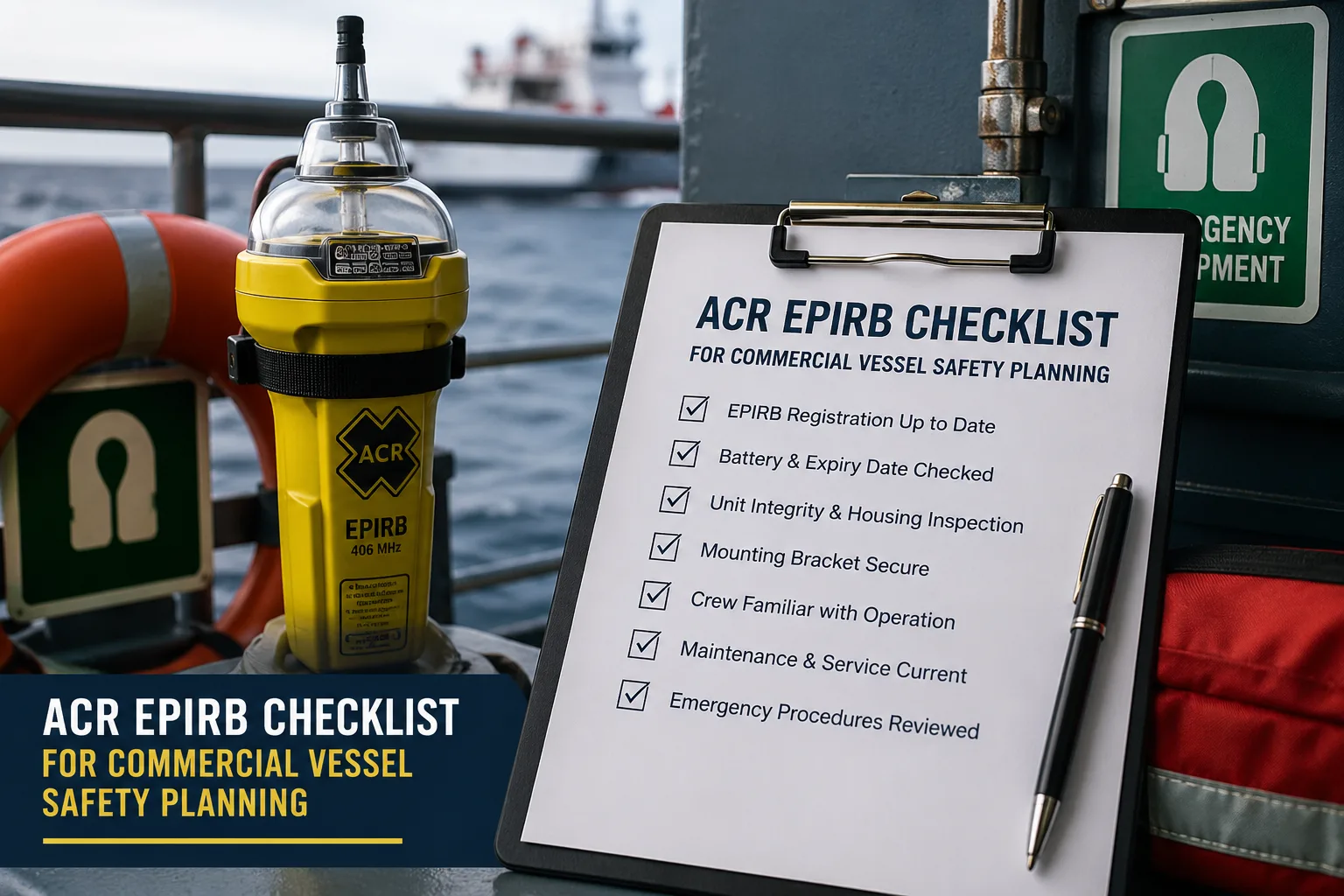
ACR EPIRB Checklist: Key Points to Confirm Onboard
To maximise the effectiveness of your ACR EPIRB, use the following checklist as part of your regular safety planning process.
Confirm Proper Installation
- Beacon is securely mounted
- Mounting bracket is in good condition
- Beacon is protected from accidental activation
- Unit can be accessed quickly during emergencies
Verify Registration Details
- Registration information is current
- Vessel details are accurate
- Emergency contact information is up to date
- Ownership information matches current records
Check Service Status
- Battery replacement dates are current
- Manufacturer service recommendations have been followed
- Inspection records are available onboard
Review Physical Condition
- No visible cracks or damage
- Labels remain legible
- Antenna is intact
- Protective housing is undamaged
Confirm Crew Familiarity
- Crew know the beacon's location
- Crew understand activation procedures
- New personnel receive EPIRB training
An ACR EPIRB is only effective if everyone onboard understands its purpose and operation.
Registering and Updating Your ACR EPIRB in the UK
Registration is one of the most important responsibilities associated with owning an ACR EPIRB.
When a distress signal is received, rescue authorities rely on registration information to identify the vessel, understand the nature of operations, and contact emergency contacts.
UK commercial vessel operators should ensure:
- Registration is completed promptly
- Contact information remains current
- Vessel changes are reported
- Ownership transfers are updated
- Fleet records remain accurate
Failing to maintain accurate registration information can slow emergency response efforts and create unnecessary complications during rescue operations.
As part of your annual review process, include registration verification alongside inspections of your marine safety equipment and marine safety supplies.
Testing and Maintenance Checklist for Commercial Vessel Owners
Regular maintenance is essential for reliable EPIRB performance.
An ACR EPIRB should be included within your vessel's planned maintenance schedule alongside other critical marine safety equipment.
Maintenance Checklist
Monthly Checks- Inspect physical condition
- Verify mounting bracket security
- Check for visible damage
- Confirm registration details remain accurate
- Conduct manufacturer-recommended testing
- Review maintenance records
- Confirm battery status
- Update crew training documentation
- Follow manufacturer service intervals
- Replace batteries when required
- Complete professional inspections when recommended
Proper maintenance ensures your ACR EPIRB remains ready to perform when needed most.
Crew Training Checklist for ACR EPIRB Use
Even the best marine safety equipment cannot deliver its full value without proper crew training.
Every commercial vessel should include EPIRB familiarisation within crew safety programs.
Training should cover:
Equipment Awareness
- Purpose of the EPIRB
- Situations requiring activation
- Beacon location onboard
Emergency Procedures
- Activation process
- Distress communication protocols
- Coordination with other emergency equipment
Practical Drills
- Emergency response exercises
- Crew role assignments
- Equipment location reviews
Regular drills improve confidence and reduce confusion during emergencies.
A well-trained crew can often respond faster and more effectively when unexpected situations arise.
Common ACR EPIRB Mistakes to Avoid
Many commercial operators invest in high-quality equipment but overlook simple issues that can reduce effectiveness.
Common mistakes include:
Not Updating Registration Information
Changes to vessel ownership, contact details, or operating information should be updated promptly.
Ignoring Maintenance Schedules
Delaying inspections or battery replacement can compromise beacon performance.
Poor Accessibility
An EPIRB stored in a difficult-to-reach location may not be available when needed.
Insufficient Crew Training
Assuming crew members already know how to use emergency equipment can create unnecessary risks.
Failing to Review Overall Safety Planning
An ACR EPIRB should work alongside other marine safety equipment and marine safety supplies, not replace them.
Avoiding these common mistakes strengthens overall vessel preparedness.
When to Review Your Full Marine Safety Plan
Commercial operators should regularly review safety procedures to ensure they remain effective.
Recommended review periods include:
- Before a new operating season
- After vessel modifications
- Following safety inspections
- After crew changes
- Following an incident or near miss
- Before long offshore operations
During these reviews, inspect all marine safety equipment, evaluate marine safety supplies, and confirm that your ACR EPIRB remains fully operational.
Routine reviews help identify gaps before they become serious safety concerns.
Why UK Operators Choose Adec Marine for Marine Safety Equipment
Commercial vessel owners across the UK require reliable safety solutions that support both compliance and crew protection.
Adec Marine helps operators source dependable marine safety equipment, maintain essential marine safety supplies, and ensure critical emergency systems are ready for service.
Whether you are reviewing fleet safety procedures, replacing outdated equipment, or upgrading your emergency communication systems, having access to trusted marine safety expertise can simplify the process and improve operational readiness.
Final Safety Checklist Before You Sail
Before every voyage, confirm the following:
✓ ACR EPIRB is onboard and accessible
✓ Registration information is current
✓ Maintenance schedules are up to date
✓ Crew understand activation procedures
✓ Marine safety equipment inspections are complete
✓ Marine safety supplies are fully stocked
✓ Emergency plans have been reviewed
✓ Communication systems are operational
A well-maintained ACR EPIRB, supported by reliable marine safety equipment and properly organised marine safety supplies, can significantly strengthen commercial vessel safety planning.
By following a structured checklist and conducting regular reviews, vessel owners and operators can improve preparedness, support compliance requirements, and help protect their crews during emergencies at sea.
For UK commercial operators looking to enhance onboard safety, Adec Marine can help ensure your vessel is equipped with the right safety solutions for every voyage.