
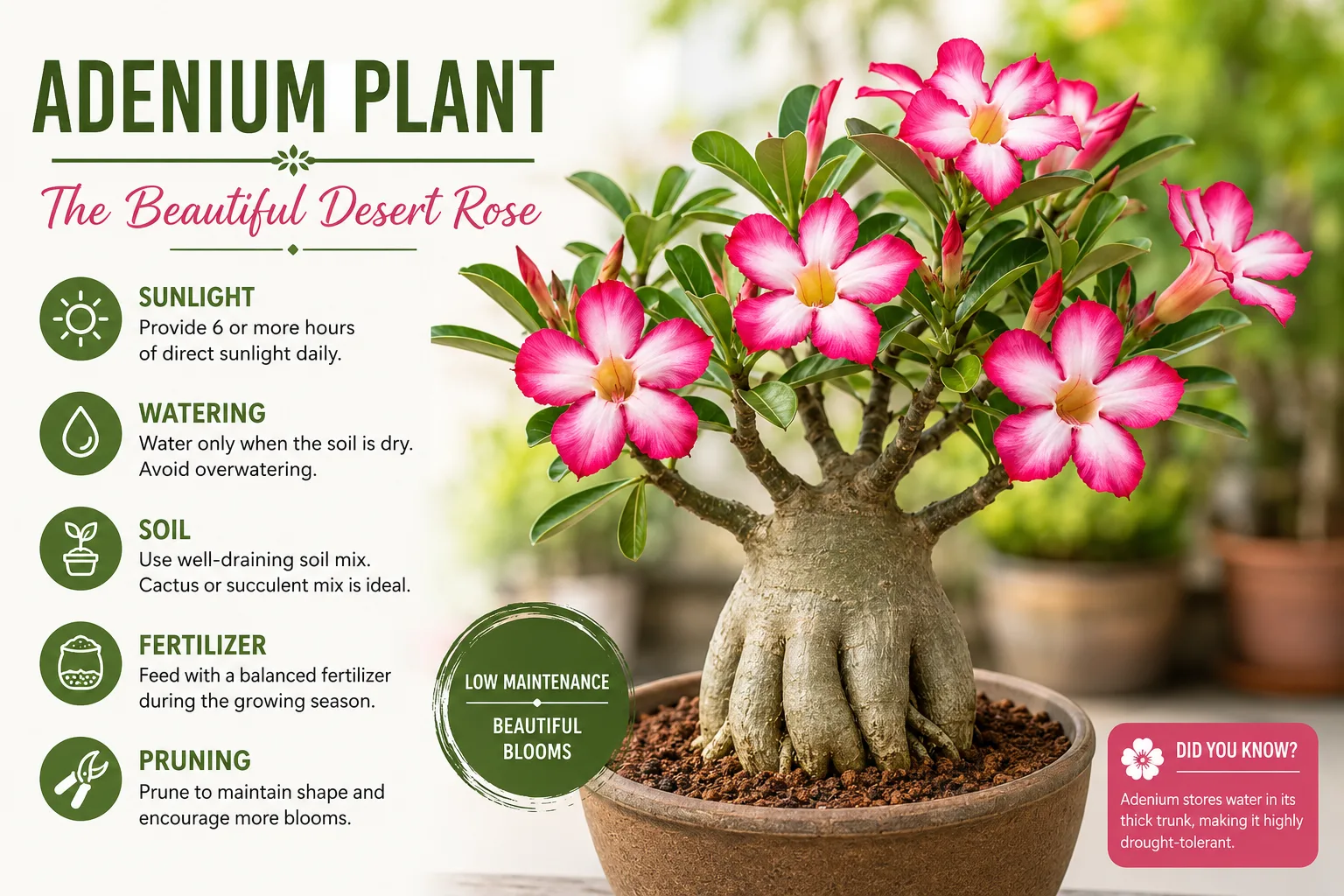
The adenium plant, commonly known as Desert Rose, is a popular ornamental plant appreciated for its attractive flowers, unusual stem structure, and ability to thrive in warm and sunny conditions. Its compact growth makes it suitable for balconies, terraces, gardens, patios, and decorative containers.
Unlike many flowering plants, adenium can store water in its thickened stem and roots, which allows it to tolerate dry conditions. With the right growing environment and basic care, this beautiful plant can become a long-lasting addition to any plant collection.
What Is an Adenium Plant?
Adenium is a succulent-like flowering plant that belongs to the Apocynaceae family. It is native to regions of Africa and the Arabian Peninsula and is especially known for its swollen trunk, attractive foliage, and colorful flowers.
The plant is available in several flower colors, including pink, red, white, and combinations of different shades. Its distinctive appearance also makes it a popular choice among bonsai enthusiasts.
One of the most interesting features of an adenium plant is its caudex, the enlarged base of the stem that stores water. This gives the plant its characteristic appearance and helps it survive periods of limited rainfall.
Choosing the Right Location
Adenium plants perform best when they receive plenty of sunlight. A location that receives around six or more hours of direct sunlight can encourage healthy growth and flowering.
For outdoor cultivation, a sunny balcony, terrace, patio, or garden area can work well. If the plant is kept indoors, place it near a bright window where it can receive sufficient natural light.
Good air circulation is also helpful. Avoid keeping the plant in areas that remain constantly damp or poorly ventilated.
Soil Requirements
Proper soil is one of the most important factors in growing a healthy adenium plant. The soil should drain quickly because excessive moisture around the roots can lead to root problems.
A well-draining succulent or cactus mix can be a good option. Gardeners can also create a suitable growing medium by combining regular soil with materials such as coarse sand, perlite, or other drainage-improving components.
The main goal is to create a loose growing medium that allows excess water to escape easily.
Watering an Adenium Plant
Adenium does not require frequent watering compared with many other flowering plants. Its thick stem and roots allow it to store water for periods when moisture is limited.
Instead of watering on a fixed daily schedule, check the soil before watering. When the growing medium has dried sufficiently, water the plant thoroughly and allow excess water to drain from the pot.
During cooler periods or when growth slows down, the plant may need considerably less water. Overwatering is generally a bigger concern than underwatering for this type of plant.
Fertilizing for Healthy Growth
Regular feeding during the active growing season can support foliage development and flowering. A balanced fertilizer suitable for flowering or succulent plants can be used according to the manufacturer's instructions.
Avoid applying excessive fertilizer because too much can damage the roots or encourage unhealthy growth. Feeding should also be reduced when the plant is not actively growing.
Pruning and Shaping
Pruning can help maintain the shape of an adenium plant and encourage branching. Removing weak, damaged, or unwanted branches can create a more attractive structure.
Many gardeners prune adenium to develop a compact, tree-like appearance. Pruning should be done with clean tools, and freshly cut areas should be protected from excessive moisture.
Regular shaping can also help the plant produce more branches, which may eventually result in more flowering points.
Repotting Tips
Adenium plants may need repotting when their roots become crowded or the growing medium stops draining properly. Choose a container with adequate drainage holes and avoid moving the plant into an excessively large pot.
A pot that is only moderately larger than the existing container is often easier to manage. After repotting, give the plant suitable light and avoid excessive watering while it adjusts.
Common Problems
Although adenium is relatively easy to maintain, a few problems can occur. Yellowing leaves may sometimes indicate watering issues, poor drainage, or changes in growing conditions.
Root problems are more likely when the soil remains wet for extended periods. Pests such as aphids, mealybugs, or scale insects can also affect the plant.
Regularly checking the leaves, stems, and soil can help identify problems early. Providing good sunlight, drainage, and airflow can prevent many common issues.
Why Grow Adenium?
There are several reasons gardeners choose adenium plants. Their colorful flowers can add a vibrant touch to outdoor spaces, while the unusual trunk gives them an attractive sculptural appearance even when they are not flowering.
They also work well in containers, making them suitable for people who have limited garden space. With proper care, an adenium can remain an attractive feature of a balcony, terrace, patio, or home garden for many years.
Final Thoughts
Growing an adenium plant can be a rewarding experience for both beginners and experienced gardeners. The key is to provide plenty of sunlight, use well-draining soil, avoid excessive watering, and offer appropriate care during the active growing season.
With its striking flowers and distinctive form, adenium can bring both beauty and character to a plant collection. Once its basic requirements are understood, maintaining this fascinating desert plant becomes simple and enjoyable.