
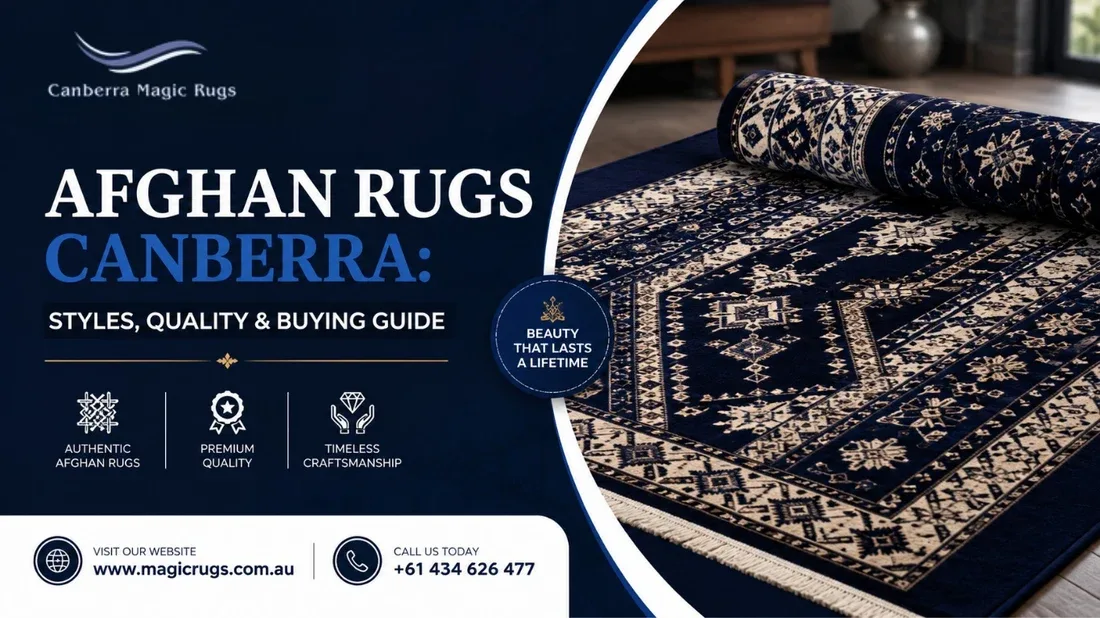
For those looking to incorporate warmth, character and traditional craftsmanship into their home, Afghan Rugs Canberra buyers have plenty to explore. Afghan rugs are hand-knotted rugs known for their rich colors, geometric patterns and are perfect for classic or modern interior design.
Whether it's a bold design by Khal Mohammadi or a delicate tribal weaving, each Afghan rug is distinctively appealing. While selecting one, you should take into account the material, quality of knots, dimensions, pattern and fit of the rug in your room.
Magic Rugs has an excellent selection of Afghan rugs for Canberra homes in a range of styles and sizes. A good Afghan rug can make a lovely permanent addition to any room, be it a living room, a bedroom, a hallway or an office.
See the newest collection and discover an Afghan rug that will fit into your interiors.
What Makes Afghan Rugs Different From Other Handmade Carpets?
Afghan rugs come from a weaving tradition that predates modern Afghanistan itself. Most are woven by Turkmen and Uzbek families in the north and west of the country.
Each rug is hand-knotted on a horizontal loom, one row at a time. A single rug can take three to nine months to finish, depending on its size and knot count.
Wool is the standard material. It's hand-spun, then dyed using a mix of natural and synthetic dyes, giving Afghan rugs their deep reds, rust tones and warm browns.
What sets them apart from mass-produced carpets is simple: no two Afghan rugs are identical. Every knot, every colour shift, is a human decision, not a machine pattern.
The industry runs deep in Afghan life. Rug weaving employs well over a million people across the country's provinces, often as a family trade passed down for generations. Weavers commonly use the Turkish (symmetrical) knot, which gives Afghan rugs their slightly firmer, chunkier pile compared to the finer Persian knot.
This history matters for buyers. A genuine Afghan rug isn't just floor decor — it's a physical record of a specific weaving region, a specific tribe, and months of hand labour. That's part of why prices vary so widely between pieces that look similar at a glance.
Popular Afghan Rug Styles You'll Find in Canberra
Not all Afghan rugs look alike. Each region and tribe weaves its own signature pattern. Here are the styles Canberra buyers ask for most.
Khal Mohammadi Rugs
Bold red and burgundy tones with octagonal "gul" motifs. This is the most recognisable Afghan style, often used as a statement piece in living rooms.
Bukhara (Aqche) Rugs
Deep red fields with repeating diamond patterns. Despite the name, most Bukhara-style rugs sold today are woven in Afghanistan, not Uzbekistan.
Baluch Rugs
Smaller, darker, and finely knotted. Baluch rugs suit hallways, bedrooms and prayer-rug-sized spaces. Their patterns are more geometric and understated.
Herati Pattern Rugs
Named after Herat province, these feature a repeating fish-and-rosette design. They pair well with both traditional and modern interiors.
Turkoman (Turkmen) Rugs
A broader family that includes several of the above. Traditional Turkmen carpet weaving is recognised by UNESCO as part of humanity's intangible cultural heritage.
You'll find several of these styles in Magic Rugs' Afghan Rugs collection, sourced directly from weaving regions.
How to Check Afghan Rug Quality Before You Buy
To check Afghan rug quality: turn it over and count knots per square inch (higher is denser), check for hand-spun wool (slight irregularities are normal), smell for natural dyes versus chemical odour, and confirm fringes are woven in, not glued or sewn on.
Genuine Afghan rugs share a few clear signs. Machine-made copies almost always fail one of these checks.
- Knot density: Flip the rug over. The tighter and more dense the knot, the better the craftsmanship and longer-lasting the knot.
- Wool feel: This is slightly felted, and is not as uniform as synthetic fibre.
- Colour variation: Natural dyeing will be evident through slight shading changes (also known as “abrash”) throughout the field – this is not a defect.
- Fringe construction: They are not stitched on separately, but are an extension of the foundation threads.
- Pattern symmetry: Hand-knotted rugs have tiny irregularities. Perfect machine symmetry is a red flag.
Choosing the Right Afghan Rug for Your Canberra Home
The right rug depends on the room, the traffic, and your existing colour palette.
Living Rooms
Go bold. A large Khal Mohammadi or Bukhara rug anchors the space and handles daily foot traffic well.
Bedrooms
Softer, smaller Baluch rugs work well beside the bed. Their tighter weave feels comfortable underfoot.
Hallways and Entryways
Runners in Herati or Turkoman patterns hide dirt better than pale, plain carpets.
Dining Rooms
Pick a rug at least 60cm wider than your table on all sides, so chairs stay on the rug when pulled out.
Home Offices and Reading Nooks
A small Baluch or Herati rug adds warmth without overwhelming a compact workspace. Darker tones also hide chair-caster marks better over time.
Colour matters too. Canberra homes with cooler, neutral interiors often suit muted Herati or Baluch tones. Homes with warmer timber floors and traditional furniture tend to carry bold Khal Mohammadi reds beautifully.
Think about foot traffic before pattern. A busy hallway or living room benefits from denser, tightly knotted rugs that resist crushing. A guest bedroom can afford a softer, looser weave.
Not sure which pattern fits your space? Browse the full handmade rug collection for side-by-side comparisons.
Have a room in mind but unsure which Afghan style suits it? Send us a photo and we'll help you pick.
Where to Buy Genuine Afghan Rugs in Canberra
Canberra buyers face a real problem: many "Afghan-style" rugs sold locally are actually machine-made overseas.
Magic Rugs sources genuine hand-knotted Afghan rugs directly, so every piece in the collection is verifiable — real wool, real knots, real weaving regions.
Beyond the rug itself, buying local also means easier access to fitting advice, repairs, and cleaning services down the track, rather than shipping a damaged rug interstate or overseas.
You can view current stock, ask questions, and get sizing help through the Magic Rugs contact page.
When comparing sellers, ask three simple questions: Where was the rug woven? What is it made from? Can you see the knot count? A genuine seller answers all three without hesitation. A generic import reseller usually can't.
It also pays to see a rug in person before buying, especially for larger living-room pieces. Colours and knot texture read differently under natural Canberra light than they do in a product photo.
Caring for Your Afghan Rug: Simple Maintenance Tips
A genuine Afghan rug can last decades with basic care. Neglect shortens that lifespan fast.
- Vacuum weekly, but avoid the beater bar on fringes.
- Rotate the rug every six months to even out sun fading and foot traffic wear.
- Blot spills immediately with a dry cloth, never rub.
- Keep out of direct, prolonged sunlight to protect natural dyes.
- Get a professional deep clean every 12–18 months.
For deeper cleaning, Magic Rugs offers professional rug cleaning services designed for hand-knotted wool pieces.
Ready to find your genuine Afghan rug in Canberra?
Shop the Afghan Rugs Collection →
Contact Magic Rugs – Canberra’s most trusted rug experts
· Call Us: +61 434 626 477
· Email: [email protected]
· Website: magicrugs.com.au
· GMB Profile: https://share.google/Ta43LVhDWki5BFkPy
· Support: Fast help with rug selection, orders & delivery