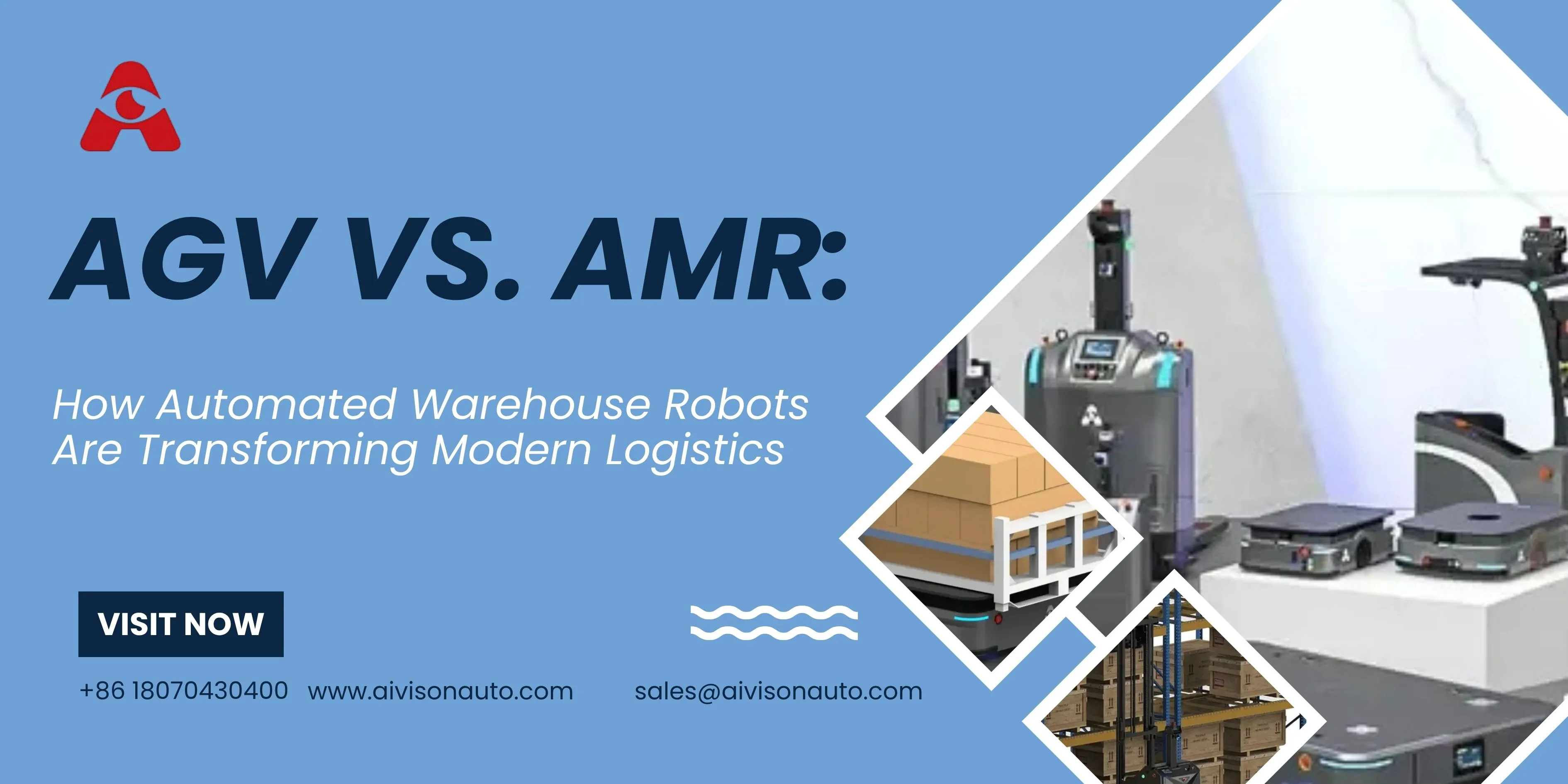
Warehouse operations are changing rapidly as businesses look for smarter ways to move materials, reduce repetitive work, and improve efficiency. Robotics technology is playing an important role in this transformation. Among the most widely adopted solutions are AGV, AMR, AMR Robot, and Automated Warehouse Robots, each designed to address different material-handling and logistics requirements.
What Is an AGV?
An AGV (Automated Guided Vehicle) is a mobile robot designed to transport materials along predefined routes. AGVs traditionally use technologies such as magnetic tape, wires, reflectors, QR codes, or other guidance systems to navigate through a facility.
AGVs are particularly useful when warehouse workflows are predictable and transportation routes remain consistent. They can move pallets, containers, and other materials between designated locations, helping businesses reduce manual transportation and maintain consistent workflows.
What Is an AMR?
An AMR (Autonomous Mobile Robot) is designed to navigate more dynamically than a traditional AGV. Instead of depending entirely on fixed physical pathways, an AMR can use sensors, cameras, mapping technology, and intelligent software to understand its surroundings and select suitable routes.
This flexibility makes AMRs valuable for modern warehouses where layouts, inventory locations, and workflows can change frequently. An AMR Robot can help transport materials while navigating around people, equipment, and temporary obstacles.
AGV vs. AMR: Which Is Better?
The choice between an AGV and AMR depends on the facility's operational requirements.
AGVs can be a strong choice for repetitive transportation tasks in structured environments with predictable routes. AMRs, on the other hand, are often better suited to dynamic environments where flexibility and autonomous navigation are important.
Businesses should consider factors such as warehouse layout, transportation requirements, payload capacity, scalability, integration needs, and future expansion before selecting a robotic solution.
How Automated Warehouse Robots Improve Operations
Automated Warehouse Robots can support a wide range of logistics activities, including material transportation, pallet movement, replenishment, picking support, and internal goods handling.
By automating repetitive transportation tasks, companies can reduce unnecessary manual movement and allow employees to focus on more complex responsibilities. Robotics can also help create more consistent workflows and improve operational visibility.
Another advantage is scalability. As order volumes increase, businesses may be able to expand robotic deployments instead of completely redesigning their warehouse processes.
Choosing the Right Robotics Solution
Successful warehouse automation starts with understanding the specific challenges of the operation. A solution should not be selected simply because it is technologically advanced. It should solve a genuine operational problem and integrate effectively with existing processes.
Businesses should evaluate navigation capabilities, payload requirements, safety features, software integration, warehouse conditions, and expected return on investment. A well-planned automation strategy can create a foundation for long-term operational improvement.
The Future of Warehouse Automation
The future of logistics will increasingly combine robotics, intelligent software, data, and human expertise. AGVs and AMRs are not necessarily replacements for workers; instead, they can work alongside people to handle repetitive and physically demanding transportation tasks.
As warehouses become more complex and customer expectations continue to rise, flexible robotic automation can help businesses build faster, safer, and more adaptable operations.
For businesses exploring warehouse automation, AIVISON provides robotic solutions designed to support modern material-handling and logistics requirements. The right combination of AGV, AMR, AMR Robot, and Automated Warehouse Robots can help organizations create a more efficient and scalable warehouse for the future.