Artificial Intelligence at a Crossroads: A Moment of Transformation
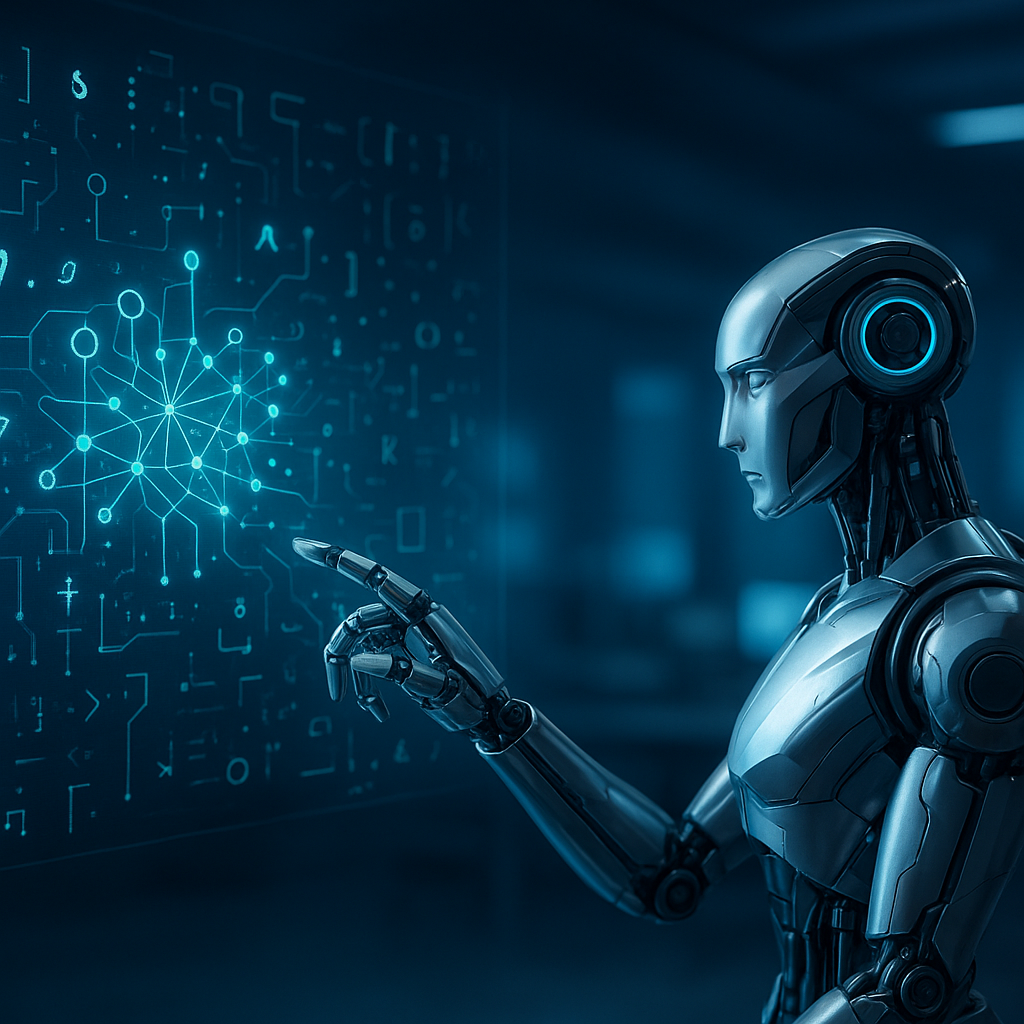
On a brisk morning in early 2026, an autonomous robot named AURORA flawlessly assembled a complex medical device in a hospital lab in Zurich. This event—reported widely by Reuters and technology journals—was not just a demonstration of robotics prowess but a vivid illustration of the extraordinary convergence between machine learning, robotics, and cutting-edge algorithms. This integration is reshaping artificial intelligence (AI) from a theoretical concept into tangible, transformative technology impacting industries globally.
Behind AURORA’s precision lies an intricate web of algorithms trained on massive datasets, enabling real-time decision-making and adaptive learning. What once was confined to research labs has now become a critical asset in healthcare, manufacturing, and even creative industries. According to industry estimates, the global AI market reached a valuation exceeding $1.7 trillion in 2026, with machine learning and robotics as its fastest-growing segments.
“The fusion of advanced algorithms and robotics is unlocking levels of machine intelligence previously thought unattainable,” noted Dr. Helena Mirov, AI researcher at ETH Zurich.
Tracing the Trajectory: How Machine Learning, Robotics, and Algorithms Coalesced
The roots of modern AI stretch back nearly a century, but the recent explosion in capabilities can be attributed to three intertwined developments. First, machine learning evolved from simple pattern recognition to sophisticated neural networks capable of unsupervised and reinforcement learning. Second, robotics advanced beyond static automation to dynamic, adaptive machines that incorporate sensory feedback and autonomous navigation. Third, algorithms surged forward in complexity and efficiency, with novel architectures such as transformers and graph neural networks revolutionizing data processing.
During the 2010s, breakthroughs in deep learning triggered a renaissance in AI research. Yet, these algorithms initially required vast computational resources and struggled with real-world unpredictability. Robotics, meanwhile, faced limitations due to sensor inaccuracies and mechanical constraints. It was only through iterative improvements in algorithmic design and hardware miniaturization that these fields began to coalesce meaningfully in the early 2020s.
By 2023, companies like Boston Dynamics and DeepMind had demonstrated robots that could learn new tasks by observing humans, a feat made possible by algorithmic advances in transfer learning and meta-learning. This synergy catalyzed a wave of innovation leading into 2026, where AI systems today exhibit unprecedented autonomy and adaptability.
Dissecting the Core: Algorithms at the Heart of Machine Learning and Robotics
At its core, the intelligence of AI systems in 2026 depends on algorithms—structured sets of rules that govern how machines process information. These algorithms have become increasingly specialized and layered, enabling machines to perform complex reasoning, perception, and motor control simultaneously.
Contemporary machine learning algorithms fall into several categories, each playing a crucial role in robotics applications:
- Supervised Learning: Algorithms trained on labeled datasets to perform classification or regression tasks, essential for visual recognition and sensor data interpretation.
- Unsupervised Learning: Techniques like clustering and dimensionality reduction that allow robots to identify patterns without explicit guidance, enhancing adaptability.
- Reinforcement Learning: Methods enabling robots to learn optimal behaviors through trial and error, critical for autonomous navigation and manipulation tasks.
- Generative Models: Including generative adversarial networks (GANs) that create synthetic data to augment learning, improving robustness.
For robotics, these algorithms integrate with sensor fusion systems and control theory to transform raw data into actionable commands. For example, Boston Dynamics’ latest Atlas robot employs reinforcement learning algorithms that allow it to navigate uneven terrain and recover from falls autonomously.
Furthermore, algorithmic innovations in edge computing and distributed learning have drastically reduced latency, enabling robots to operate with minimal reliance on cloud infrastructure. This shift is critical for applications demanding real-time responsiveness, such as surgical robotics or autonomous vehicles.
“Algorithmic efficiency and adaptability are the backbone of modern robotics, turning mechanical systems into intelligent agents,” explained Dr. Raj Patel, CTO of NeuraRobotics.
2026 Milestones: Current Innovations Shaping AI’s Landscape
This year, the AI sector witnessed remarkable breakthroughs that underscore the accelerating integration of machine learning, robotics, and algorithms.
- AI-Driven Healthcare Robotics: Companies like MedTech Robotics unveiled robots capable of conducting complex surgeries with minimal human intervention, guided by algorithms trained on millions of procedural datasets.
- Industrial Automation 4.0: Manufacturing facilities have adopted fully autonomous robotic assembly lines powered by reinforcement learning algorithms that self-optimize production flows and reduce downtime.
- Natural Language and Perception Fusion: Innovations in multi-modal learning allow robots to understand and respond to combined visual, auditory, and textual inputs, enhancing human-robot collaboration.
- Ethical AI Frameworks: Governments and industry coalitions introduced algorithmic transparency mandates, requiring explainability in AI-driven robotic decisions, balancing innovation with social responsibility.
According to recent reports by the International Robotics Federation, the robotics market grew by 18% year-over-year in 2026, with AI-enhanced systems responsible for over 70% of new deployments. These trends highlight a shift from isolated AI components to integrated systems wherein machine learning and robotics operate symbiotically.
Moreover, TheOmniBuzz’s own investigative coverage reveals how startups in Silicon Valley and Shenzhen are pioneering neuromorphic chips that mimic human brain architecture, drastically enhancing the efficiency of learning algorithms embedded in robots. This hardware-software co-design is pivotal for next-generation AI capabilities.
Industry and Expert Insights: The Broader Implications
Leading voices across academia and industry emphasize that the convergence of machine learning, robotics, and algorithms is not merely technological but socio-economic.
Dr. Lena Valdez, AI Ethics Chair at Stanford University, cautions that “as robots gain more autonomy through advanced algorithms, ensuring ethical frameworks and accountability mechanisms is paramount to prevent misuse and bias.” Similarly, industry leaders stress the potential for AI to augment rather than replace human labor, fostering new job categories in robot maintenance, AI training, and system oversight.
In manufacturing, executives report productivity gains of up to 40%, with reduced error rates and enhanced safety. Retail and logistics sectors have embraced autonomous robots guided by sophisticated algorithms to streamline inventory management and last-mile delivery. This evolution is altering workforce dynamics, necessitating reskilling programs and policy adaptations.
From a strategic perspective, multinational corporations are investing heavily in proprietary algorithm development and robotics integration to maintain competitive advantage. According to Statista data, global R&D expenditure on AI-related robotics surpassed $150 billion in 2025, reflecting the technology's central role in economic growth.
These insights align with TheOmniBuzz’s in-depth reports such as Why Algorithms, Robotics, and Machine Learning Are Reshaping AI Innovation and How Machine Learning, Robotics, and Algorithms Are Forging the New AI Frontier, which document this technological and cultural transformation.
Future Horizons: What to Watch in AI’s Next Chapter
Looking ahead, the trajectory of AI suggests several critical developments that will define the next decade.
- Explainable AI in Robotics: Advances in algorithmic transparency will empower users to understand robotic decision-making processes, building trust and facilitating regulatory compliance.
- Human-Robot Symbiosis: Enhanced machine learning will enable robots to anticipate human needs and collaborate seamlessly, especially in healthcare, education, and hazardous environments.
- Quantum-Enhanced Algorithms: Emerging quantum computing capabilities promise to accelerate learning algorithms, opening new frontiers in problem-solving and optimization.
- Decentralized AI Systems: Distributed learning models will allow fleets of robots to share knowledge in real time without centralized servers, enhancing scalability and resilience.
- Ethical and Social Governance: Policymakers will increasingly codify ethical AI standards, ensuring equitable access and mitigating risks related to privacy, security, and bias.
These priorities entail not only technological innovation but also collaborative governance between researchers, industry stakeholders, and regulators. TheOmniBuzz’s coverage of AI policy evolution and ethical frameworks provides essential context for these emerging challenges.
Ultimately, the fusion of algorithms, robotics, and machine learning is heralding an AI renaissance. By unlocking unprecedented levels of autonomy and intelligence, these technologies are poised to redefine human-machine interaction and reshape the global socio-economic fabric.
“We stand at the cusp of an AI revolution, where algorithms and robots will become partners in innovation, creativity, and problem-solving,” summarized Dr. Mirov.
As this complex ecosystem evolves, staying informed through expert analyses and ongoing research will be vital for businesses, policymakers, and the public. For a comprehensive understanding of this dynamic field, readers can explore related TheOmniBuzz features such as Unlocking Intelligence: How Algorithms, Robotics, and Machine Learning Shape Our Future and Rethinking Intelligence: The Synergy of Machine Learning, Robotics, and Algorithms.