Modern automation systems are extraordinary things. They run production lines at speeds and precision levels no human hand could match. They keep chemical processes within tolerances measured in fractions of a degree. They operate assembly robots that work around the clock without breaks, complaints, or fatigue. However, behind every one of those smart, connected, automated systems is something fundamentally unglamorous: a reliable power supply.
An industrial DC power supply is not the most visible component in an automation system, but it may well be the most important. Without clean, stable, correctly regulated DC power, every other component in the system is at risk.
In this article, you will explore the key applications of an industrial power supply in automation and understand why choosing the right one is a decision that affects your entire operation.
Powering Programmable Logic Controllers (PLCs)
PLCs are the brain of most industrial automation systems. They read sensor inputs, execute control logic, and send commands to actuators and motors. PLCs require a stable and precise DC voltage, typically 24V DC, to operate without error. Any fluctuation in that supply voltage can cause the PLC to reset, misread inputs, or output incorrect commands. In a production environment, a single PLC failure can halt an entire line. Therefore, the quality of the DC power supply feeding your PLC is directly linked to your uptime.
Driving Sensors and Actuators
Automation systems rely on dozens or even hundreds of sensors to monitor temperature, pressure, flow, position, and other variables. These sensors demand a clean and stable DC supply to produce accurate measurements. Additionally, actuators including solenoid valves, relays, and servo drives, require DC power with precise voltage levels to operate correctly. An industrial DC power supply with good load regulation and low ripple voltage ensures that sensor readings remain accurate and actuator responses remain consistent under varying load conditions.
Supporting Communication and Safety Systems
Industrial communication networks such as Profibus, EtherCAT, and Modbus require clean power to transmit data reliably over long cable runs. Power supply noise can corrupt data packets and cause communication faults that are notoriously difficult to trace. Furthermore, safety systems including emergency stop circuits and safety relays must receive uninterrupted DC power at all times. A reliable supply with built-in redundancy and short-circuit protection is essential in these applications.
Trusted companies like BOS Power supply power solutions that meet the demanding requirements of industrial automation environments, ensuring that your control systems receive the clean, stable power they need to perform.
What to Look for in an Industrial Power Supply
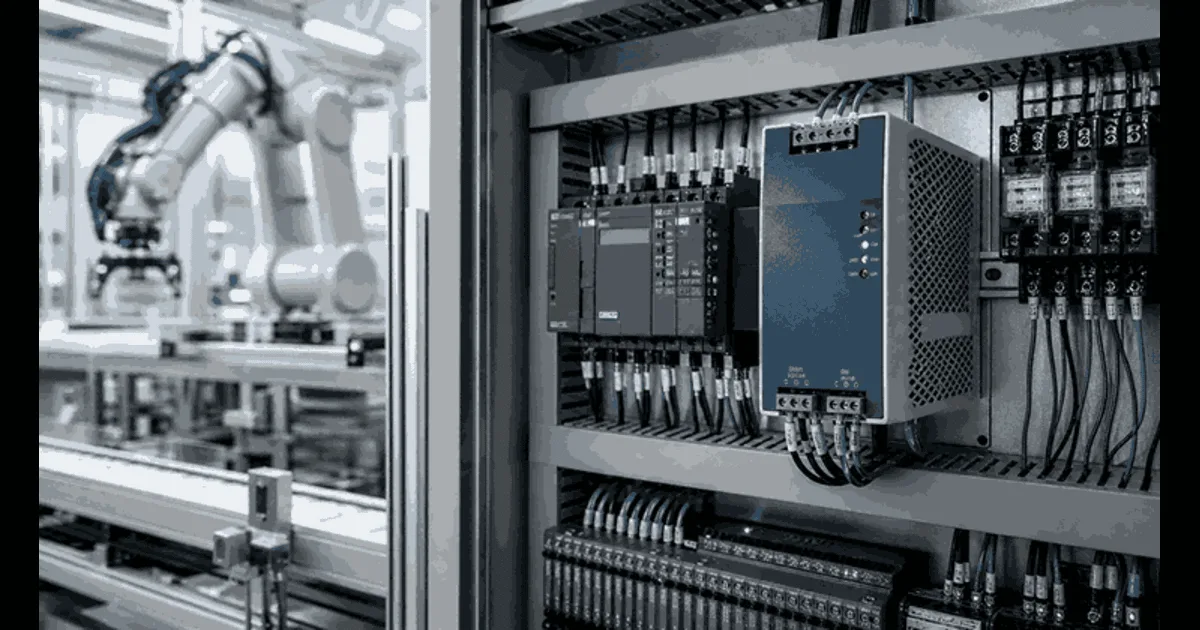
When selecting an industrial DC power supply for automation, look for wide input voltage range, high efficiency ratings, low output ripple, and robust protection features. DIN-rail mounting options simplify installation in control cabinets. Additionally, redundant power supply configurations with load-sharing modules ensure that a single unit failure does not take down your system. Trusted providers like BOS Power can help you select and configure the right power solution for your specific automation requirements.