Plastic T-shirt bags are not governed by one uniform carryout-bag rule across the entire United States in 2026. State and local requirements differ, and some jurisdictions restrict single-use plastic carryout bags while allowing specified alternatives or other bag uses. A retailer should identify where the bag will be distributed, determine whether it is a checkout carryout bag or another type of packaging, and review the current official rules before ordering.
Are plastic T-shirt bags allowed everywhere in the USA?
No. Whether a plastic T-shirt bag may be distributed depends on the state, city, county, bag type, and intended use. A restriction on single-use plastic carryout bags does not automatically mean every plastic bag used for every purpose is prohibited. Conversely, a bag being sold online does not prove it is permitted at checkout in every location.
Why bag definitions and intended use matter
Regulations may distinguish checkout carryout bags from bags used inside a store for produce, bulk goods, meat, flowers, bakery items, or other product-specific purposes. The exact definitions and exemptions depend on the applicable law. Retailers should not assume that a T-shirt bag qualifies for an exemption because of its dimensions, thickness, or product name.
California: 2026 carryout-bag requirements
CalRecycle states that SB 1053, effective January 1, 2026, restricts the types of bags that may be distributed at the point of sale by most grocery stores, retail stores with a pharmacy, convenience stores, food marts, and liquor stores. The state’s official guidance describes requirements for recycled paper carryout bags and separately addresses pre-checkout bags and specified exceptions. Retailers should consult the current CalRecycle guidance and applicable local rules rather than relying on summaries or outdated information.
Washington: single-use plastic carryout-bag ban and 2026 fees
Washington’s Department of Ecology states that single-use plastic carryout bags are banned for retail, grocery, convenience, restaurant, takeout, and other covered settings. Starting January 1, 2026, the minimum charge for reusable plastic film carryout bags increased to 12 cents, while the minimum charge for paper carryout bags remains 8 cents. The state also specifies requirements for qualifying bags, including thickness, recycled content, and labeling. Retailers should review the current state guidance for exceptions and exact product requirements.
These examples are not a nationwide summary
California and Washington illustrate why retailers need a location-specific compliance process. Other states, counties, and cities may have different restrictions, fees, definitions, and exceptions. Businesses with multiple locations should review the requirements for each store and should recheck official sources when laws change. This article is a general overview, not legal advice.
What alternatives can retailers evaluate?
Paper carryout bags
Paper bags may be permitted or required in some jurisdictions, but the rules may specify recycled content, labeling, bag size, or a customer fee. Verify the applicable law and the bag’s supporting documentation before ordering.
Qualifying reusable bags
Some laws allow specific reusable bag formats when they meet defined requirements. A retailer should not assume that any thicker plastic bag qualifies as reusable under a local law. Check the exact definition, thickness, recycled-content, labeling, and fee provisions.
Other product-specific packaging
Some packaging used for product protection or inside-store handling may be treated differently from checkout carryout bags. Confirm the legal definition and conditions for any exemption before relying on it.
A compliance checklist for US retailers
- List each location where bags will be distributed.
- Identify the exact use: checkout carryout, delivery, pre-checkout, produce, product protection, or another purpose.
- Check the current state and local government guidance for definitions, bans, fees, labeling, and exceptions.
- Match the product documentation to the requirements that apply.
- Train store teams and update purchasing rules when the law changes.
Frequently asked questions
Q: Are plastic T-shirt bags banned throughout the USA in 2026?
There is no single uniform rule for every bag and use nationwide. State and local requirements vary. Check the law for the specific location and application.
Q: Can a retailer use T-shirt bags in California in 2026?
California’s SB 1053 restricts point-of-sale carryout bag types for many covered stores, with requirements and exceptions described by CalRecycle. Retailers should review current state and local guidance before distributing any bag.
Q: Are plastic T-shirt bags allowed in Washington in 2026?
Washington bans single-use plastic carryout bags in covered retail and food-service settings. Certain qualifying reusable plastic film carryout bags may be allowed subject to requirements and fees. Check the Department of Ecology’s current guidance.
Q: Does thicker plastic automatically make a T-shirt bag legal?
No. Legal definitions may include several conditions such as thickness, recycled content, labeling, fees, and intended use. Thickness alone is not enough.
Q: Where can a retailer check current bag regulations?
Start with the official environmental or consumer-protection agency for the state and locality where the bags will be distributed. Seek legal advice if the requirements are unclear.
Explore packaging options after checking local requirements
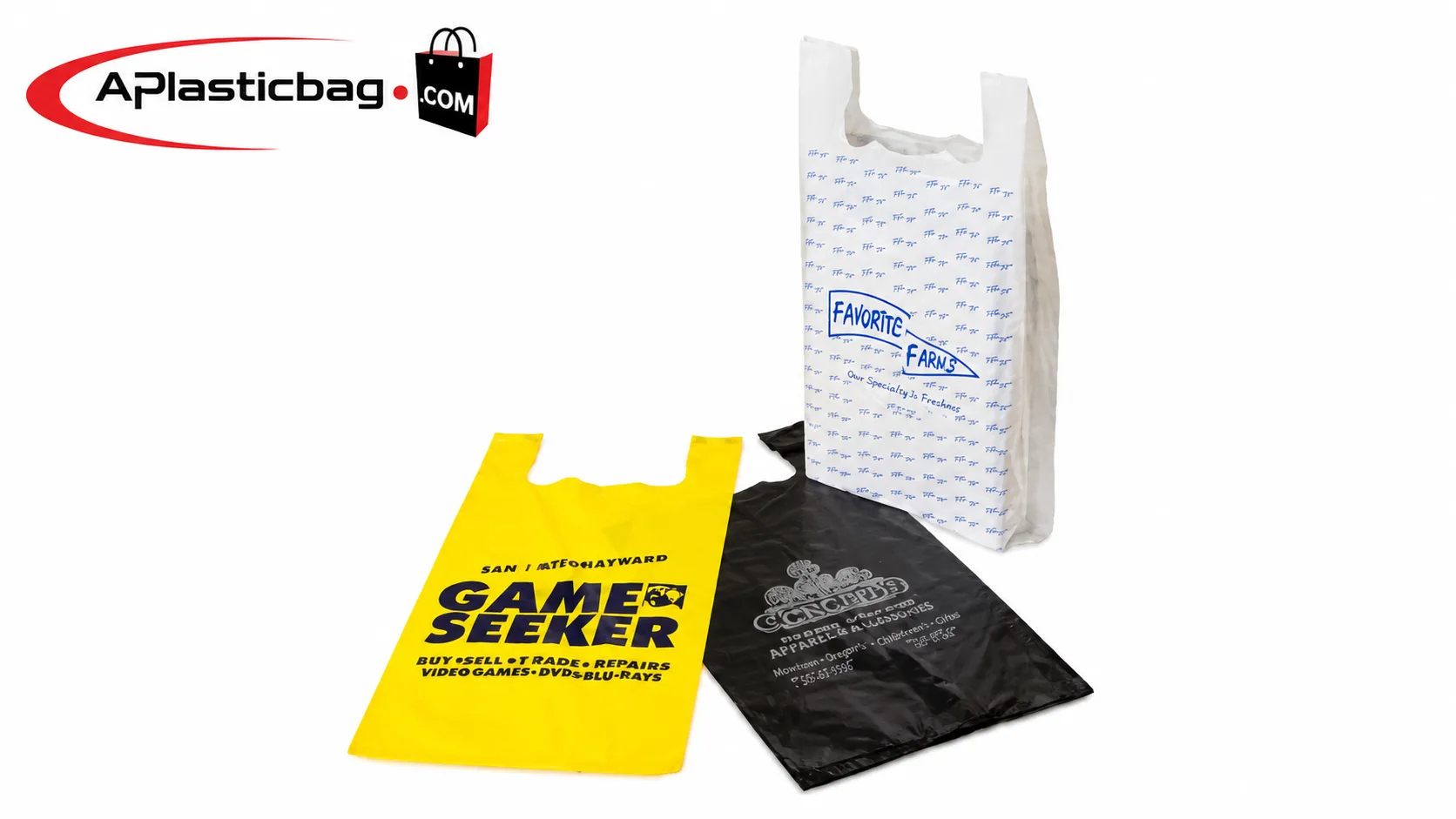
Once the applicable rules are clear, retailers can compare bag dimensions, material, construction, printing availability, and total cost. APlasticBag.com’s Custom T-Shirt Bags category provides product information for buyers to review. Confirm that a selected product is suitable and lawful for the intended use and location before ordering.