
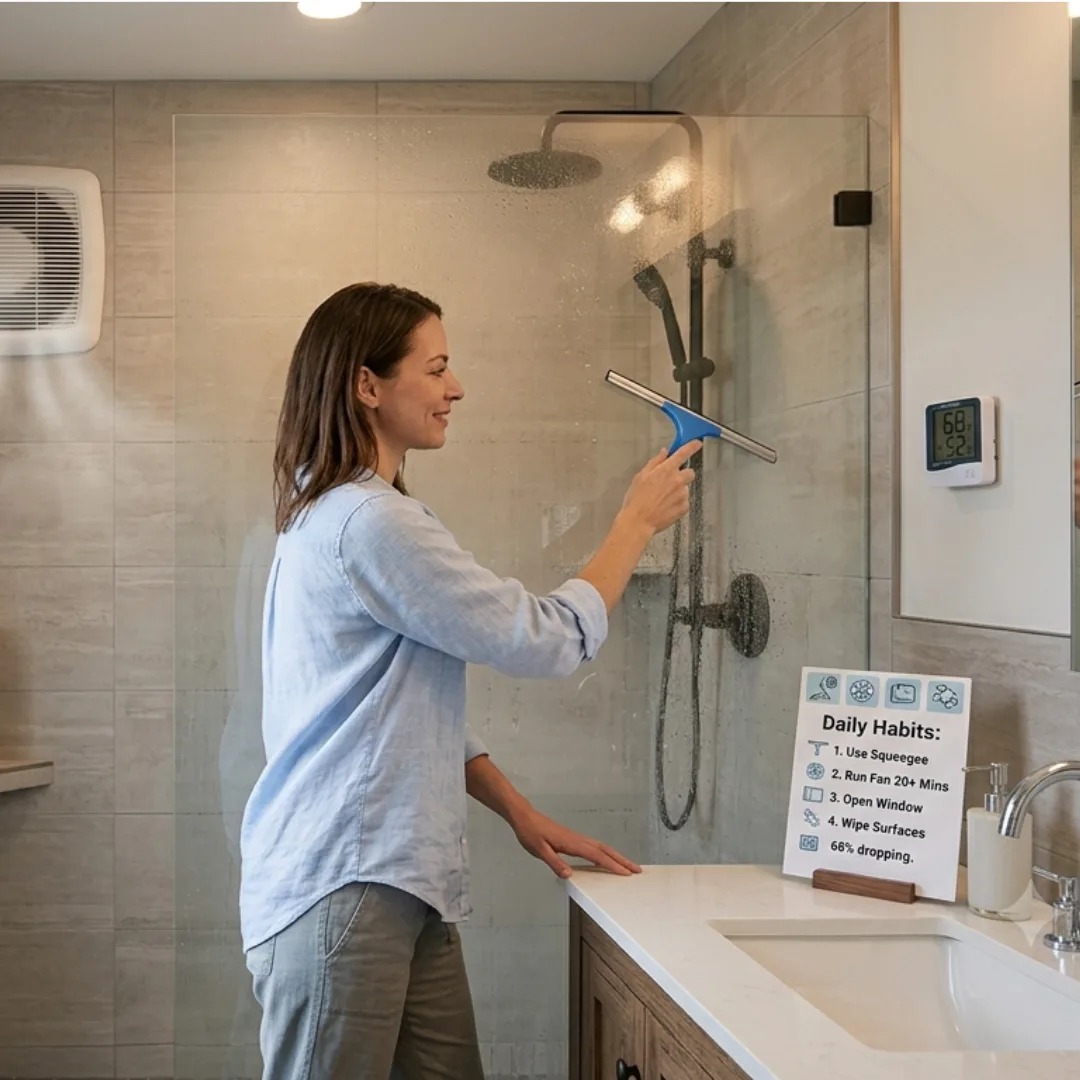
A bathroom is designed to handle water, but it is not designed to stay wet. Every hot shower, bath, and sink use adds moisture to the air. If that moisture does not leave the room quickly, it begins affecting walls, ceilings, grout, cabinets, and even the air quality inside your home. That is why bathroom moisture control is one of the most important parts of maintaining a clean and durable bathroom.
Many homeowners assume moisture problems only appear when mold becomes visible. In reality, excess humidity often builds up behind mirrors, inside cabinets, around window frames, and beneath flooring long before there are obvious signs. By the time peeling paint or dark spots appear, moisture may have already caused damage behind the surface.
Ventilation Does More Than Remove Steam
An exhaust fan is one of the most effective tools for controlling humidity. Running it while showering and for at least twenty minutes afterward helps remove warm, damp air before it settles on bathroom surfaces.
Bathrooms with limited ventilation often stay humid much longer, increasing the likelihood of mildew, unpleasant odors, and condensation. If your bathroom has a window, opening it for a short time after bathing can also improve airflow.
Moisture Often Collects in Unexpected Places
While shower walls receive the most attention, moisture builds up in many overlooked areas.
These include:
- Around the toilet base
- Behind the vanity
- Under bath mats
- Inside storage cabinets
- Along window frames
- Around plumbing fixtures
Checking these areas regularly helps identify hidden moisture before it develops into a larger problem.
Choose Materials That Resist Moisture
Bathrooms experience constant changes in temperature and humidity. Selecting materials designed for wet environments helps reduce maintenance over time.
Porcelain tiles, quartz countertops, waterproof flooring, and moisture resistant paint are popular choices because they are durable and easy to clean. High quality silicone sealant around sinks, bathtubs, and showers also helps keep water from reaching the walls behind them.
When planning improvements, many homeowners focus on colors and fixtures first. Looking at bathroom renovation ideas that prioritize ventilation, waterproof materials, and practical layouts often leads to a bathroom that performs better as well as looks better.
Simple Habits Make a Big Difference
Effective bathroom moisture control does not always require expensive upgrades. A few daily habits can significantly reduce excess humidity.
- Wipe shower glass after use.
- Hang towels so they dry completely.
- Keep the exhaust fan clean.
- Repair dripping taps promptly.
- Replace cracked grout or sealant.
- Leave the shower door open after bathing to improve airflow.
These small steps help prevent moisture from lingering where it can quietly cause damage.
Why Moisture Control Protects Your Investment
Moisture affects more than appearance. Over time, it can weaken wooden cabinets, loosen tiles, damage drywall, and reduce the lifespan of flooring. It can also create conditions where mold and mildew spread more easily.
Maintaining lower humidity levels helps preserve finishes, reduces cleaning, and supports better indoor air quality. It is one of the simplest ways to extend the life of a bathroom without major renovations.
Frequently Asked Questions
Why is bathroom moisture control important?
It helps prevent mold, mildew, peeling paint, wood damage, and excessive humidity that can shorten the lifespan of bathroom materials.
How long should an exhaust fan run after a shower?
Most professionals recommend leaving it on for about twenty minutes after showering to remove remaining moisture from the air.
What materials handle bathroom moisture best?
Porcelain tile, quartz surfaces, waterproof flooring, moisture resistant paint, and quality silicone sealants are all excellent choices for humid environments.
Final Thoughts
Good bathroom moisture control is about preventing problems before they begin. Proper ventilation, moisture resistant materials, and simple daily habits work together to protect your bathroom from unnecessary wear. By managing humidity consistently, homeowners can keep their bathrooms cleaner, healthier, and easier to maintain for many years.