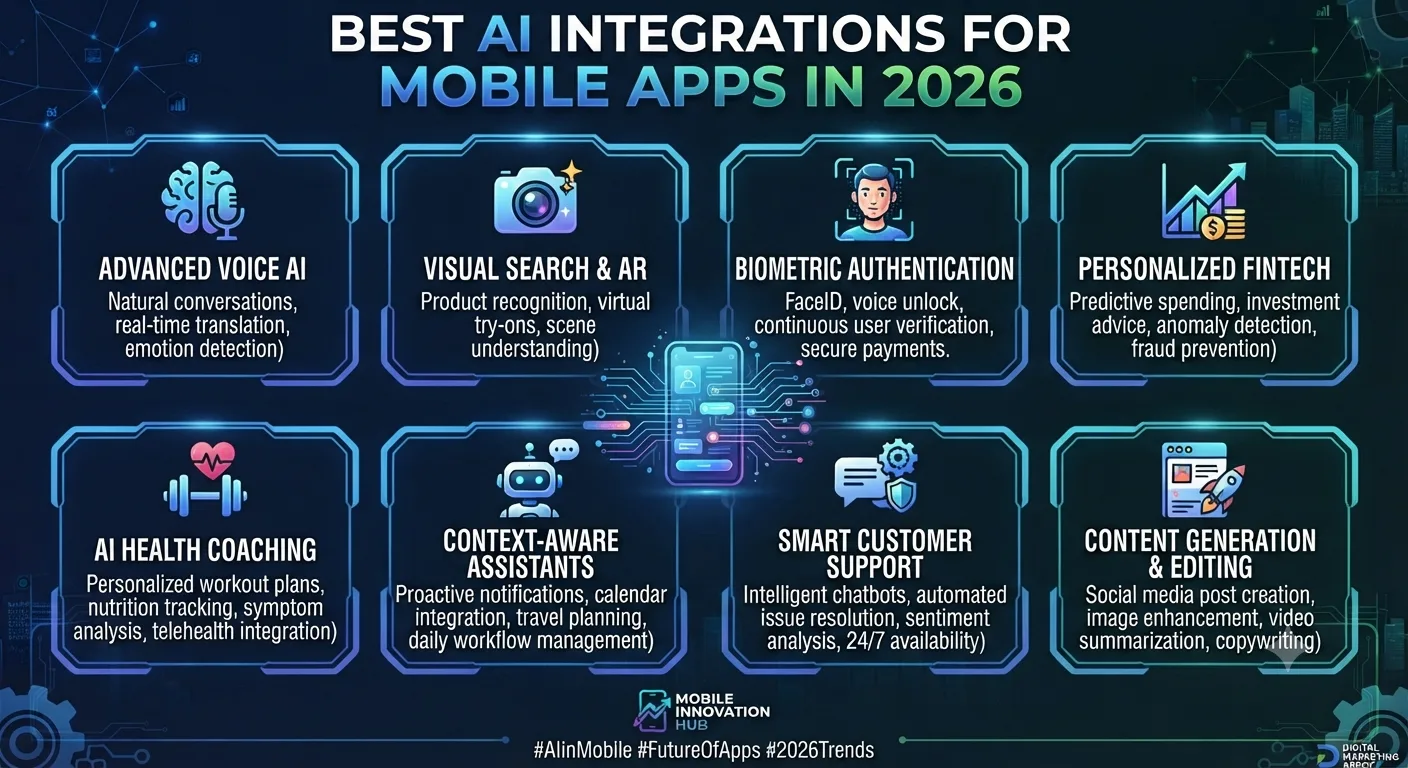
Artificial Intelligence has moved beyond being a futuristic concept. In 2026, AI is becoming a core part of mobile applications across healthcare, fintech, eCommerce, education, logistics, travel, and entertainment. Businesses are no longer asking whether they should integrate AI—they are asking which AI technologies will deliver the highest return on investment.
Organizations looking to build intelligent applications often work with an AI App Development Company in New York that has experience integrating machine learning, conversational AI, computer vision, and predictive analytics into scalable mobile products. Choosing the right AI strategy early helps businesses reduce development costs while creating better user experiences.
This guide explores the most valuable AI integrations for mobile apps in 2026, how they improve customer engagement, and why they have become essential for digital-first businesses.
Why AI Integration Matters in Mobile Apps
Modern users expect mobile apps to understand their preferences, respond instantly, and provide personalized experiences. AI makes this possible by analyzing data, recognizing patterns, and automating decision-making in real time.
Businesses integrating AI into mobile applications often achieve:
- Better customer engagement
- Higher user retention
- Faster customer support
- Personalized recommendations
- Increased revenue
- Improved operational efficiency
- Smarter business insights
As cloud AI services become more accessible, companies of all sizes can implement intelligent features without building complex AI infrastructure from scratch.
1. AI Chatbots and Virtual Assistants
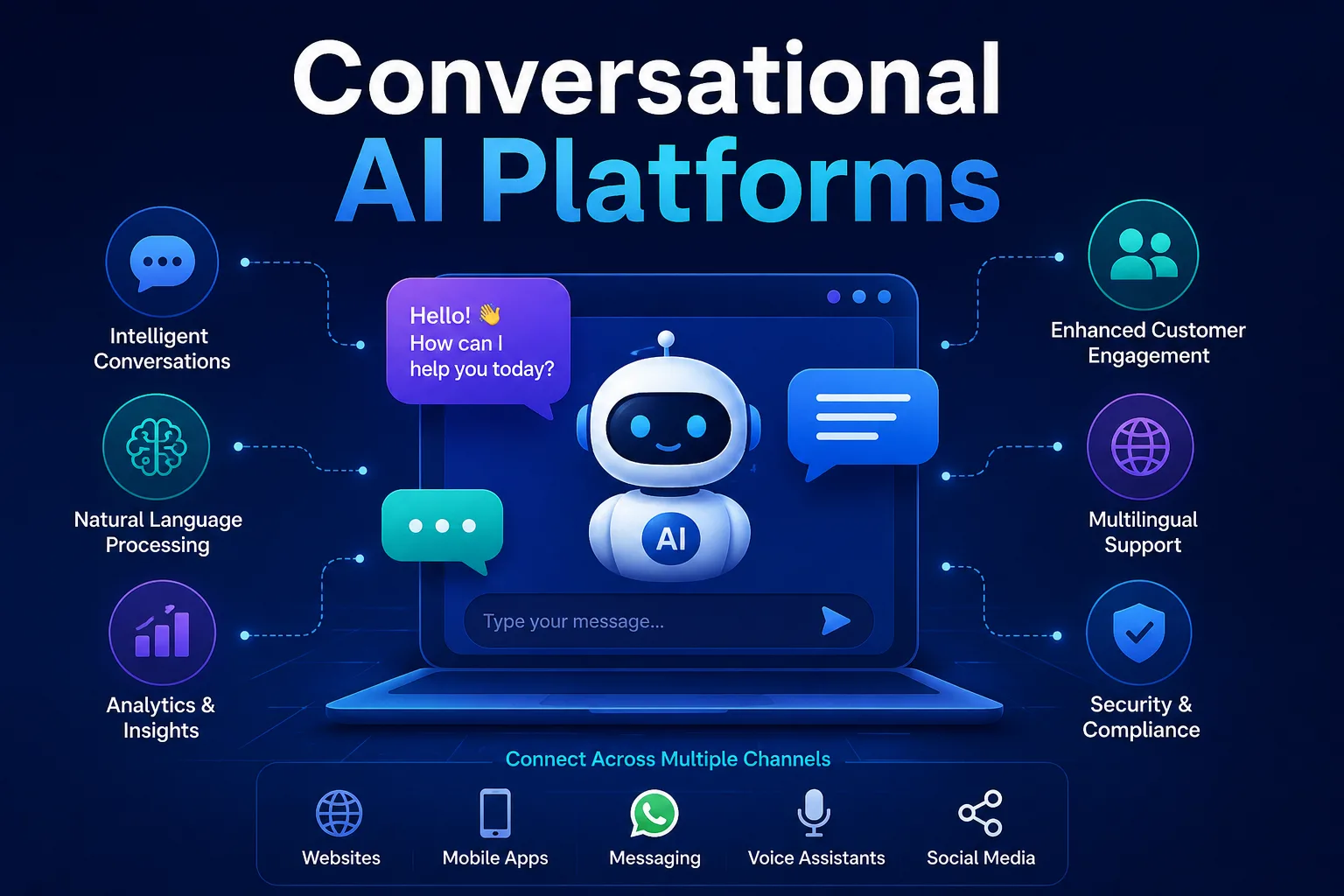
AI-powered chatbots continue to dominate mobile applications in 2026.
Instead of simple scripted conversations, modern chatbots understand context, remember previous interactions, and deliver human-like responses.
Common Applications- Customer support
- Appointment booking
- Banking assistance
- Shopping guidance
- Healthcare consultations
- Travel planning
- 24/7 customer support
- Reduced operational costs
- Faster response times
- Improved customer satisfaction
2. Personalized Recommendation Engines
Recommendation systems have become one of the biggest revenue drivers for digital businesses.
AI analyzes user behavior, purchase history, search activity, and browsing patterns to recommend products or services that users are most likely to purchase.
Industries Using Recommendation AI- eCommerce
- OTT platforms
- Food delivery
- Online learning
- Music streaming
- Travel apps
Personalized recommendations increase average order value while improving customer loyalty.
3. AI-Powered Voice Recognition
Voice interfaces continue gaining popularity because they simplify user interaction.
Users can now search, place orders, control devices, or perform banking operations using voice commands.
Popular Use Cases- Voice search
- Smart assistants
- Voice payments
- Accessibility features
- Healthcare documentation
Businesses serving multilingual audiences also benefit from real-time speech translation powered by AI.
4. Predictive Analytics
Predictive analytics helps businesses make data-driven decisions before problems occur.
Instead of simply reporting historical information, AI predicts future customer behavior using machine learning algorithms.
Examples- Customer churn prediction
- Sales forecasting
- Inventory planning
- Financial risk assessment
- Healthcare diagnosis support
Predictive insights allow businesses to optimize marketing campaigns and improve operational planning.
5. Computer Vision
Computer vision enables mobile applications to understand and interpret images and videos.
This technology is transforming multiple industries.
Real-World Applications- Face recognition
- Document verification
- Medical imaging
- Product identification
- Retail automation
- Augmented reality shopping
Banks use computer vision for identity verification, while retailers allow customers to search products using images instead of keywords.
6. AI Image Generation
Generative AI has transformed content creation.
Businesses can now create marketing assets, product visuals, social media graphics, and promotional banners directly within mobile apps.
Popular applications include:
- AI avatars
- Product mockups
- Social media creatives
- Marketing graphics
- Design automation
This significantly reduces creative production costs.
7. AI Content Generation
Generative AI is helping businesses create:
- Product descriptions
- Email campaigns
- Blog summaries
- Push notifications
- Marketing copy
- Customer replies
Rather than replacing human creativity, AI accelerates content production and improves productivity.
8. AI Translation and Localization
Global businesses require multilingual applications.
AI translation engines now provide highly accurate translations across dozens of languages while maintaining contextual understanding.
Benefits include:
- Better international expansion
- Improved customer experience
- Reduced localization costs
- Faster content deployment
This is especially valuable for businesses serving customers across different regions.
9. AI Fraud Detection
Security remains one of the biggest priorities for financial applications.
AI continuously analyzes user behavior to identify suspicious transactions and prevent fraud before it occurs.
Industries using fraud detection include:
- Banking
- Fintech
- Insurance
- Cryptocurrency
- eCommerce
Machine learning models improve over time, making fraud detection increasingly accurate.
10. AI-Powered Search
Traditional keyword-based search is being replaced by semantic search.
Instead of matching exact words, AI understands user intent.
Examples include:
- Visual search
- Voice search
- Conversational search
- Context-aware search
This dramatically improves search accuracy inside mobile applications.
11. Smart Notifications
Push notifications are no longer sent to every user at the same time.
AI determines:
- Best delivery time
- Personalized content
- User interests
- Purchase intent
- Activity history
Personalized notifications consistently outperform generic campaigns in terms of engagement and conversions.
12. AI in Healthcare Mobile Apps
Healthcare continues to experience one of the fastest rates of AI adoption.
AI-powered healthcare apps provide:
- Symptom checking
- Medical image analysis
- Medication reminders
- Remote patient monitoring
- Virtual consultations
These features improve patient outcomes while reducing administrative workload.
13. AI in eCommerce Apps
AI has become essential for online shopping experiences.
Popular integrations include:
- Product recommendations
- Smart pricing
- Inventory prediction
- Customer segmentation
- Review analysis
- Shopping assistants
Businesses implementing these features often experience higher conversion rates and increased customer retention.
14. AI in Fintech Applications
Financial institutions are investing heavily in AI technologies.
Key integrations include:
- Credit scoring
- Fraud prevention
- Automated investment advice
- Expense categorization
- Risk assessment
These capabilities improve financial decision-making while strengthening security.
Best Practices for AI Integration
Before implementing AI, businesses should focus on:
Define Business Objectives
AI should solve measurable business problems rather than being added for marketing purposes.
Protect User Data
Privacy regulations require businesses to collect and process data responsibly.
Train with High-Quality Data
Machine learning models are only as good as the data they receive.
Optimize Performance
AI features should deliver intelligent functionality without negatively affecting application speed.
Continuously Improve Models
Regular monitoring and retraining help AI systems remain accurate as user behavior changes.
Future Trends in AI Mobile Apps
Several technologies are expected to shape the next generation of intelligent mobile applications.
These include:
- Agentic AI
- Edge AI
- On-device AI processing
- Multimodal AI
- Emotion recognition
- Autonomous AI assistants
- Hyper-personalization
- AI-powered cybersecurity
- Real-time predictive automation
Businesses adopting these technologies early are likely to gain a competitive advantage in their respective industries.
Final Thoughts
Artificial Intelligence is no longer an optional enhancement—it has become a strategic requirement for businesses building modern mobile applications. From intelligent chatbots and predictive analytics to computer vision and generative AI, these technologies help organizations improve customer experiences, automate operations, and drive long-term growth.
Whether you are developing a startup MVP or an enterprise-grade application, partnering with an experienced Mobile App Development Company can help you identify the right AI integrations, reduce implementation risks, and build scalable digital products that are ready for the future.
As AI capabilities continue to evolve, businesses that invest in intelligent mobile applications today will be better positioned to compete, innovate, and deliver greater value to their customers in 2026 and beyond.